
Can an Ultrasonic Cleaner Run Continuously? Duty Cycle Guide for Buyers
Learn what continuous operation really means for an ultrasonic cleaner, how heat and duty cycle affect throughput, and what commercial buyers should verify before ordering.

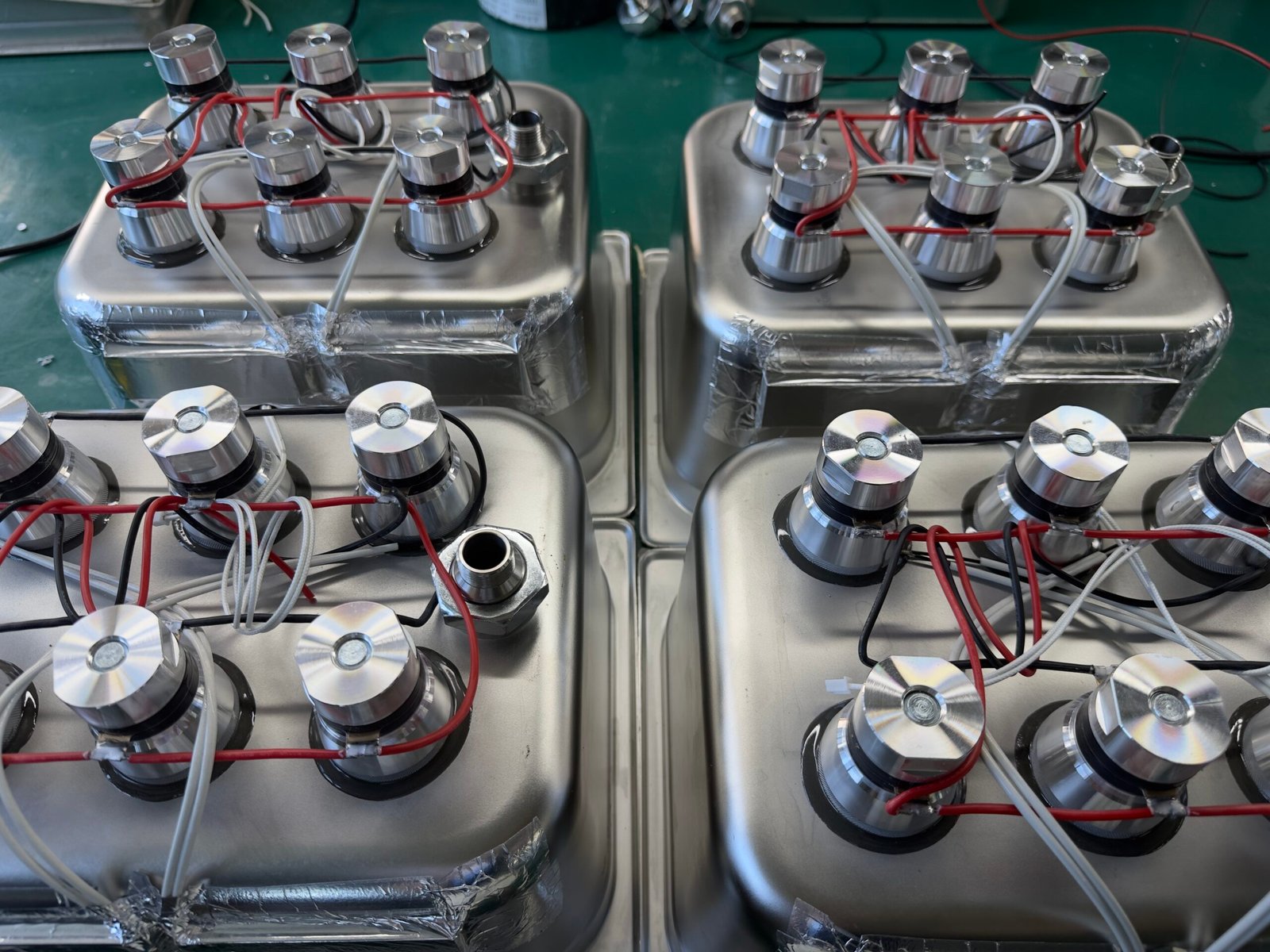
Quick answer: Some ultrasonic cleaners offer a continuous mode, but that does not automatically mean they are designed for unattended, around-the-clock production. Buyers should separate the timer setting from the machine’s rated duty cycle, thermal limits and intended application. Ask the supplier for the maximum ultrasound-on time, required cooling interval, protection features and a loaded-cycle test before approving an order.
What Does “Continuous Operation” Mean on an Ultrasonic Cleaner?
The phrase can describe several different things, so it should never be accepted as a stand-alone specification:
- Continuous timer mode: the control can keep ultrasound active until the operator stops it or an automatic safety limit is reached.
- Repeated batch operation: the machine runs many timed cycles during a shift, with loading, unloading or cooling time between cycles.
- Professional continuous-duty design: the tank, generator, transducers, cooling and controls are engineered for intensive use under defined conditions.
- 24/7 process operation: a production system is expected to operate around the clock, usually with filtration, temperature management, liquid-level controls and planned maintenance.
These are not interchangeable. For example, the Elmasonic Easy operating instructions describe an ON position as continuous operation, but also state that this mode stops automatically after a maximum of six hours. By contrast, Elma describes its Elmasonic xtra ST as a unit designed for professional continuous use. The important point for buyers is that the words on a control panel do not, by themselves, define the equipment’s duty rating.
Why Long Ultrasound-On Time Changes the Process
1. Ultrasound adds heat even when the heater is off
Cavitation and electrical losses transfer energy into the liquid. During repeated or long cycles, bath temperature can continue to rise even without the heater. BANDELIN’s SONOREX operating instructions warn that liquid temperature may increase more rapidly during continuous operation and can exceed the thermostat setting in some conditions. The same instructions advise monitoring temperature for temperature-sensitive components and not operating the bath unattended.
This matters because a process validated at 35°C may behave differently at 60°C. Higher temperature can change detergent action, evaporation, material compatibility and the risk to adhesives, coatings or plastics.
2. The cleaning bath becomes part of the capacity limit
Throughput is not determined only by tank litres or ultrasonic watts. Soil accumulates in the liquid, chemistry is consumed, foam can develop, and removed particles may redeposit on later loads. A machine that can run for a long time may still need bath filtration, skimming, partial replacement or a complete solution change.
3. Longer is not always cleaner
Once the target contamination has been removed, extending the cycle may add heat and energy without improving the result. For delicate surfaces, excessive exposure can increase the risk of finish damage or cavitation erosion. The correct endpoint should be established with representative parts, soil and chemistry rather than by choosing the longest available timer setting.
4. Loading and liquid level affect thermal stress
A full working load absorbs and redistributes energy differently from an empty or lightly loaded tank. Low liquid level, blocked ventilation, an unsuitable lid arrangement or items placed directly on the tank bottom can also create unsafe or inconsistent conditions. Always follow the machine manual and use a basket or proper holder.
Timer Range Is Not the Same as Duty Cycle
A timer tells the operator how long one programmed cycle can run. Duty cycle describes how the equipment may be operated over time under stated conditions.
For example, SONICLEANTECH’s 15L 40kHz commercial ultrasonic cleaner lists an adjustable 1–99 minute timer, room-temperature-to-80°C heating range, full-wave and half-wave modes, a SUS304 tank and a drain valve. Those are useful process controls, but the timer value should not be interpreted as a promise of unlimited continuous operation. A buyer planning high-throughput production should still confirm the intended duty, acceptable ambient conditions and test protocol with the supplier.
A Practical Throughput Calculation
Commercial buyers often estimate capacity as tank loads per hour, but a realistic calculation should include every step:
Total batch time = loading + ultrasonic cleaning + draining/rinsing + unloading + inspection + any required cooling or bath service.
If ultrasound is programmed for 12 minutes but handling and rinsing require another 8 minutes, the practical cycle is 20 minutes—not 12. One station can therefore complete about three batches per hour before allowances for rejects, solution changes and breaks. If production requires six batches per hour, a larger basket is not always the answer; two parallel stations or a multi-stage line may provide better control.
For tank sizing, also review our ultrasonic cleaner basket-size guide. Nominal litres do not tell you the usable basket dimensions or whether parts can be spaced correctly.
Eight Questions to Ask a Supplier Before Ordering
- What is the maximum recommended ultrasound-on time? Request a value under defined fill level, load, ambient temperature and power setting.
- Is a cooling interval required? If yes, ask how long and after how many cycles.
- Does “continuous” have an automatic time limit? A control may stop automatically even when the dial or display shows continuous mode.
- What temperature protection is included? Ask about over-temperature protection, generator protection, alarms and reset behaviour.
- Can ultrasound and heating run together? Confirm any restrictions and whether the displayed temperature is a setpoint or actual measured liquid temperature.
- How is the generator cooled? Check fan or passive ventilation requirements and the clearance needed around the enclosure.
- What maintenance is expected at the planned workload? Ask about tank inspection, transducer checks, ventilation cleaning, filtration and solution-change frequency.
- Is the proposed duty covered by the warranty? Put the intended daily operating schedule in the purchase specification rather than relying on a general catalogue phrase.
How to Validate a Sample for Repeated Production Use
Use the supplier’s manual and never exceed its limits. A useful sample-approval test can follow this sequence:
- Fill to the specified working level with the approved liquid and chemistry.
- Degas fresh solution as instructed. See our degas function guide for what this feature can and cannot prove.
- Record starting liquid temperature, ambient temperature, voltage and load weight.
- Run representative parts for the validated cleaning time—not an arbitrary maximum cycle.
- Repeat the planned number of batches, including normal loading and unloading pauses.
- Record bath temperature after each cycle and note alarms, unusual noise or changes in cleaning consistency.
- Inspect parts using a defined acceptance method, such as visual criteria, residue testing or a customer-approved cleanliness measurement.
- After the test, inspect the tank, basket, connectors and ventilation path. Confirm that the unit restarts and controls respond normally.
A foil test can help compare cavitation distribution under controlled conditions, but it does not prove that a real part is clean. Our foil test guide explains the limitations.
When Should Buyers Consider a Higher-Duty System?
A benchtop cleaner may be suitable for laboratories, workshops and intermittent production. Consider a system designed for heavier duty when your process needs:
- multiple shifts with high ultrasound-on time;
- tight liquid-temperature control;
- continuous filtration or oil separation;
- automatic filling, draining or solution monitoring;
- repeatable multi-stage wash, rinse and dry steps;
- traceable process parameters;
- large or heavy loads that approach the basket limit.
The right decision is based on the process, not a marketing label. A smaller unit used within a validated batch schedule can be more reliable than an oversized unit run beyond its intended duty.
Frequently Asked Questions
Can I leave an ultrasonic cleaner running overnight?
Do not assume this is safe. Follow the manufacturer’s instructions. Many operating manuals prohibit unattended use, and liquid temperature can rise during extended sonication even if the heater is off.
Does continuous mode mean the cleaner runs forever?
No. Some units impose an automatic maximum time, while others require operator shutdown or are intended only for repeated batches. Confirm the exact limit for the model and operating conditions.
Should I add a rest period between cycles?
Only the equipment supplier can specify the required rest period for a particular model. If no duty information is documented, ask for it before building the unit into a production plan.
Can half-power or pulse mode reduce heating?
Lower average energy input may reduce the rate of temperature rise, but the effect depends on the machine and load. It should be verified during a representative test rather than assumed.
How do I choose cleaning chemistry for repeated operation?
Use a solution compatible with the tank, parts and contamination, and follow the chemical supplier’s concentration and temperature limits. Start with our ultrasonic cleaning solution guide.
Request a Duty-Cycle Review for Your Application
When requesting a quotation, provide the part dimensions, material, contamination, required cleanliness, batch quantity, planned hours per shift, target temperature and downstream rinse or drying steps. SONICLEANTECH can then discuss a suitable tank size, controls and sample-test plan without treating timer length as a substitute for process validation.
Contact SONICLEANTECH to discuss your commercial ultrasonic cleaning application.
Summary: Continuous mode is a control setting; continuous-duty capability is an engineering and process specification. Verify thermal behaviour, duty limits, protection features and loaded cleaning results before ordering.