
Ultrasonic Cleaning Solution Guide: How to Choose One Safely

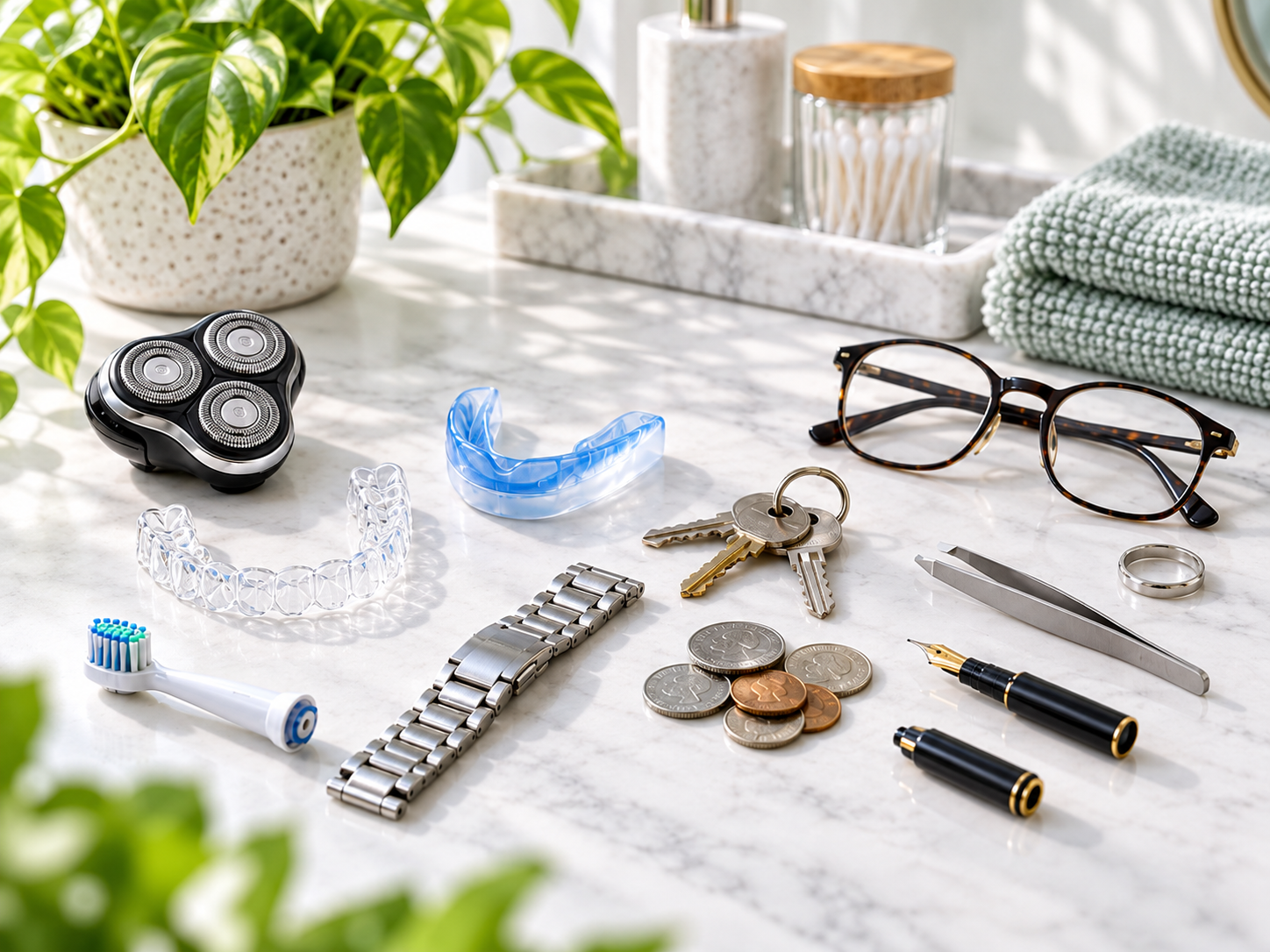
Quick Answer: Do Ultrasonic Cleaners Need Cleaning Solution?
Ultrasonic cleaning solution is optional: water may be enough for light, water-soluble soil, while a compatible cleaner can help with oils or material-specific contamination. Follow the cleaner and item manufacturer’s instructions, especially for valuable or delicate items.
A change in a gold item’s appearance does not automatically mean ultrasound stripped the gold; plating condition, stones or settings, solution chemistry, cycle length, heat, and existing wear all affect the outcome.
A color change after cleaning does not by itself show what caused it. The item’s plating, stones, settings, solution chemistry, cleaning time, heat, and prior wear all matter; stop if you see a change and consult a jeweler.
The real reason is often related to:
- the material coating on the jewelry surface
- the type of cleaning solution used
- cleaning time and temperature
- the condition of the jewelry before cleaning
For gold-plated jewelry, aggressive chemistry and ultrasonic vibration may contribute to wear, especially when plating is already thin or damaged. Ask the jeweler before cleaning a valuable or sentimental piece.
So, does an ultrasonic cleaner remove gold?
The answer is:
Ultrasonic cleaning does not typically dissolve solid gold, but that does not make every gold item safe to clean ultrasonically. Plating, stones, settings, solder, adhesives, and existing wear may be vulnerable; check the jeweler’s or item manufacturer’s guidance before cleaning a valuable piece.
Do Ultrasonic Cleaners Need a Cleaning Solution?
The short answer:
No. A machine can run with water alone. A compatible solution may help with oily or material-specific soil; match it to the item and follow both manufacturers’ instructions.
The main cleaning power comes from ultrasonic cavitation.
When ultrasonic waves travel through water, millions of tiny bubbles are created.
These bubbles:
- collapse rapidly
- generate micro shock waves
- remove dirt from small gaps and complex surfaces
This process can remove:
- dust
- fingerprints
- oil
- loose particles
- surface contamination
For many daily cleaning applications, water alone can already provide good cleaning results.
However, cleaning agents can significantly improve performance in specific situations.
What Does Ultrasonic Cleaning Solution Actually Do?
A common misunderstanding is:
“The ultrasonic machine cleans because of the detergent.”
Actually, ultrasonic waves provide the mechanical cleaning force, while the cleaning solution improves the efficiency.
Cleaning solutions mainly work in four ways.
1. Reduce Surface Tension and Improve Cavitation
Water has relatively high surface tension.
This means bubbles do not easily penetrate:
- tiny holes
- narrow gaps
- complex structures
Cleaning agents reduce surface tension, allowing ultrasonic energy to reach deeper areas.
Example:
A ring with gemstones may have:
- small stone settings
- microscopic gaps
- accumulated oil
A suitable cleaning solution helps ultrasonic waves reach these areas.
2. Dissolve Oil and Organic Contamination
Ultrasonic waves are excellent at removing particles, but oil-based contamination is harder.
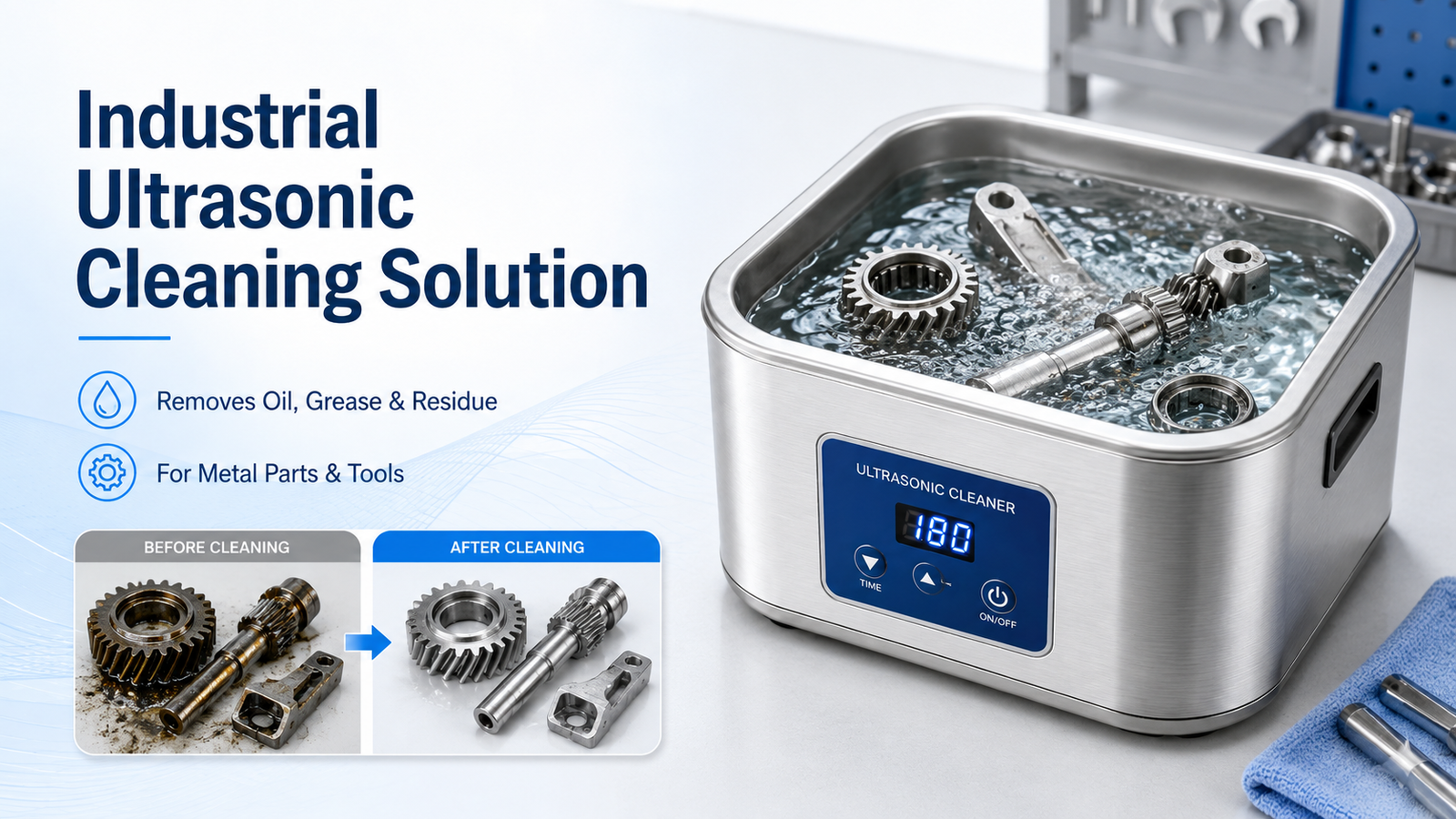
Examples:
- fingerprints
- skin oil
- grease
- polishing compounds
- machine oil
A suitable detergent can dissolve or separate these contaminants.
Without cleaning solution:
Water + ultrasonic = mechanical removal
With cleaning solution:
Water + ultrasonic + chemical action = stronger cleaning
3. Protect Certain Materials During Cleaning
Professional ultrasonic solutions are not only for stronger cleaning.
Some formulas are designed to:
- prevent oxidation
- protect aluminum
- avoid corrosion
- maintain surface finish
Industrial users often choose different formulas depending on the material.
4. Improve Cleaning Speed
The same result may take:
Water only:
- longer cleaning time
- multiple cycles
With proper detergent:
- faster cleaning
- better oil removal
Why Did My Gold Jewelry Lose Color?
This is where many users misunderstand ultrasonic cleaners.
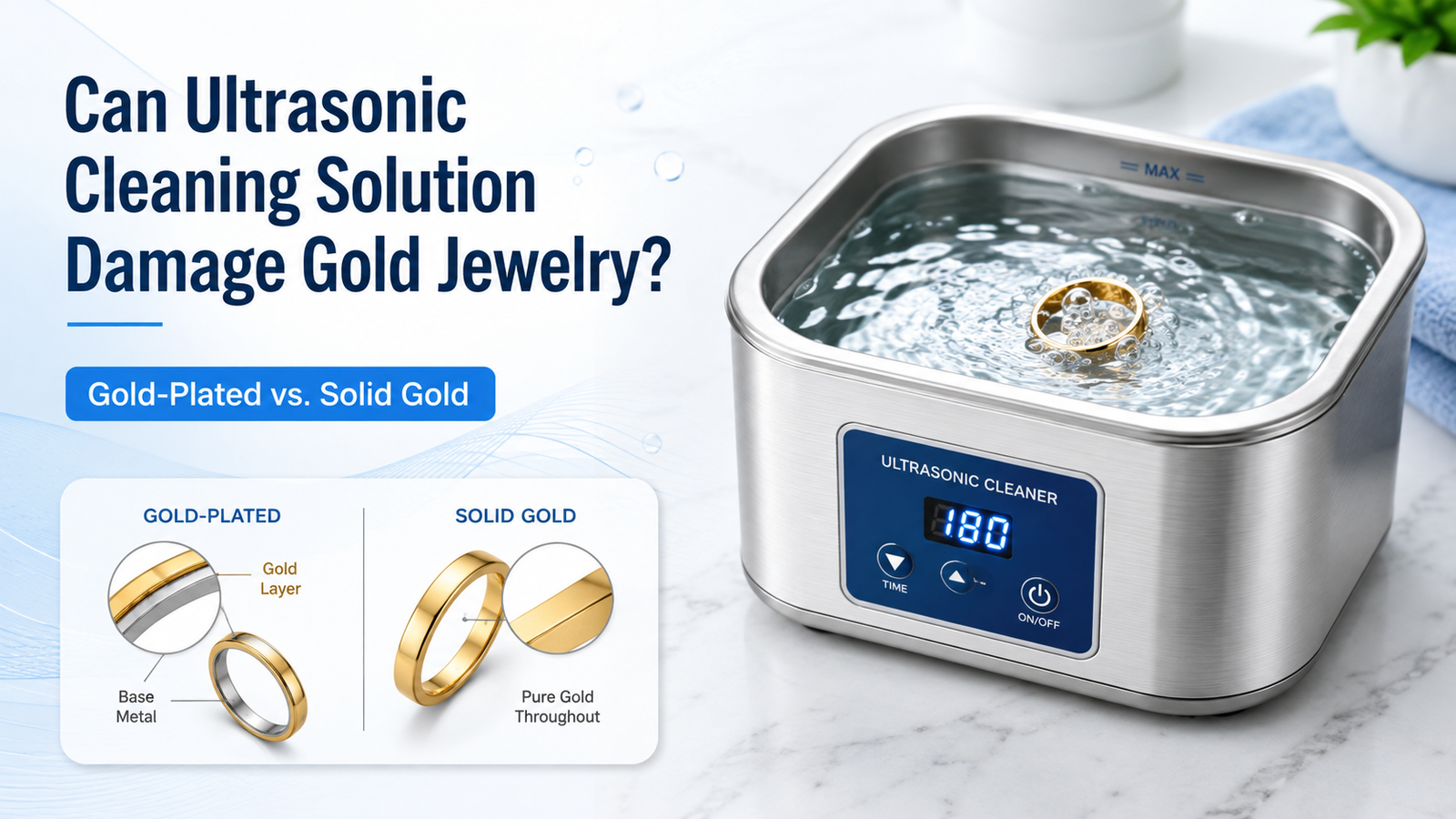
Solid Gold Jewelry
For normal jewelry:
- 14K gold
- 18K gold
- 24K gold
Solid gold itself is not usually the main concern; ultrasonic vibration can still affect settings, solder joints, surface finishes, or attached stones.
Gold is a stable metal and does not dissolve easily.
Gold-Plated Jewelry
Gold-plated jewelry is different.
The gold layer may only be:
- several microns thick
- deposited on another metal base
The ultrasonic cleaner itself normally does not “wash away” gold.
However, problems can occur when:
1. The coating is already damaged
Small cracks or worn areas allow cleaning chemicals to reach underneath.
2. Strong alkaline or acidic cleaners are used
Some jewelry cleaning solutions contain chemicals that may attack:
- plating layers
- adhesives
- protective coatings
3. Long cleaning cycles are used repeatedly
A thin decorative coating is not designed for aggressive cleaning.
Therefore:
A change in appearance can have several causes, including worn plating, residue becoming visible, pre-existing damage, or an incompatible cleaning method. Stop cleaning the item and ask a jeweler to inspect it if the change persists.
Can You Use an Ultrasonic Cleaner Without Detergent?
Yes.
In many situations, water-only cleaning is recommended.
Suitable for water-only cleaning:
Jewelry with unknown materials
If you are unsure whether an item is:
- plated
- coated
- glued
- treated
Start with:
- clean water
- short cleaning time
- low temperature
Daily items
Examples:
- glasses
- stainless steel items
- metal tools
- toothbrush heads
Water is often enough.
What Cleaning Solution Should Be Used for Different Products?
Different materials require different cleaning approaches.
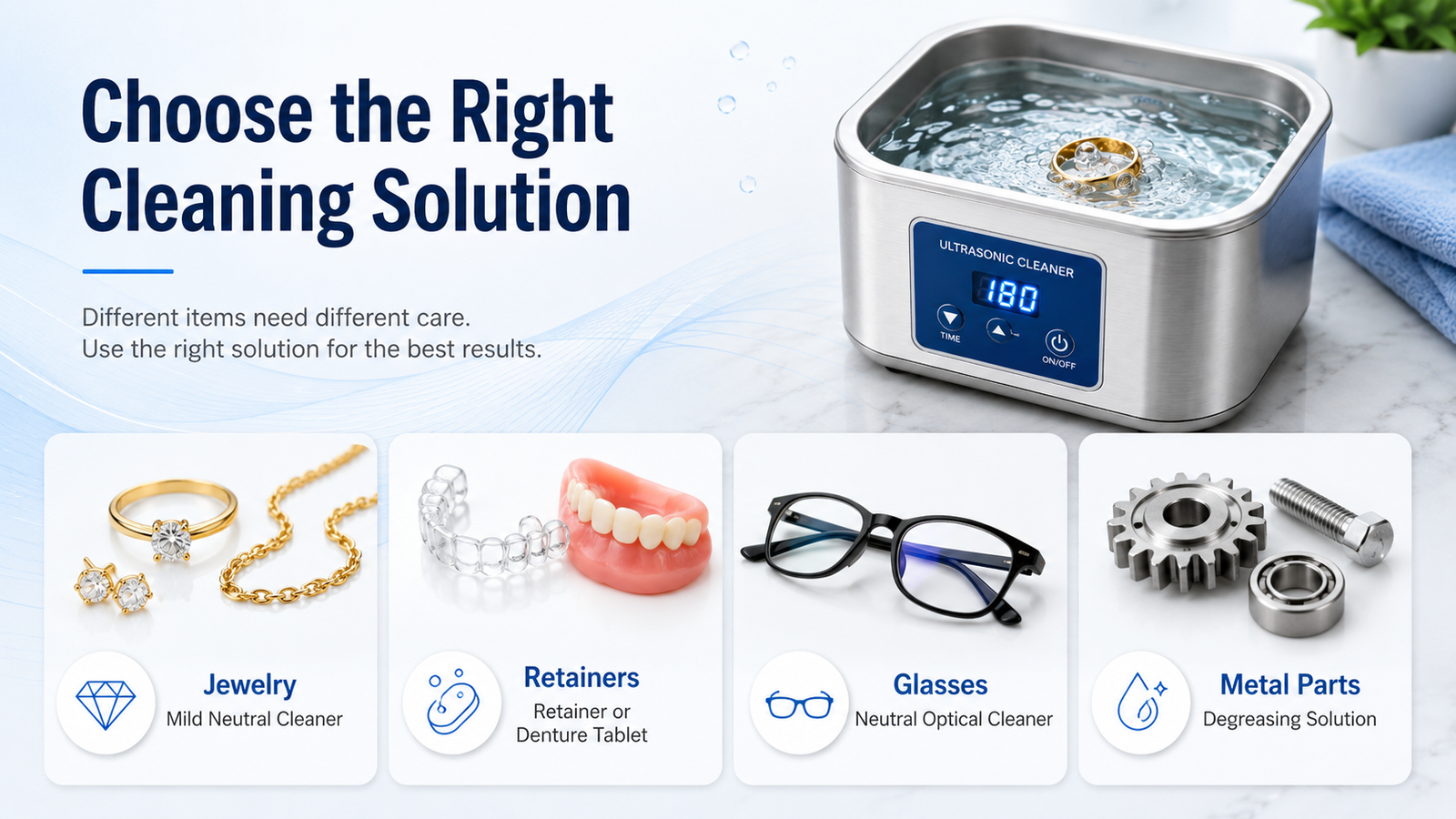
1. Jewelry
Suitable:
- mild neutral jewelry cleaner
- non-ammonia ultrasonic solution
Good for:
- solid gold
- platinum
- stainless steel jewelry
Avoid:
- strong alkaline cleaners
- acidic solutions
- unknown chemicals
Especially avoid aggressive solutions for:
- gold plating
- fashion jewelry
2. Dental Retainers and Aligners
Recommended:
- mild neutral cleaning tablets
- denture/retainer ultrasonic cleaning solutions
Purpose:
- remove protein deposits
- reduce odor
- may help loosen some deposits; follow the retainer manufacturer’s cleaning and disinfection instructions
Avoid:
- strong solvents
- high-temperature chemicals
For clear aligners, excessive heat may affect material properties.
3. Glasses and Optical Products
Recommended:
- neutral ultrasonic cleaning solution
Good for:
- lenses
- frames
- nose pads
Avoid:
- abrasive chemicals
- strong alcohol-based cleaners
4. Industrial Parts
Industrial cleaning usually requires stronger solutions.
Examples:
Oil contamination:
Use:
- alkaline degreasing solution
For:
- engine parts
- metal components
- machining parts
Precision components:
Use:
- low-residue cleaner
For:
- electronics
- optical parts
- sensors
5. Watches
Extra caution is required.
Suitable:
- watch-specific cleaning solutions
Avoid ultrasonic cleaning for:
- water-resistant watches with unknown condition
- watches with loose parts
- vintage watches
The Most Important Rule: Choose the Solution According to the Material
Many users make this mistake:
“A stronger cleaner means better cleaning.”
This is not always true.
The correct principle is:
The strongest cleaner is not always the best cleaner. The best cleaner is the one that matches the material.
A professional ultrasonic cleaning process combines:
- Frequency selection
- Cleaning temperature
- Cleaning time
- Cleaning solution
- Material compatibility
Conclusion: Is Ultrasonic Cleaning Safe for Gold?
Not necessarily.
Ultrasonic cleaning removes contamination, but vibration and cleaning chemistry can affect vulnerable components or coatings. Whether an item is suitable depends on its construction and the manufacturer’s guidance.
The problem usually comes from:
- gold plating instead of solid gold
- unsuitable cleaning chemicals
- excessive cleaning time
- damaged surface coatings
For valuable or unknown items:
Start with the safest method:
Water first. Mild solution second. Strong chemicals only when necessary.
Understanding how ultrasonic cleaning works helps you get powerful cleaning results without damaging valuable items.
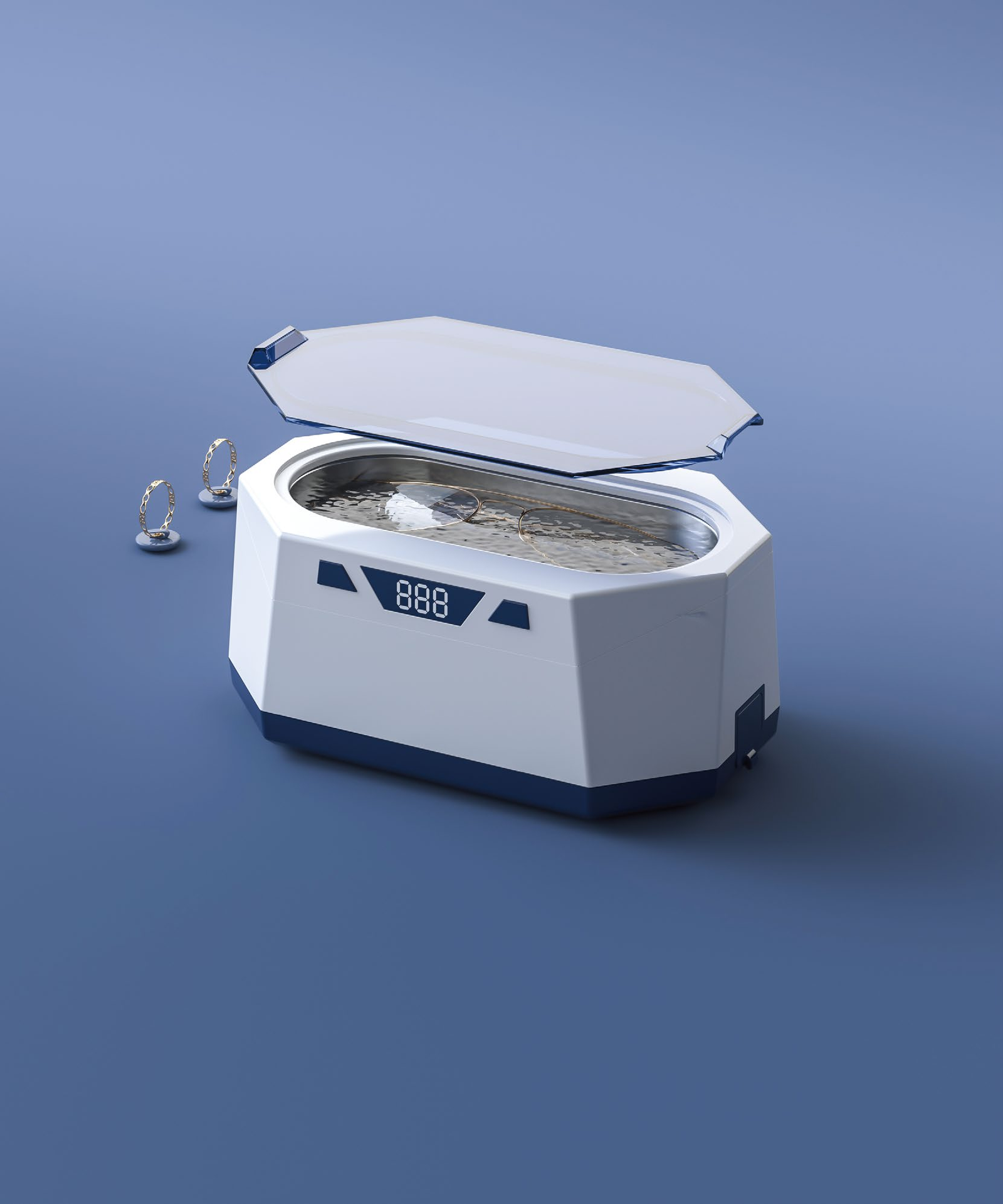
[…] on the item, contamination, solution, temperature, ultrasonic conditions and cycle. Read our ultrasonic cleaning solution guide before selecting […]
[…] or a compatible jewelry-cleaning solution in the concentration specified by its manufacturer. Our ultrasonic cleaning solution guide explains why chemistry must match both the item and the […]