
Ultrasonic Cleaner Foil Test: What Buyers Can (and Can’t) Learn
See what an ultrasonic cleaner foil test can show about cavitation, how to keep test conditions consistent, and why it cannot replace an application-specific cleaning test.

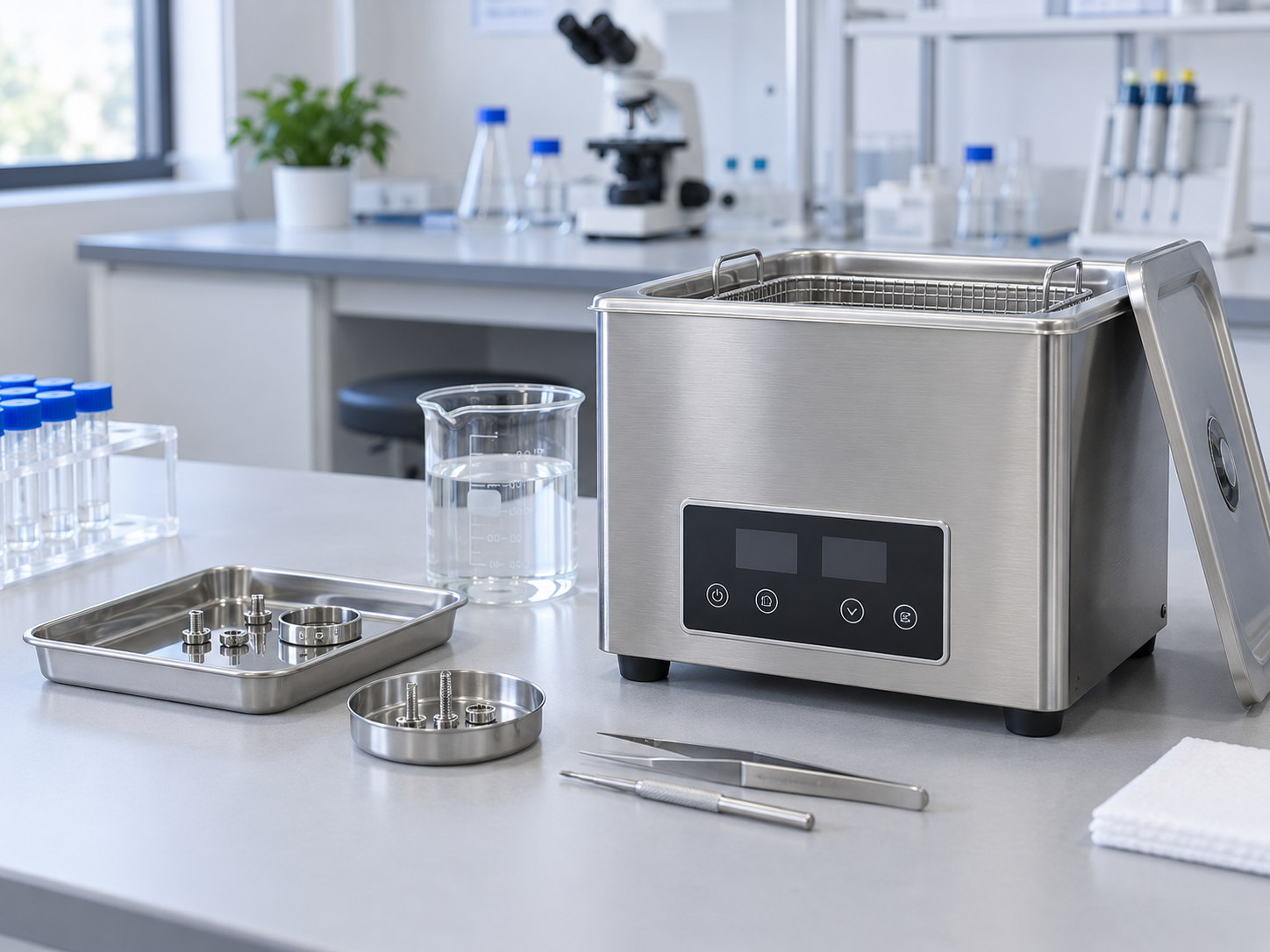
Quick answer: An ultrasonic cleaner foil test gives buyers a simple visual check of cavitation activity and how it is distributed in a bath. It is useful for comparing the same tank over time when test conditions stay consistent. It does not prove that a specific part is clean, that a process is validated, or that equipment disinfects or sterilizes.
What is an ultrasonic cleaner foil test?
A foil test suspends a sheet of thin aluminum foil in a filled ultrasonic bath for a controlled period. Cavitation activity can leave visible pinholes, pitting or erosion patterns. The pattern can help reveal whether ultrasonic activity is present and whether it appears uneven across the test area.
Equipment maker BANDELIN’s foil-test procedure describes the method as a way to display cavitation intensity and distribution. It recommends keeping variables consistent and archiving the foil with the test date and bath serial number. Treat this as a comparative function check and follow the procedure supplied with the machine you are evaluating.
Why should equipment buyers care?
A new ultrasonic cleaner may sound normal while its bath performs unevenly or changes over time. For a distributor, lab, workshop or production team, a documented baseline gives service staff and operators something concrete to compare during commissioning and routine checks.
The technical distinction matters: IEC TS 63001:2024 describes measuring and evaluating ultrasound in liquids used in cleaning devices. IEC also states that the method covers cavitation measurement and evaluation, not secondary effects such as cleaning results. A foil pattern is therefore not a substitute for testing the actual part, soil, chemistry and loading conditions.
How to make a foil test useful
Use the cleaner’s manual as the controlling instruction. Procedures differ by equipment and application, so do not copy a test duration, detergent or foil specification from another model without checking compatibility.
- Set a baseline on arrival. Record the model, serial number, date and bath condition before production use.
- Control the liquid. Use the specified fill level and an approved test liquid or wetting agent. Record concentration and temperature.
- Prepare the bath consistently. Degas when the manual calls for it. Use the same preparation method for later comparisons.
- Keep the foil setup fixed. Use the same foil type and thickness, frame, position, immersion depth and exposure time each time.
- Document the result. Photograph or retain the foil, and note any changes in the test conditions or pattern.
- Clean the tank afterward. Follow the manual’s instructions for removing foil fragments and disposing of the test liquid.
BANDELIN’s manual, for example, lists fill level, liquid temperature, degassing time, frame position, foil type, exposure time and test agent as conditions to hold constant for reproducible comparisons. Its instructions are specific to its equipment; use your own supplier’s procedure for other cleaners.
What a foil test cannot tell you
- Whether your part’s geometry, surface or hidden channels will be cleaned adequately.
- Whether the selected detergent, concentration, temperature and cycle remove your actual soil.
- Whether a process meets a regulatory or customer validation requirement.
- Whether an ultrasonic cleaner disinfects or sterilizes an item.
For a real purchase decision, pair the foil check with a representative cleaning trial. Provide the supplier with the part material and dimensions, contaminant, basket or fixture, solution, target throughput and acceptance criteria. In healthcare settings, follow the device and instrument manufacturers’ reprocessing instructions and applicable infection-control requirements; the CDC guidance treats cleaning and sterilization/disinfection as separate steps.
Questions to ask an ultrasonic cleaner supplier
- Can you provide a written commissioning or cavitation-check procedure for this model?
- What fill level, liquid, degassing steps and test accessories does the procedure require?
- How should we document the baseline so later checks are comparable?
- Can you run a sample test using our actual part and soil, and provide the test conditions?
- Which service steps are recommended if the pattern changes or becomes uneven?
Explore a commercial ultrasonic cleaner
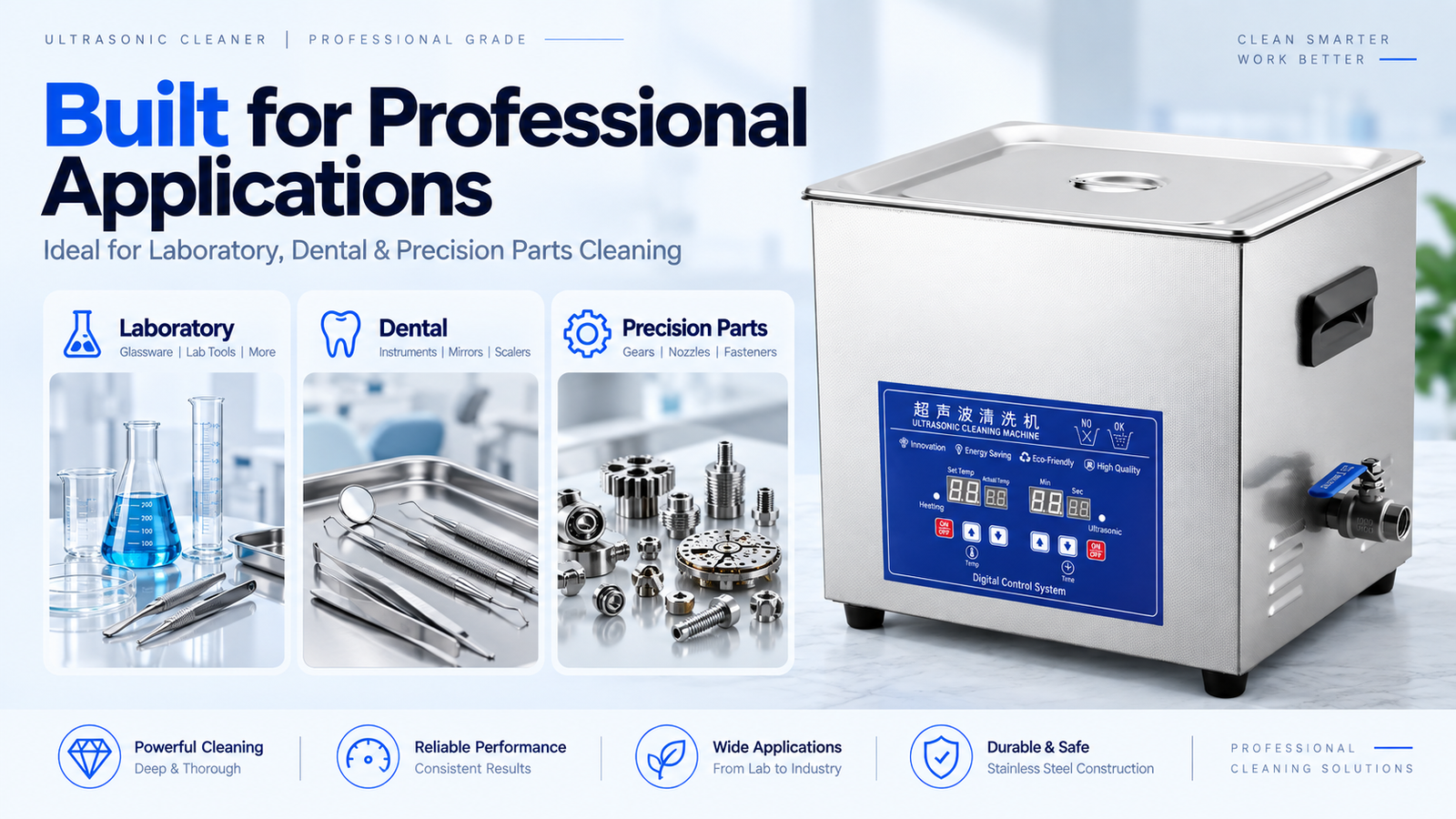
Review the SONICLEANTECH 15L 40kHz commercial ultrasonic cleaner for a benchtop application, or read our heated versus no-heating buyer guide to compare process requirements. For a sample cleaning trial or quotation, contact SONICLEANTECH with your part details and acceptance criteria.
Frequently asked questions
Does a foil test prove that a part is clean?
No. It indicates cavitation activity under the test setup. A representative cleaning trial is needed to assess the actual part, soil and process.
Can I compare two different ultrasonic cleaners by comparing their foil patterns?
Only with care. Differences in foil, liquid, temperature, fill level, degassing, placement and exposure time can change the pattern. Follow each manufacturer’s procedure and use application-specific performance tests for equipment selection.
How often should I run the test?
There is no single interval for every application. Follow the equipment maker’s instructions and set a schedule based on use, process risk and your quality system. Recheck after installation or service and when performance changes are suspected.
Does an ultrasonic cleaner sterilize dental instruments?
A foil test cannot establish sterilization. Follow the relevant instrument instructions and local infection-control requirements for cleaning, disinfection and sterilization.
[…] test report that describes the conditions and outcome. For a quick check of bath activity, see our guide to the ultrasonic cleaner foil test; it does not replace an application-specific cleaning […]
[…] indication of cavitation distribution, not as proof that a retainer or denture is clean. Our ultrasonic cleaner foil-test guide explains what this check can and cannot […]