
How to Choose an Ultrasonic Cleaner Basket Size: A Commercial Buyer’s Guide
Choose an ultrasonic cleaner by usable basket dimensions, part size and loading method—not nominal tank litres alone. A practical sizing checklist for 1–20L commercial buyers.

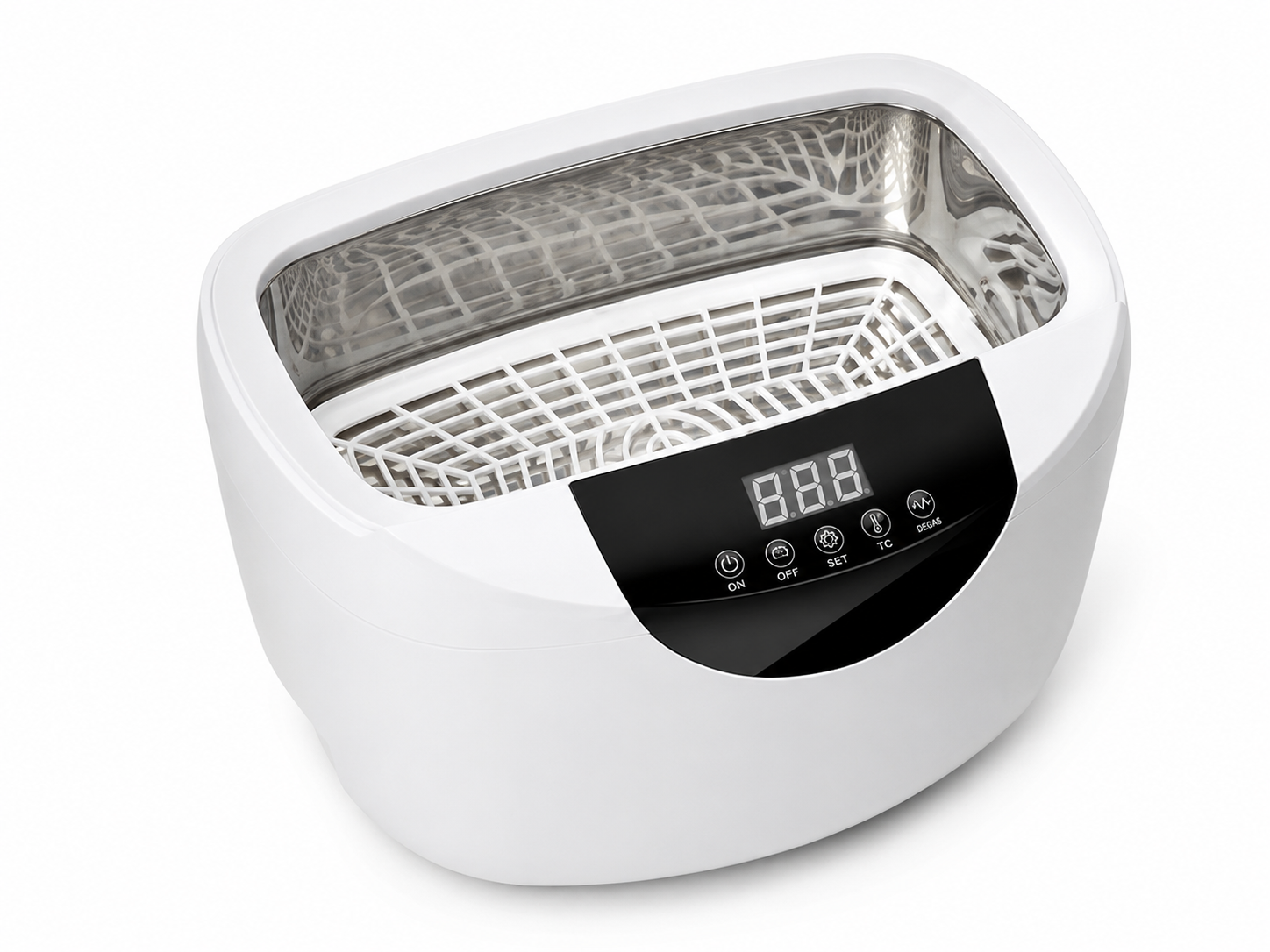
Quick answer: Choose an ultrasonic cleaner by the usable space inside its cleaning basket and the largest part or fixture you need to clean—not by the tank’s nominal litre rating alone. Check the part envelope, basket dimensions, immersion depth, load spacing and room for cleaning solution to circulate before selecting a 1–20L commercial or laboratory cleaner.
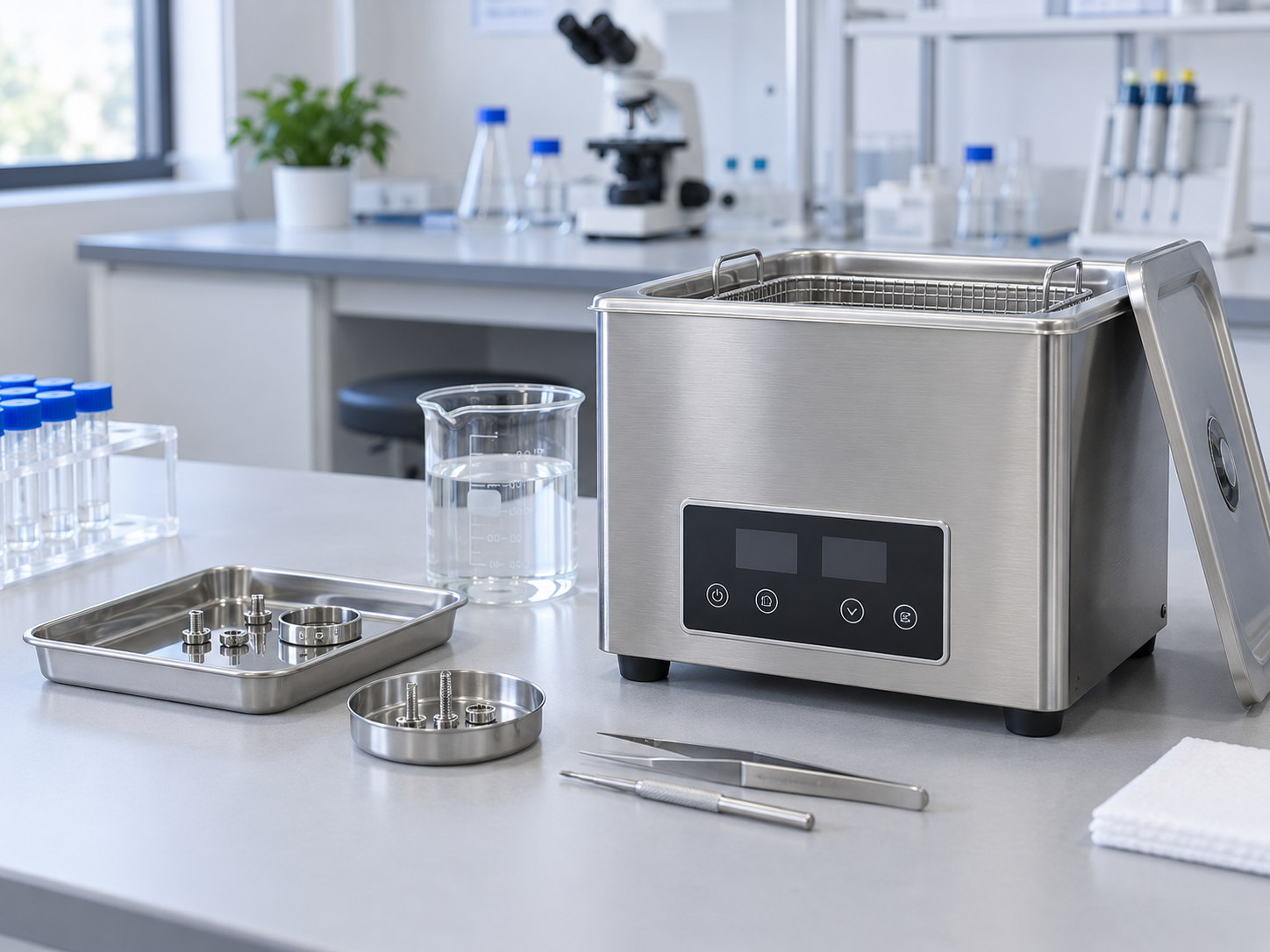
Why nominal tank capacity is not the same as usable load capacity
A cleaner described as 15L refers to its nominal tank capacity. It does not mean a basket can hold 15 litres of parts, or that a part measuring close to the tank’s inside dimensions will fit safely. The basket, liquid level, part shape and required clearance all affect the usable working space.
For example, SONICLEANTECH’s 15L commercial ultrasonic cleaner lists an inner tank size of 330 × 300 × 150 mm and includes a stainless steel basket. Buyers should still request the basket’s internal dimensions and any load limit before confirming that a particular component or fixture fits.
A five-point sizing checklist for buyers
1. Measure the largest part and its fixture
Measure length, width and height in the orientation used during cleaning. Include clips, holders, manifolds or other fixtures that will go into the basket. Check that the complete assembly can be lowered through the tank opening and remain below the liquid surface.
2. Ask for the basket’s internal dimensions
Request the usable length, width and depth of the basket—not only the tank’s external dimensions or stated litre capacity. Confirm whether the part can be loaded in its intended orientation without pressing against the basket walls or interfering with the lid.
3. Plan the load so liquid can reach the surfaces
Estimate the number of parts per batch, then confirm how they will be arranged. Do not plan to stack parts tightly just to reach a target quantity. Elma’s operating manual instructs users to avoid overfilling the basket and arrange items so fluid can circulate around them. Actual spacing and loading limits depend on the parts, basket and equipment.
4. Confirm immersion and liquid level
Parts that need cleaning must be covered by the cleaning liquid as directed by the equipment and process instructions. Remember that placing a loaded basket displaces liquid. Elma warns that a full tank can overflow when a basket is inserted; its manual describes adding the remaining liquid after the basket is in place when needed. Follow the instructions for the specific cleaner you are buying.
5. Keep parts off the tank bottom
Use the proper basket or fixture rather than placing work directly on the tank floor. BANDELIN explains that direct contact can damage both the part and the vibrating tank surface, and that objects can obstruct ultrasound when placed on the bottom. Verify that the supplied basket supports your load safely.
What to send a supplier before requesting a quote
- Largest part dimensions and material, including any fixture or holder.
- Typical and maximum number of parts per batch.
- Soil or residue to remove and any cleaning solution already specified by your process.
- Required basket dimensions, immersion depth and loading method.
- Available bench space, drain needs, heating requirements and power supply.
- Your acceptance criteria or sample-cleaning test requirements.
Ask the supplier to confirm the basket’s internal dimensions, usable depth, liquid fill guidance and recommended loading arrangement in writing. If possible, provide a representative part for a sample test; tank size alone cannot confirm that a cleaning process will meet your application requirements.
Frequently asked questions
Does a 15L ultrasonic cleaner hold 15L of parts?
No. The litre rating describes nominal tank capacity, not the volume or weight of parts the basket can hold. Basket size, liquid displacement and the way parts must be arranged determine a practical load.
Can parts touch each other in the basket?
There is no single spacing rule for every part and process. Ask the equipment supplier how the parts should be positioned, and avoid a packed load that blocks liquid circulation or prevents the required surfaces from being exposed.
Can I put parts directly on the bottom of the tank?
Use the supplied basket or an approved fixture. Follow the cleaner manufacturer’s instructions; some manufacturers warn that parts resting on the tank bottom can cause damage or interfere with operation.
How do I know whether a 1–20L cleaner is large enough?
Compare your complete part-and-fixture envelope with the basket’s internal dimensions, then confirm immersion, spacing and batch quantity with the supplier. A sample trial is the best next step when fit or cleaning performance is uncertain.
Choose a cleaner around your real workload
Review the specifications for our 15L 40kHz commercial ultrasonic cleaner, or contact SONICLEANTECH with your part dimensions, batch quantity and application. We can help you confirm which tank and basket configuration to evaluate.
Summary: Size a commercial ultrasonic cleaner around the largest loaded basket—not the litre number. Confirm basket dimensions, load layout, liquid circulation and immersion with the supplier before ordering.
Sources: Elma Elmasonic Easy operating manual; BANDELIN: Why do I need a basket in the ultrasonic bath?.
[…] tank sizing, also review our ultrasonic cleaner basket-size guide. Nominal litres do not tell you the usable basket dimensions or whether parts can be spaced […]