
Why Are Heated Ultrasonic Retainer Cleaners Rare In Market?

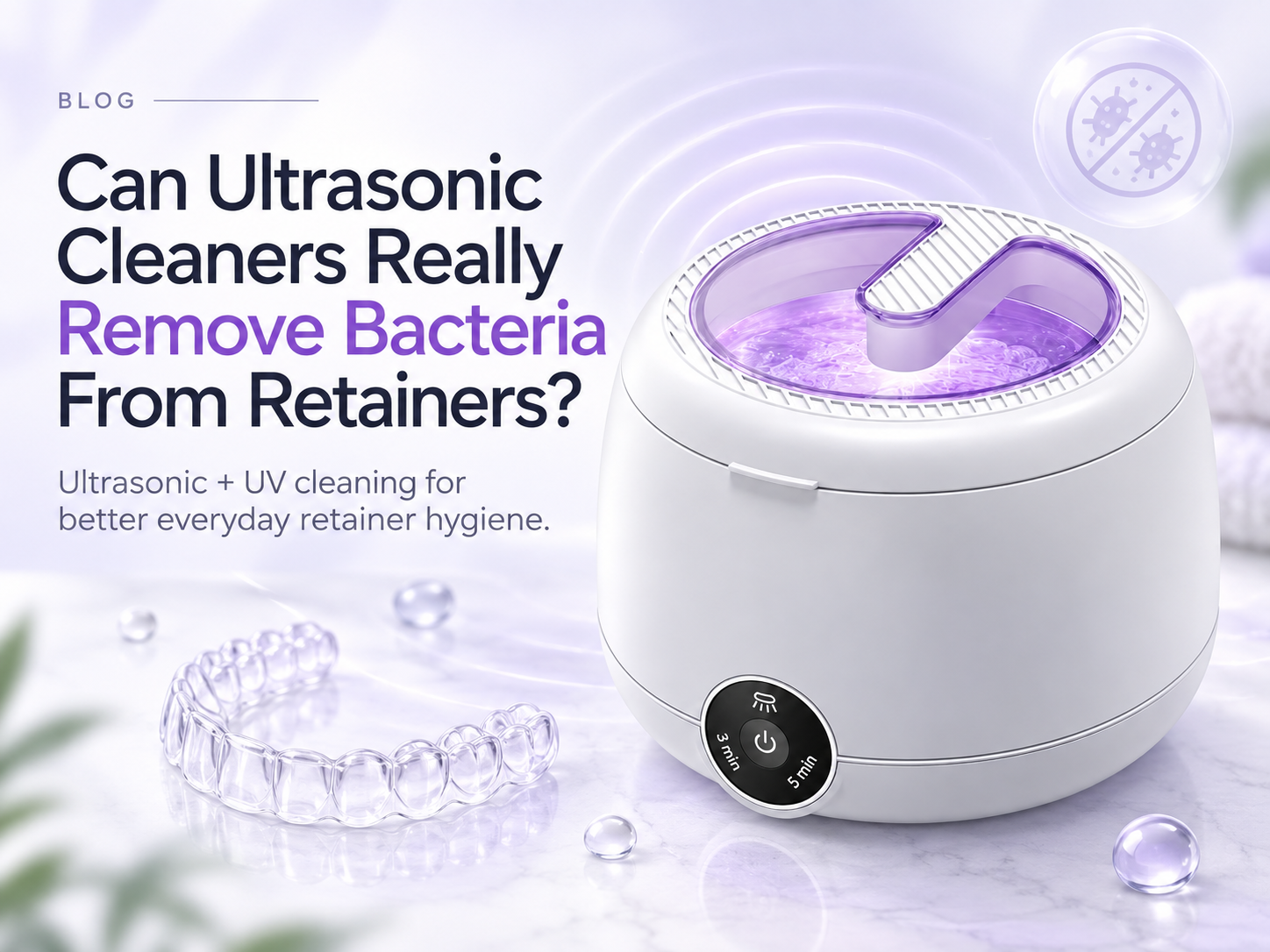
Search online for a commercial ultrasonic cleaner, and you will find many models with adjustable heating. Search for a compact cleaner designed specifically for retainers and clear aligners, however, and most products offer only ultrasonic vibration, a timer, and sometimes UV or LED light.
This raises an obvious question:
Why can larger commercial ultrasonic cleaners include heating, while small aligner cleaners rarely do?
The answer is not that heating is physically impossible in a compact machine. Small heated cleaners already exist. The real issue is that compact products combine tighter space, higher power density, stricter material-safety requirements, and greater consumer-product risks.
At the same time, most conventional retainers do not actually require a high-temperature cleaning cycle. Natural warming during ultrasonic operation is often sufficient for ordinary daily cleaning.
This may begin to change as directly 3D-printed shape-memory aligners become more common.
Why Do Most Small Retainer Cleaners Not Include Heating?
The typical household retainer cleaner is designed around a short and simple cleaning cycle.
It usually contains:
- A small stainless-steel tank
- One compact piezoelectric transducer
- A low-power ultrasonic driver
- A timer
- A lightweight power adapter
- A plastic housing
Many models operate at approximately 40–45kHz and use total power levels far below those of professional heated systems.
Adding active heating requires much more than placing a heating film under the tank. The machine may also need:
- A temperature sensor
- A heater-control circuit
- Overtemperature protection
- Dry-run protection
- More powerful wiring and connectors
- A larger power adapter
- Heat-resistant insulation
- Material-specific operating instructions
- Additional safety and lifetime testing
For a low-cost consumer cleaner, these additions increase development cost, certification difficulty and failure risk.
More importantly, manufacturers must answer a difficult question:
Which retainers are actually safe at the selected temperature?
If the machine heats every appliance to 50°C or 60°C, it may be suitable for one specialized material but unsafe for another.
Why Heating Is Easier in a Commercial Ultrasonic Cleaner
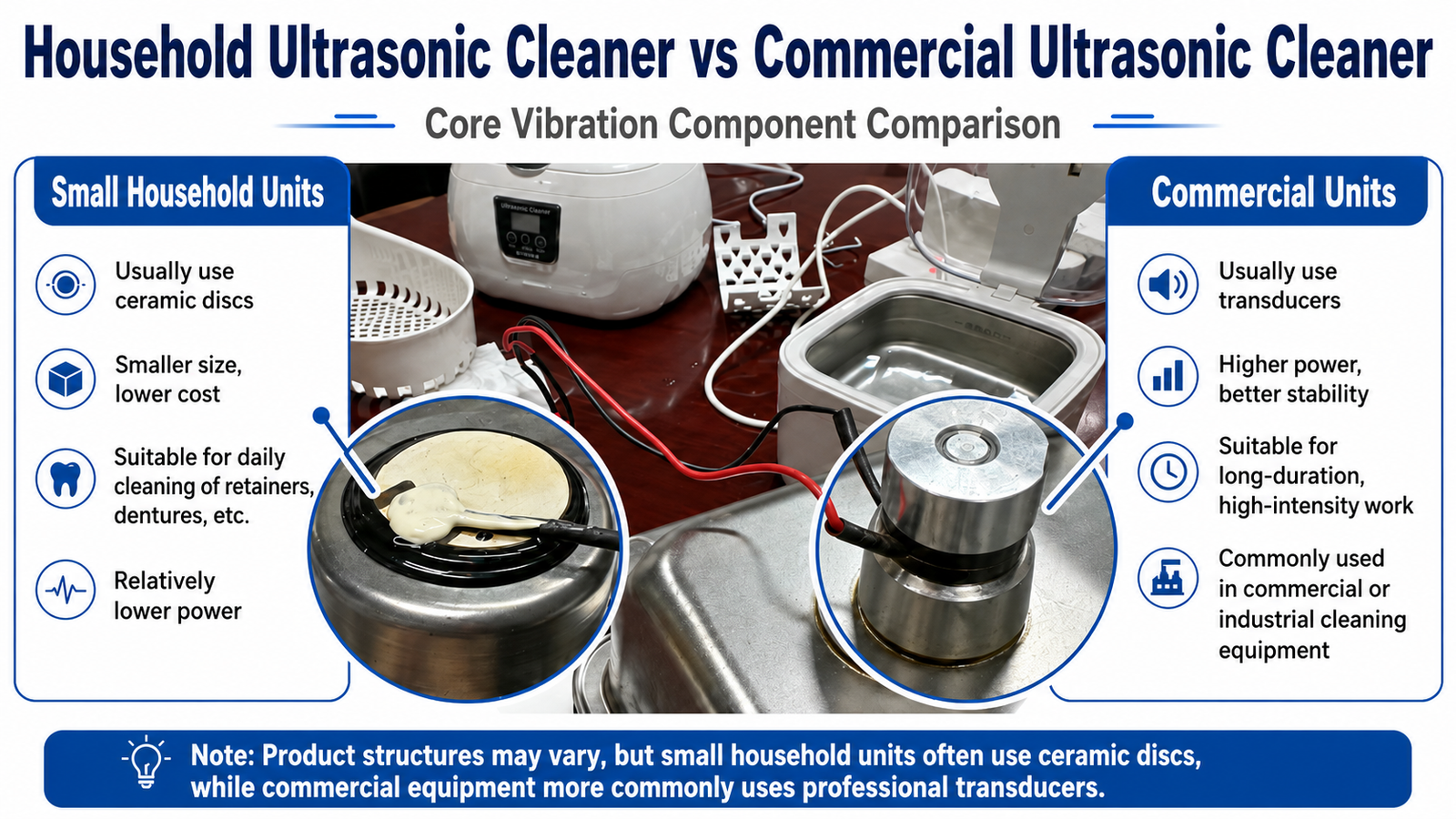
Commercial ultrasonic cleaners are usually larger, heavier and less constrained by appearance.
A typical benchtop machine may have enough internal space to separate:
- The ultrasonic transducer
- The heating element
- The control board
- The fan
- The temperature sensor
- The power components
The larger tank also provides more surface area for arranging heaters away from the transducer.
For example, a commercial unit may specify 65W of ultrasonic power and an additional 100W heater. The quoted 65W is not necessarily the complete input power; it may describe only the ultrasonic section.
Commercial machines can also allow a long preheating period. A 2.5L tank with a 100W heater may take tens of minutes to approach a high temperature. That is acceptable in a workshop or laboratory where the operator can preheat the bath before cleaning.
A compact aligner cleaner is expected to behave differently:
- It should fit on a bathroom counter.
- It should use one-button operation.
- It should finish within several minutes.
- It should remain safe when used by non-technical consumers.
- Its outer surface should not become dangerously hot.
- It should not damage an unknown dental appliance.
These expectations make the small machine much harder to engineer.
A Small Tank Is Easier to Heat—but Harder to Protect
Small water volume is an advantage for heating speed.
Heating approximately 180–200mL of water requires much less energy than heating 2.5L. This is why a compact machine can theoretically reach around 60°C within a short program when equipped with sufficient heater power.
However, the same compact size creates a high concentration of components:
- Heater
- Ultrasonic ceramic
- Adhesive layer
- Sensor
- Driver board
- Wiring
- Plastic shell
If the heating element is positioned too close to the transducer, the water may measure 60°C while the heater surface or adhesive joint becomes significantly hotter.
This can accelerate:
- Adhesive softening
- Transducer delamination
- Electrode fatigue
- Solder-joint failure
- Plastic deformation
- Resonance drift
- Internal overheating
The ceramic itself is not necessarily the first part to fail. In many designs, the bond between the ceramic and stainless-steel tank is more vulnerable to repeated heat and vibration.
Why Ultrasonic Operation Already Warms the Water
An ultrasonic cleaner is not perfectly efficient.
Some electrical energy becomes useful acoustic vibration and cavitation, while some becomes heat through:
- Transducer losses
- Tank vibration
- Liquid friction
- Cavitation
- Driver-board losses
- Mechanical damping in the adhesive layer
Temperature rise is even used as one method of evaluating acoustic power in ultrasonic baths.
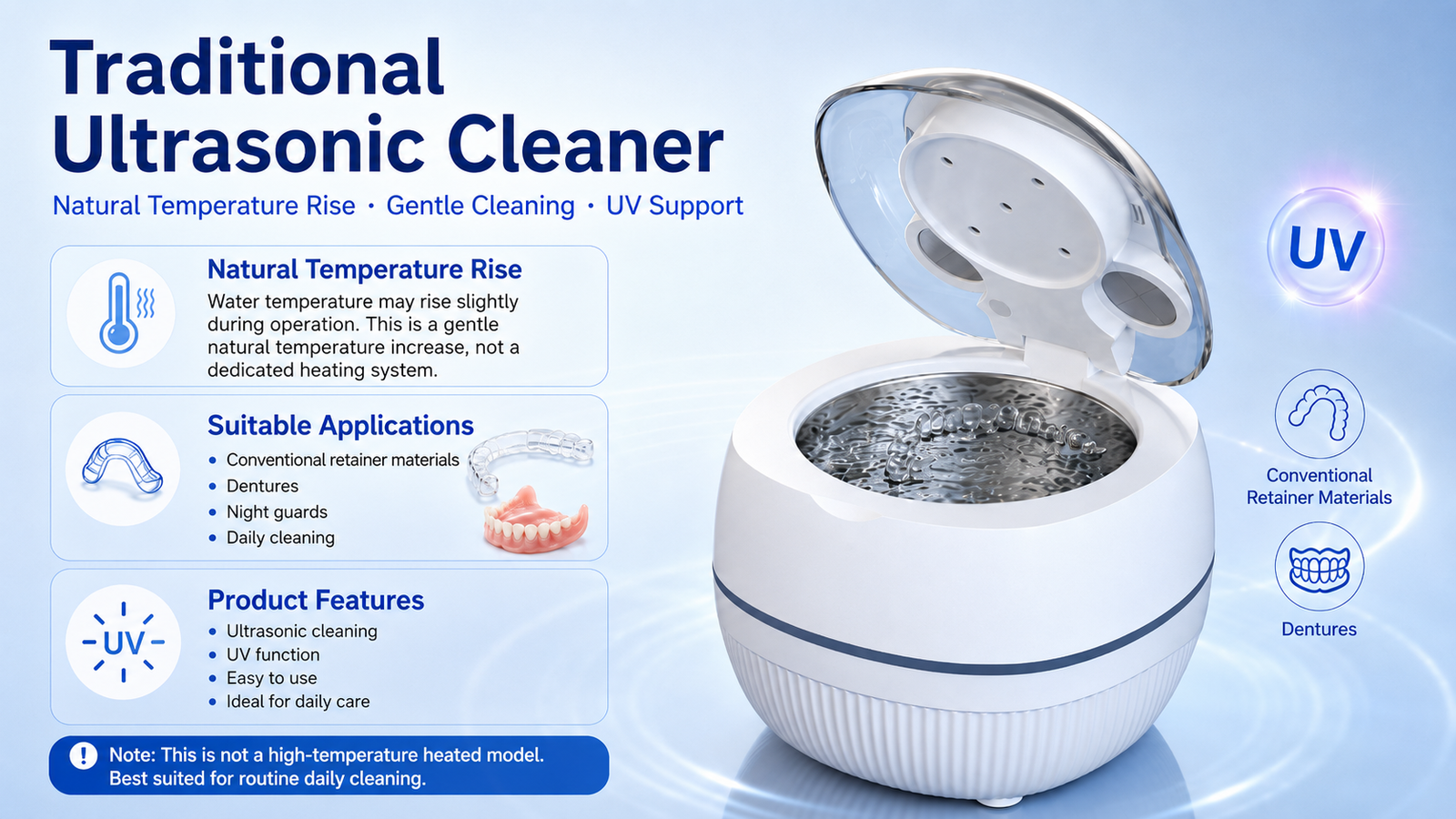
This means that a standard household cleaner may naturally make the water slightly warmer during operation, even without a dedicated heater.
For routine cleaning, that mild temperature increase may already help:
- Dissolve cleaning tablets
- Reduce liquid viscosity
- Soften fresh deposits
- Improve detergent performance
Most daily aligner cleaning does not require the water to reach 60°C. A short ultrasonic cycle in room-temperature or mildly warm water is often the more conservative choice for conventional appliances.
That is one reason active heating has not become standard in this product category.
Not Every Aligner Should Be Heated
The phrase “clear aligner” includes many materials.
Conventional aligners and retainers may use:
- PETG
- TPU
- Polyurethane
- Copolyester
- Multilayer thermoformed films
- Acrylic or mixed-material structures
These products can respond differently to heat. Excessive temperature or repeated heating may contribute to:
- Warping
- Edge deformation
- Loss of fit
- Changes in retention
- Layer separation
- Altered orthodontic force
Even “3D printed” does not automatically mean heat compatible.
Direct printing only describes the manufacturing process. A printed dental resin may be biocompatible without being engineered for thermal recovery.
Therefore, a high-temperature cleaning program should never be marketed as suitable for every:
- Aligner
- Retainer
- Night guard
- Denture
- Mouth guard
- Printed dental appliance
For unknown materials, non-heated ultrasonic cleaning remains the safer default.
Why 3D-Printed Shape-Memory Aligners May Change Demand
A new use case is emerging: direct-printed aligners made from thermally responsive polymers.
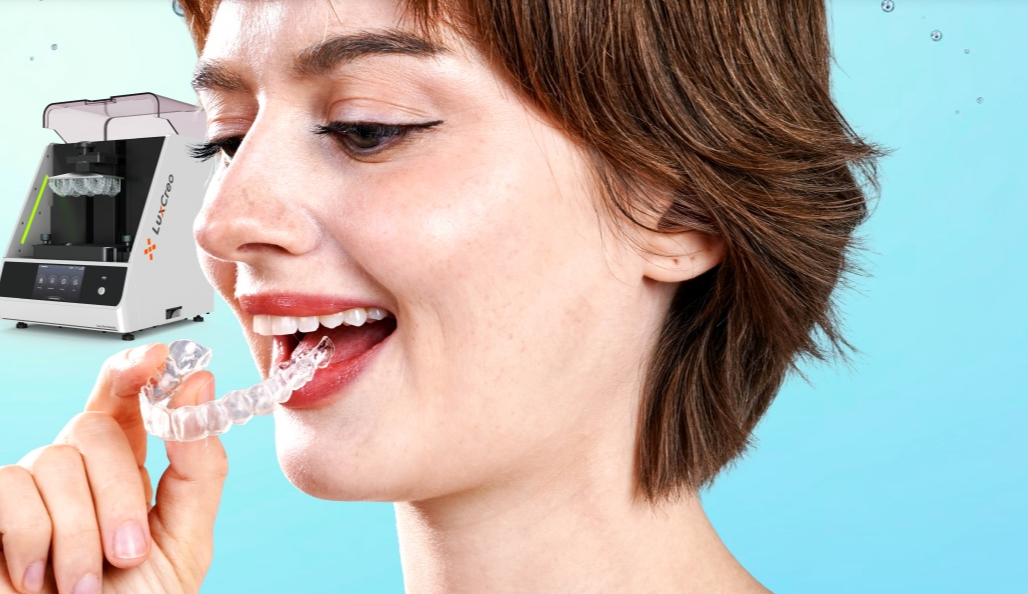
LuxCreo, for example, markets ActiveMemory™ Polymer as a direct-print resin system that can restore geometry and force after thermal activation. Its official material information describes thermal restoration above approximately 60°C.
This changes the purpose of heating.
In a conventional ultrasonic cleaner, heat mainly supports detergent action.
In a shape-memory aligner system, heat may also:
- Activate molecular mobility
- Restore programmed geometry
- Recover part of the original force profile
- Reverse minor deformation
- Support a manufacturer-defined care procedure
The heated cleaner therefore becomes more than a cleaning appliance. It becomes part of the material-management system.
As direct-printed aligners expand, demand may grow for compact machines offering:
- Controlled 40°C, 50°C and 60°C modes
- Material-specific programs
- Accurate temperature sensing
- Ultrasonic and heating sequence control
- Shape-memory recovery cycles
However, high-temperature settings should remain restricted to materials whose manufacturers have validated them.
How Manufacturers Can Overcome the Compact-Design Challenge
1. Separate the heater and transducer
The heater should not be placed directly over or immediately beside the ultrasonic ceramic.
A better layout may use:
- A central transducer
- A ring-shaped heater around the tank perimeter
- A flexible heater on the lower sidewall
- A non-heated separation zone
This reduces direct thermal stress on the ceramic and adhesive.
2. Monitor more than the water temperature
A compact heated cleaner should ideally monitor:
- Tank or water temperature
- Transducer-area temperature
One sensor may show that the water is 60°C while missing a much hotter localized area underneath the tank.
The control system should reduce power or stop operation if the transducer region overheats.
3. Use staged operation
The heater and ultrasonics do not need to run at maximum power for the entire cycle.
A better sequence may be:
- Begin ultrasonic cleaning at a lower temperature.
- Add controlled heating gradually.
- Reduce or pulse ultrasonic power during rapid heating.
- Hold the required material temperature briefly.
- Shut down automatically.
This protects the power supply, adhesive, transducer and plastic housing.
4. Compensate for resonance changes
Temperature can change the mechanical behavior of the tank, adhesive and transducer.
If the driver remains fixed while resonance shifts, the cleaner may experience:
- Lower cavitation efficiency
- Higher current
- More self-heating
- Unstable cleaning performance
Frequency scanning, current sensing or limited automatic frequency tracking can improve stability.
5. Upgrade the bonding system
A high-quality ceramic is not enough if it is attached with unsuitable adhesive.
The bonding process should include:
- Proper stainless-steel surface preparation
- Controlled adhesive thickness
- Removal of air bubbles
- Defined curing pressure
- Correct curing temperature and time
- Post-bond impedance testing
The adhesive should resist heat, vibration, moisture and repeated thermal cycling.
6. Use a suitable power architecture
A compact 150–180W machine can draw very high current at 12V.
A 24V architecture may reduce:
- Cable current
- Connector heating
- PCB trace loss
- Voltage drop
- MOSFET stress
The final choice depends on certification, heater design and component availability, but high-current 12V systems require especially careful engineering.
7. Provide material-specific modes
A future multi-purpose aligner cleaner should not use one temperature for every appliance.
A practical interface might offer:
| Mode | Intended application |
|---|---|
| Standard ultrasonic | Unknown materials and routine cleaning |
| Gentle warm | Approved heat-compatible appliances |
| Shape-memory warm | Materials validated for moderate heat |
| Thermal recovery | Specific systems validated around 60°C |
Clear warnings are as important as the heater itself.
Why Heated Compact Models May Become More Common
Heated retainer cleaners have not been widely adopted because the existing market has not strongly required them.
For conventional retainers:
- Mild ultrasonic warming is often enough.
- High heat can create compatibility concerns.
- Consumers prefer simple one-button products.
- Manufacturers compete heavily on price.
- Adding heating increases engineering and warranty risk.
Direct-printed shape-memory aligners create a clearer reason to pay for controlled heating.
As these materials gain adoption, the compact cleaner may evolve from a basic hygiene device into a material-specific dental-care platform.
That future is likely to include:
- Better thermal control
- Selectable programs
- Smarter material guidance
- Higher-power compact adapters
- Improved transducer protection
- Verified compatibility with specific aligner systems
Conclusion
Small heated ultrasonic aligner cleaners are rare not because compact heating is impossible, but because the technical and commercial trade-offs are difficult.
Compared with commercial machines, compact products have:
- Less space for thermal separation
- Higher power density
- Greater consumer-safety requirements
- More sensitive plastic housings
- Higher material-compatibility risk
- Stronger price pressure
For most conventional aligners and retainers, controlled high-temperature cleaning is unnecessary. Natural ultrasonic warming and a suitable cleaning tablet are often sufficient for routine care.
The market may change as direct-printed shape-memory aligners expand. These materials can create a genuine need for controlled thermal recovery, making heated ultrasonic cleaners more useful and commercially relevant.
The best future product will not simply offer the highest temperature. It will combine reliable ultrasonic cleaning, accurate temperature control, transducer protection and clear material-specific programs.
Heating should be introduced because the dental material requires it—not simply because the machine can provide it.
Disclaimer: This article provides general technical information. Cleaning temperature and care procedures should always follow instructions from the aligner manufacturer, resin supplier, dentist or orthodontist.
For more information, please visit our official website: www.sonicleantech.com
[…] This is also why compact dental cleaners are commonly used without a heater. For related background, see why heated ultrasonic retainer cleaners are uncommon. […]