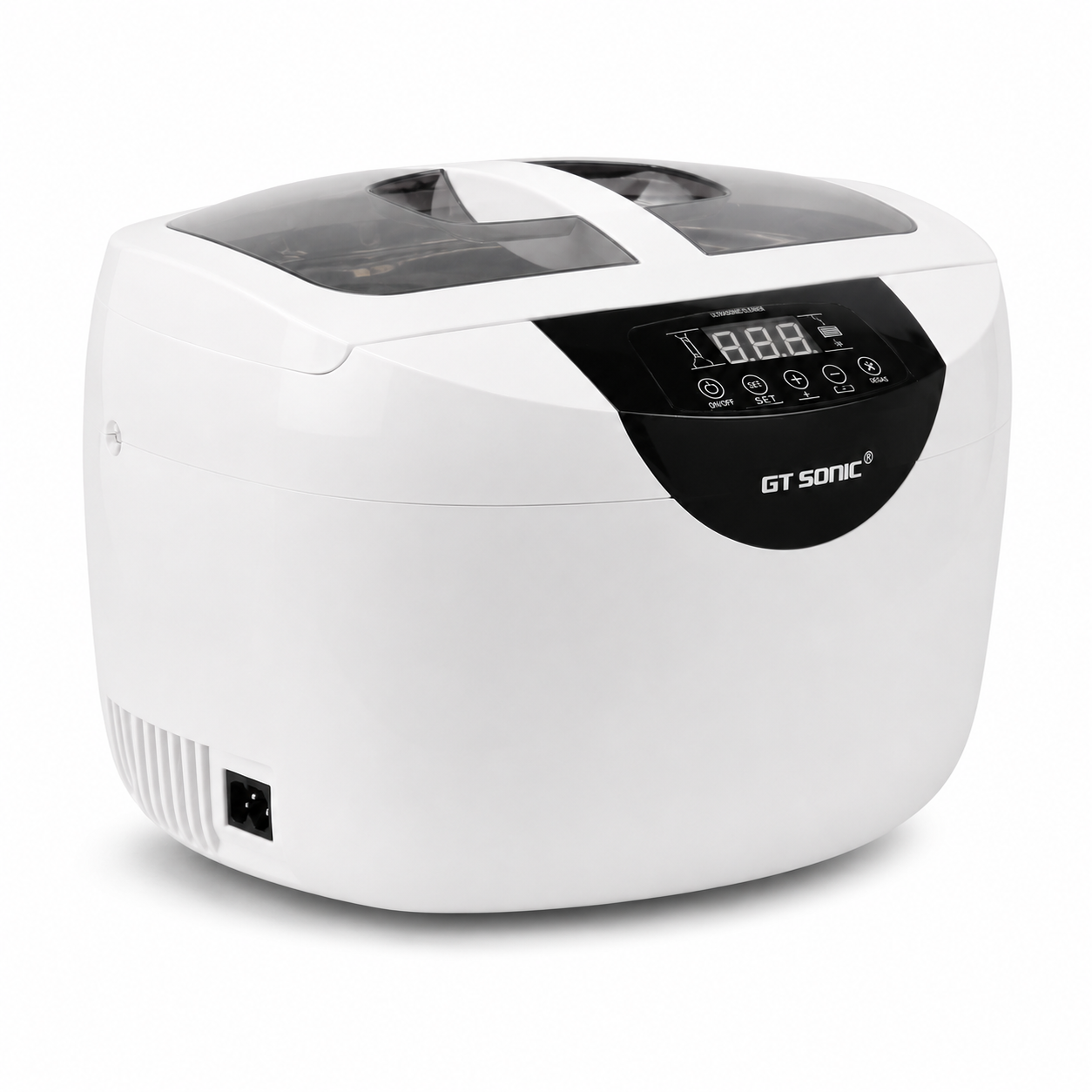
Can You Use a Heated Ultrasonic Cleaner for 3D-Printed Aligners? Temperature & Safety Guide

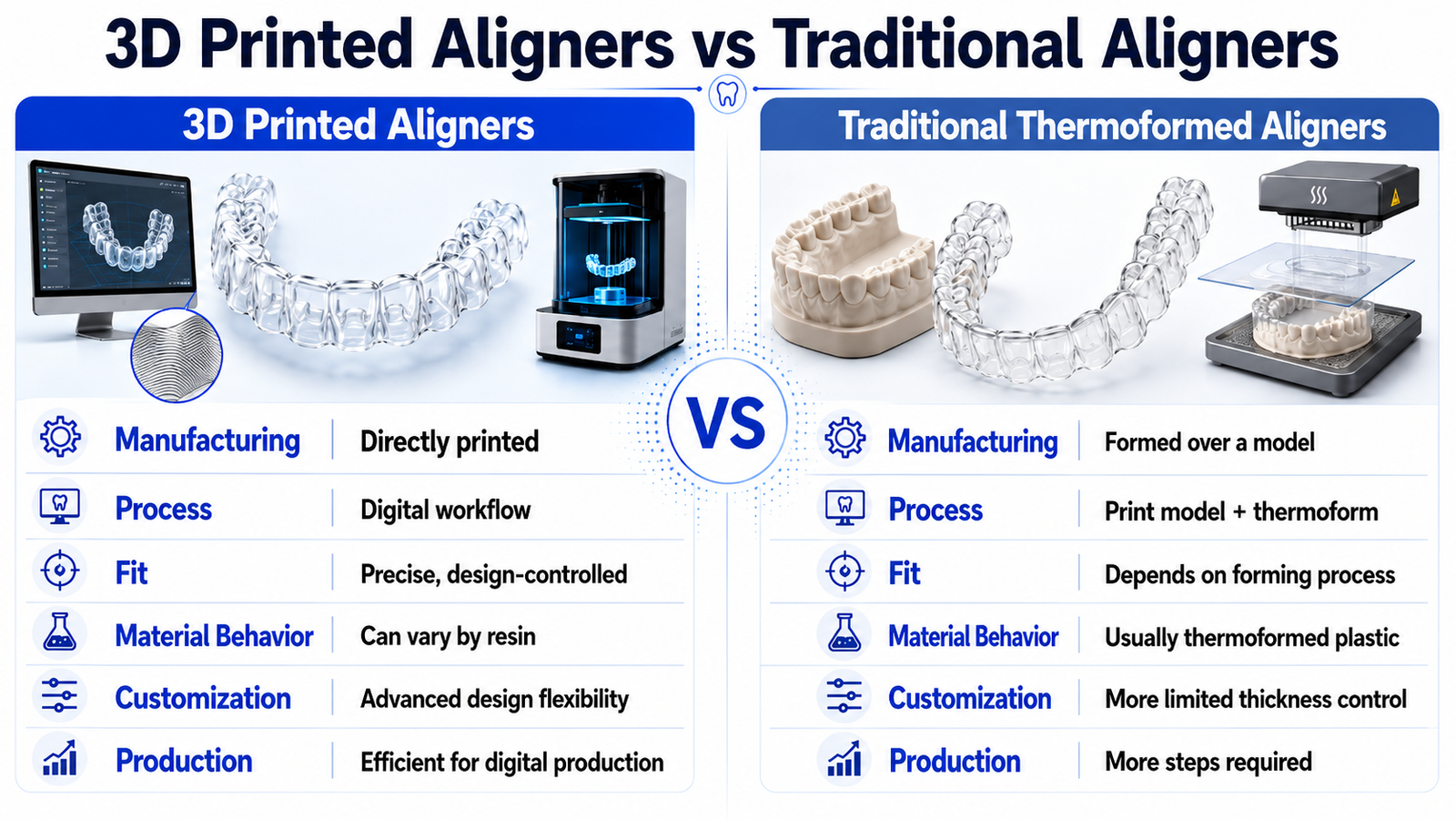
Direct 3D printing is changing how clear aligners are manufactured. Instead of printing a dental model and thermoforming a plastic sheet over it, manufacturers can now print the aligner itself using specialized dental resins.
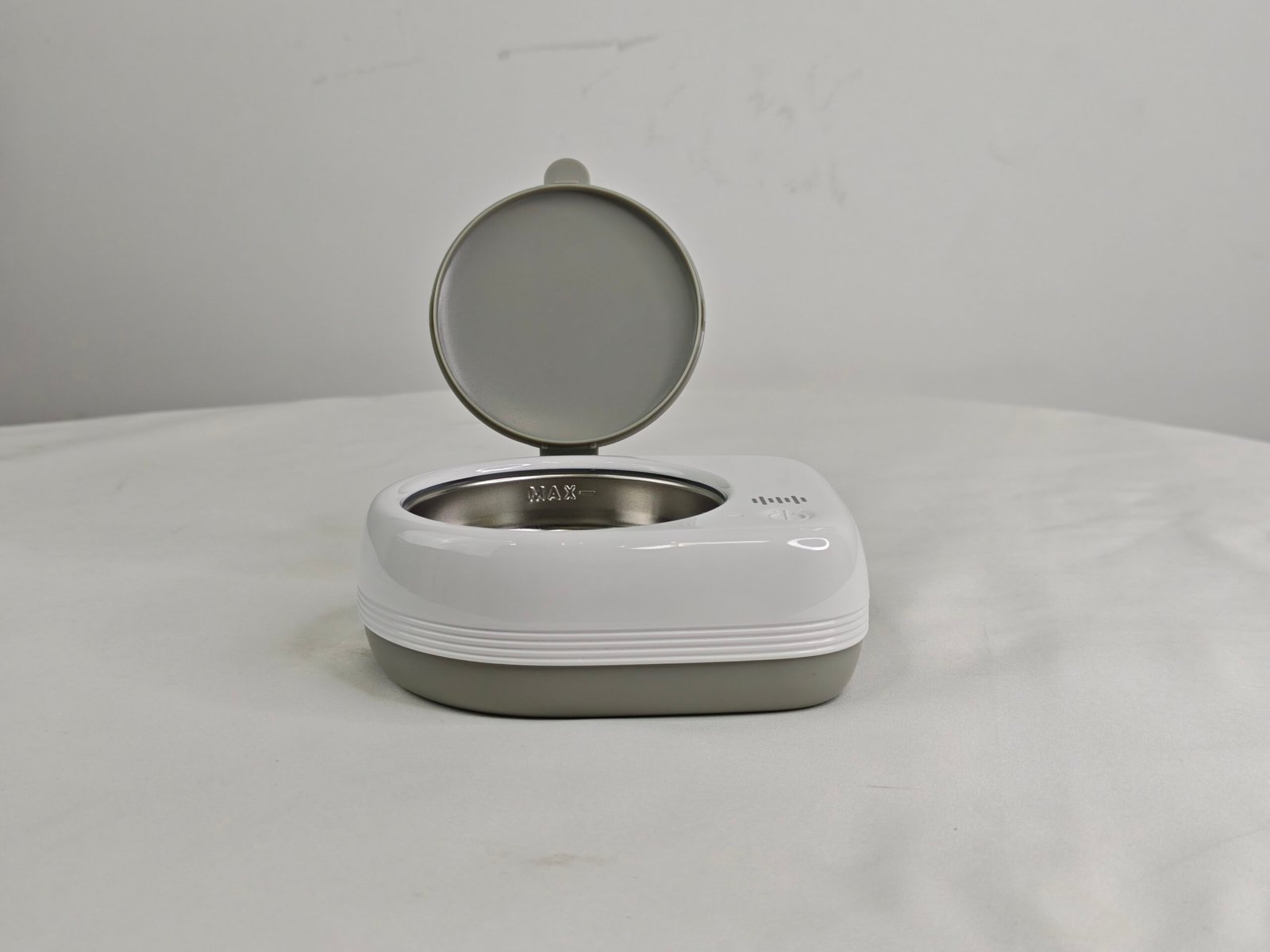
As direct-printed aligners become more common, heated ultrasonic cleaners are also receiving more attention. Some compact cleaners operate with room-temperature water, while others heat the cleaning liquid to 40°C, 50°C, or even 60°C.
This raises an important question:
Should 3D-printed aligners be cleaned in a heated ultrasonic cleaner?
The answer depends on the material.
Some direct-printed aligners use thermally responsive shape-memory polymers and may require controlled heating to restore their programmed shape or force. Other 3D-printed aligners may soften, deform, or experience changes in mechanical performance when exposed to the same temperature.
Therefore, “3D printed” does not automatically mean “safe for heated cleaning.”
Before selecting a heated ultrasonic cleaner, users and dental professionals should confirm:
- The specific resin or material used to print the aligner
- Whether the material has verified shape-memory properties
- The manufacturer’s approved cleaning temperature
- The maximum heating duration
- Whether ultrasonic vibration and heating can be used simultaneously
- Which cleaning tablets or solutions are compatible
This article explains how heated ultrasonic cleaners affect different types of 3D-printed aligners, when a 40–60°C cycle may be appropriate, and why conventional thermoformed aligners usually require a different cleaning approach.
Quick Answer
Some 3D-printed shape-memory aligners can be cleaned or thermally restored in a heated ultrasonic cleaner. However, many direct-printed aligners and most conventional thermoformed aligners are not designed for a 50–60°C cycle.
Always identify the material and follow the aligner manufacturer’s approved temperature before using heat.
Are Heated Ultrasonic Cleaners Safe for 3D-Printed Aligners?
Heated ultrasonic cleaning can be suitable for some 3D-printed aligners, but it is not universally safe.
Compatibility depends on:
- Resin formulation
- Thermal transition behavior
- Crosslink density
- Water absorption
- Shape-memory performance
- Post-curing quality
- The manufacturer’s validated care protocol
The phrase “3D-printed aligner” only describes the manufacturing method. It does not tell you how the material reacts to heat.
A directly printed aligner may be made from a biocompatible photopolymer without having any verified thermal-recovery function. If the material is exposed to an unsuitable temperature, it may lose dimensional accuracy or change mechanically.
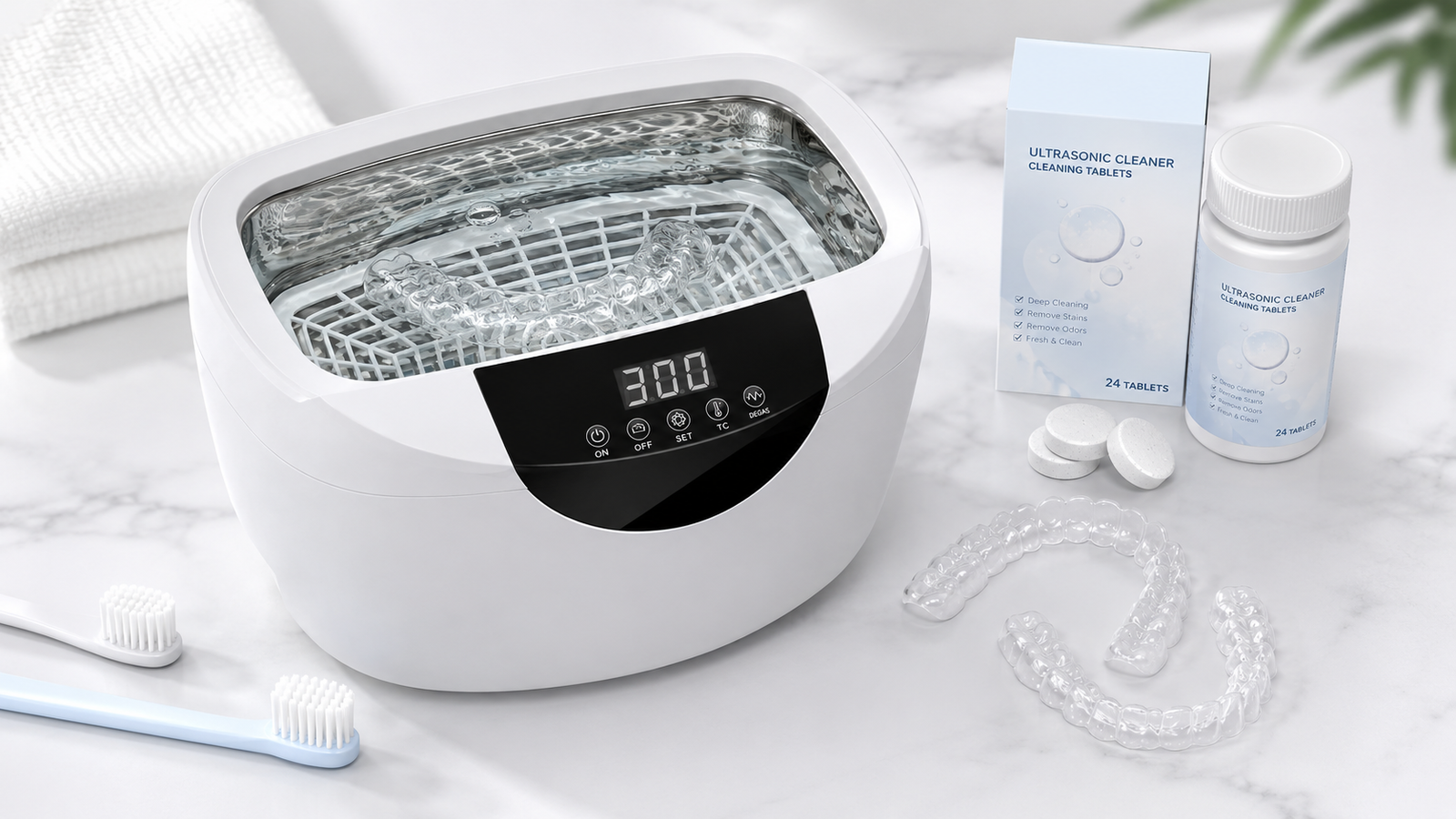
How Does an Ultrasonic Aligner Cleaner Work?
An ultrasonic cleaner uses a transducer attached to a stainless-steel tank. The transducer converts electrical energy into high-frequency mechanical vibration.
When this vibration enters the water, microscopic cavitation bubbles repeatedly form and collapse. This action helps loosen deposits from difficult areas, including:
- Tooth impressions
- Attachment recesses
- Narrow edges
- Internal grooves
- Areas that are difficult to reach with a toothbrush
Compact dental cleaners commonly operate at approximately 40–45kHz. This frequency range produces relatively fine cavitation and is widely used for small, delicate items.
Ultrasonic cleaning primarily helps remove contamination mechanically. It should not automatically be described as sterilization unless the complete process has been validated for that purpose.
Why Are Some 3D-Printed Aligners Heated During Cleaning?
Some directly printed aligners use thermally responsive polymer networks.
During insertion and wear, the aligner may experience:
- Minor deformation
- Stress relaxation
- Reduced force output
- Temporary changes in fit
Controlled heating can increase molecular mobility within the polymer network and guide the appliance back toward its programmed geometry.
For these materials, heating may serve two purposes:
- Improve the cleaning process
- Activate thermal recovery of the aligner material
This is why some specialized aligner systems use temperatures around 50–60°C.
However, thermal recovery only works when the material has been specifically engineered and validated for that behavior.
A heated cleaner cannot repair:
- Cracks
- Missing material
- Severe bending
- Worn edges
- Incorrect manufacturing
- A badly fitting aligner caused by tooth movement
Are All 3D-Printed Aligners Shape-Memory Aligners?
No.
A directly printed aligner may be produced from a biocompatible dental photopolymer without having shape-memory properties.
Different printed aligner materials may have different:
- Glass-transition ranges
- Elastic modulus
- Crosslink density
- Water absorption
- Heat resistance
- Post-curing requirements
- Shape-recovery behavior
A material designed only for direct printing may react very differently from a material designed for repeated thermal activation.
Excessive heat may cause:
- Softening
- Warping
- Loss of fit
- Changes in orthodontic force
- Reduced transparency
- Surface degradation
- Increased water absorption
- Dimensional instability
Therefore, the term “3D printed” should never be used as the only basis for selecting a cleaning temperature.
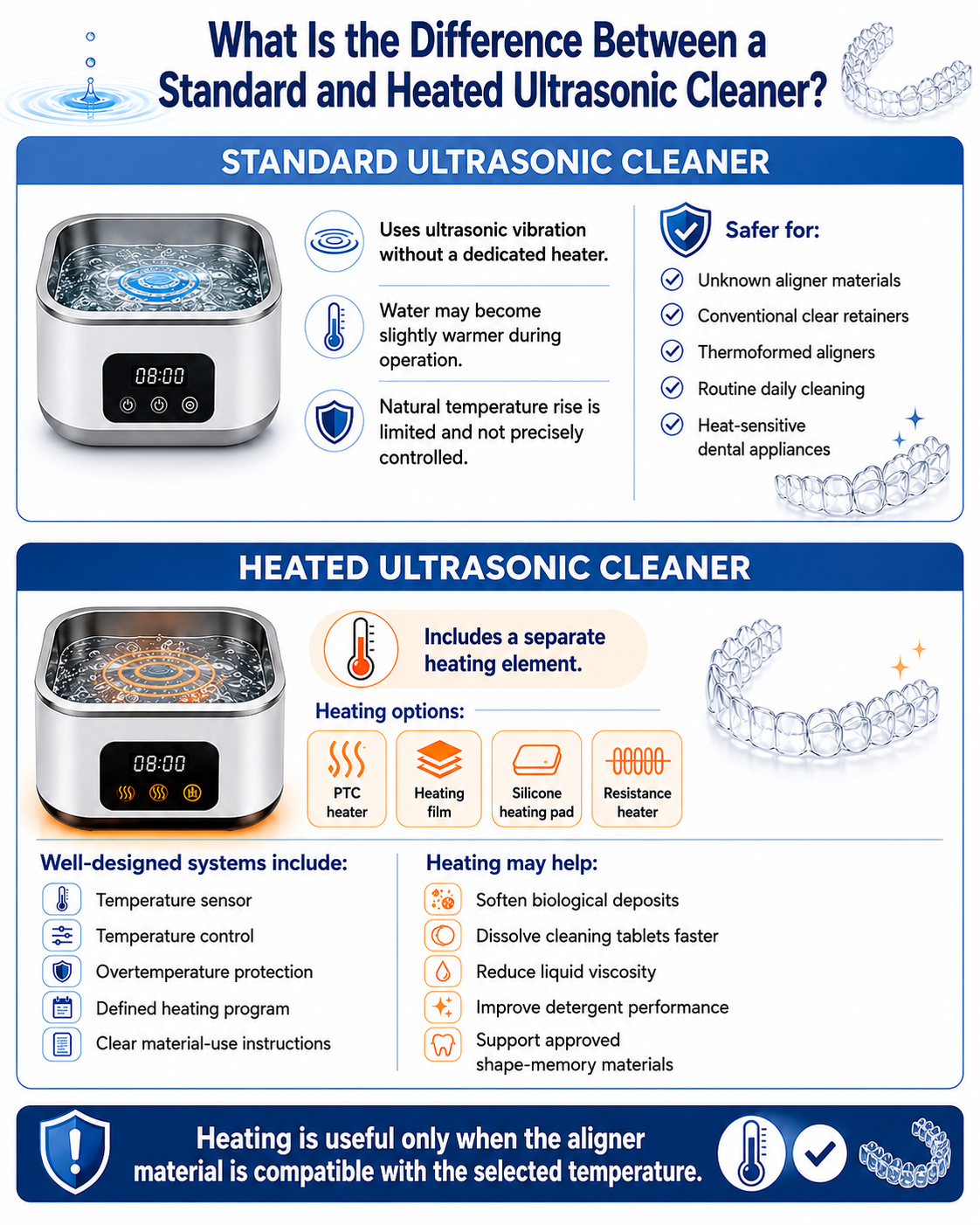
Does Ultrasonic Cleaning Naturally Heat the Water?
Yes, but natural ultrasonic warming is different from active heating.
Heat can be generated by:
- Transducer losses
- Stainless-steel tank vibration
- Liquid friction
- Cavitation energy
- Driver-board losses
- Mechanical damping in the bonding layer
A small household cleaner may raise the water temperature by several degrees during a cycle. However, it usually cannot heat room-temperature water to 60°C in a short program unless it contains a dedicated heater or requires preheated water.
A product listed as 20W, 30W, or 40W may become warm during use, but that does not prove it has active temperature control.
Does Warm Water Improve Ultrasonic Cleaning?
Moderate warmth can improve the overall cleaning result by:
- Softening deposits
- Improving cleaning-tablet dissolution
- Reducing liquid viscosity
- Increasing detergent activity
- Helping remove dried contamination
However, hotter water does not always create stronger cavitation.
As water temperature rises, its vapor pressure also increases. Cavitation bubbles may contain more vapor and collapse less violently. Therefore, the strongest mechanical cavitation does not necessarily occur at the highest temperature.
The practical cleaning result depends on the balance between:
- Cavitation
- Cleaning chemistry
- Temperature
- Exposure time
- Type of contamination
For dental appliances, a moderately warm cleaning solution may improve the final result even if the cavitation impact is slightly reduced.
What Temperature Is Safe for 3D-Printed Aligners?
There is no universal safe temperature for every printed aligner.
| Cleaning temperature | General suitability | Important limitation |
|---|---|---|
| Room temperature | Safest default for unknown materials | Cleaning tablets may dissolve more slowly |
| 30–40°C | May suit approved heat-compatible materials | Not universally validated |
| 45–50°C | May soften or activate some shape-memory systems | Requires manufacturer confirmation |
| Around 60°C | Used by certain dedicated thermal-recovery systems | Not suitable for all printed aligners |
| Above 60°C | Specialized use only | Higher risk of deformation or property changes |
These temperature ranges are not universal medical recommendations. The correct temperature must come from the aligner or resin manufacturer.
Can LuxCreo 4D Aligners Be Cleaned at 60°C?
LuxCreo’s 4D aligner system uses a proprietary thermally responsive material marketed as ActiveMemory™ Polymer.
Its dedicated cleaner is associated with:
- Approximately 43kHz ultrasonic cleaning
- A controlled ten-minute cycle
- Heating around 60°C
In this application, heating is not used only to improve cleaning. It is also linked to the thermal restoration of the material’s programmed shape and mechanical behavior.
This means the 60°C cycle is part of a specific material system.
It should not automatically be used for:
- Conventional PETG aligners
- Standard retainers
- Unknown 3D-print resins
- Night guards
- Dentures
- Unverified shape-memory materials
Can Graphy SMA Aligners Use the Same 60°C Program?
Not automatically.
Graphy’s shape-memory aligners and LuxCreo’s ActiveMemory aligners follow a similar broad technology direction, but they are separate material platforms.
Similar shape-memory claims do not prove that two products use:
- The same resin
- The same activation temperature
- The same heating duration
- The same ultrasonic frequency
- The same cleaning solution
- The same number of permitted thermal cycles
Before using a LuxCreo-style 60°C, ten-minute ultrasonic program with another shape-memory aligner, confirm:
- Approved water temperature
- Maximum exposure time
- Whether ultrasonic cleaning is allowed
- Whether heating and ultrasonics may operate simultaneously
- Cleaning-agent compatibility
- Recommended thermal-cycle frequency
Which Cleaner Should Be Used for Each Aligner Type?
| Aligner type | Recommended ultrasonic cleaner | Heating guidance |
|---|---|---|
| Unknown 3D-printed aligner | Standard non-heated cleaner | Do not heat until the material is confirmed |
| Standard direct-print dental resin | Standard or gentle-warm cleaner | Follow the resin manufacturer’s instructions |
| LuxCreo AMP / 4D Aligner | Dedicated heated ultrasonic program | Use the approved thermal protocol |
| Graphy SMA / TC-85 system | Manufacturer-approved process | Do not automatically copy LuxCreo settings |
| Conventional PETG aligner | Standard non-heated cleaner | Avoid high-temperature cycles |
| TPU or multilayer thermoformed aligner | Standard or low-temperature cleaner | Heat may affect fit or layer stability |
| Clear retainer | Standard short-cycle cleaner | Avoid 50–60°C unless approved |
| Unknown retainer or night guard | Non-heated mode | Treat as heat-sensitive |
What About Conventional Thermoformed Aligners?
Conventional clear aligners are generally produced from thermoformed materials such as:
- PETG
- TPU
- Polyurethane
- Copolyester
- Multilayer thermoplastic sheets
Although they may look similar to direct-printed aligners, their thermal behavior can be very different.
Repeated high-temperature exposure may cause:
- Permanent deformation
- Edge warping
- Loss of retention
- Changes in fit
- Layer separation
- Altered orthodontic force
For most conventional thermoformed aligners, a standard non-heated ultrasonic cleaner or a gentle low-temperature program is the safer choice unless the manufacturer states otherwise.
Can a Heated Ultrasonic Cleaner Damage a 3D-Printed Aligner?
Yes, if the temperature or exposure time is not compatible with the material.
Possible risks include:
- Softening beyond the intended range
- Permanent deformation
- Reduced force accuracy
- Increased surface roughness
- Loss of transparency
- Water absorption
- Changes caused by repeated heat cycles
The risk depends on both temperature and time.
For example, a short exposure at 45°C may affect a material differently from ten minutes at 60°C. The ultrasonic vibration, cleaning solution, and repeated daily use may also influence long-term performance.
How Should a Heated Cleaner Be Used Safely?
Before using heat, identify the aligner material and obtain the approved care instructions.
A safe process should confirm:
- The exact material or resin
- The approved water temperature
- The maximum cleaning duration
- Whether ultrasonic cleaning is permitted
- Whether heating and ultrasonics can run together
- Which cleaning tablets are compatible
- How often the heating cycle may be repeated
For an unknown aligner, use room-temperature ultrasonic cleaning as the default.
Do not assume that a higher temperature provides better cleaning.
How Can Buyers Identify a Real Heated Ultrasonic Cleaner?
Do not rely only on the product title or marketplace search results.
A genuine heated model should ideally list:
- Heating temperature
- Heating power
- Total rated power
- Temperature-control method
- Heating time
- Overtemperature protection
- Approved appliance types
Be cautious when a listing only uses phrases such as:
- Warm cleaning
- Enhanced cleaning
- UV heating
- Temperature function
- Use warm water
Purple or blue light in a product image does not prove that the cleaner has a water-heating element.
Recommended Modes for a Multi-Purpose Aligner Cleaner
A multi-purpose machine should provide selectable programs instead of forcing every appliance through one high-temperature cycle.
| Cleaning mode | Suggested temperature | Intended use |
|---|---|---|
| Standard ultrasonic mode | No active heating | Unknown materials and routine cleaning |
| Gentle warm mode | Approximately 30–40°C | Approved heat-compatible appliances |
| Shape-memory warm mode | Approximately 45–50°C | Only materials approved for this range |
| Thermal-recovery mode | Approximately 60°C | Only verified systems requiring high-temperature activation |
The machine manual should clearly state:
Always follow the aligner manufacturer’s approved temperature and cleaning instructions.
Frequently Asked Questions
Can All 3D-Printed Aligners Be Cleaned at 60°C?
No. Only materials specifically validated for a 60°C thermal cycle should be exposed to that temperature.
Does “3D Printed” Mean the Aligner Has Shape-Memory Properties?
No. Direct printing is a manufacturing method. Shape memory is a separate material property.
Can 50°C Damage a 3D-Printed Aligner?
It may affect certain materials. The result depends on the resin formulation, exposure time, post-curing quality, and repeated use.
Can a Heated Ultrasonic Cleaner Restore a Deformed Aligner?
Only certain programmed shape-memory aligners may recover from minor deformation. A heated cleaner cannot repair cracks, missing material, severe damage, or an aligner that no longer fits because the teeth have moved.
Can LuxCreo and Graphy Aligners Use the Same Cleaning Program?
Not automatically. Their material systems and validated thermal protocols may be different.
Is a Standard Ultrasonic Cleaner Safer for Unknown Aligner Materials?
Yes. Non-heated cleaning is generally the safer default until heat compatibility is confirmed.
Does Ultrasonic Cleaning Itself Heat the Water?
Yes, slightly. Reaching a controlled temperature such as 60°C usually requires a dedicated heater or preheated water.
Does Heating Always Improve Cleaning?
No. Moderate warmth may improve detergent performance, but excessive heat can damage sensitive materials.
Does UV Light Mean the Cleaner Has Heating?
No. UV or LED light is not the same as controlled water heating.
Does a 60°C Cycle Sterilize the Aligner?
Not necessarily. Cleaning, disinfection, and sterilization are different processes. Any antimicrobial claim requires validated testing.
Final Recommendation
Heated ultrasonic cleaners are an important development for direct-printed dental appliances, especially for aligners made from verified shape-memory polymers.
However, the term “3D-printed aligner” covers many different resin systems. Some may benefit from controlled heating, while others may lose transparency, dimensional accuracy, or orthodontic performance.
Before using a heated ultrasonic cleaner, confirm:
- The exact aligner material
- The approved cleaning temperature
- The maximum heating time
- Whether ultrasonic cleaning is permitted
- Whether the cleaning solution is compatible
For unknown or conventional materials, use a standard non-heated ultrasonic program. Reserve 50–60°C modes for aligners whose manufacturers have specifically validated those conditions.
The correct cleaner is determined by the aligner material—not simply by whether the aligner was 3D printed.
Disclaimer: This article provides general technical information and does not replace instructions from a dentist, orthodontist, aligner manufacturer, or dental-material supplier.