
OEM Ultrasonic Retainer Cleaner Sample Approval: 10 Checks Before Mass Production
A practical OEM ultrasonic retainer cleaner sample-approval checklist covering performance, branding, packaging, compliance documents and pre-shipment QC.

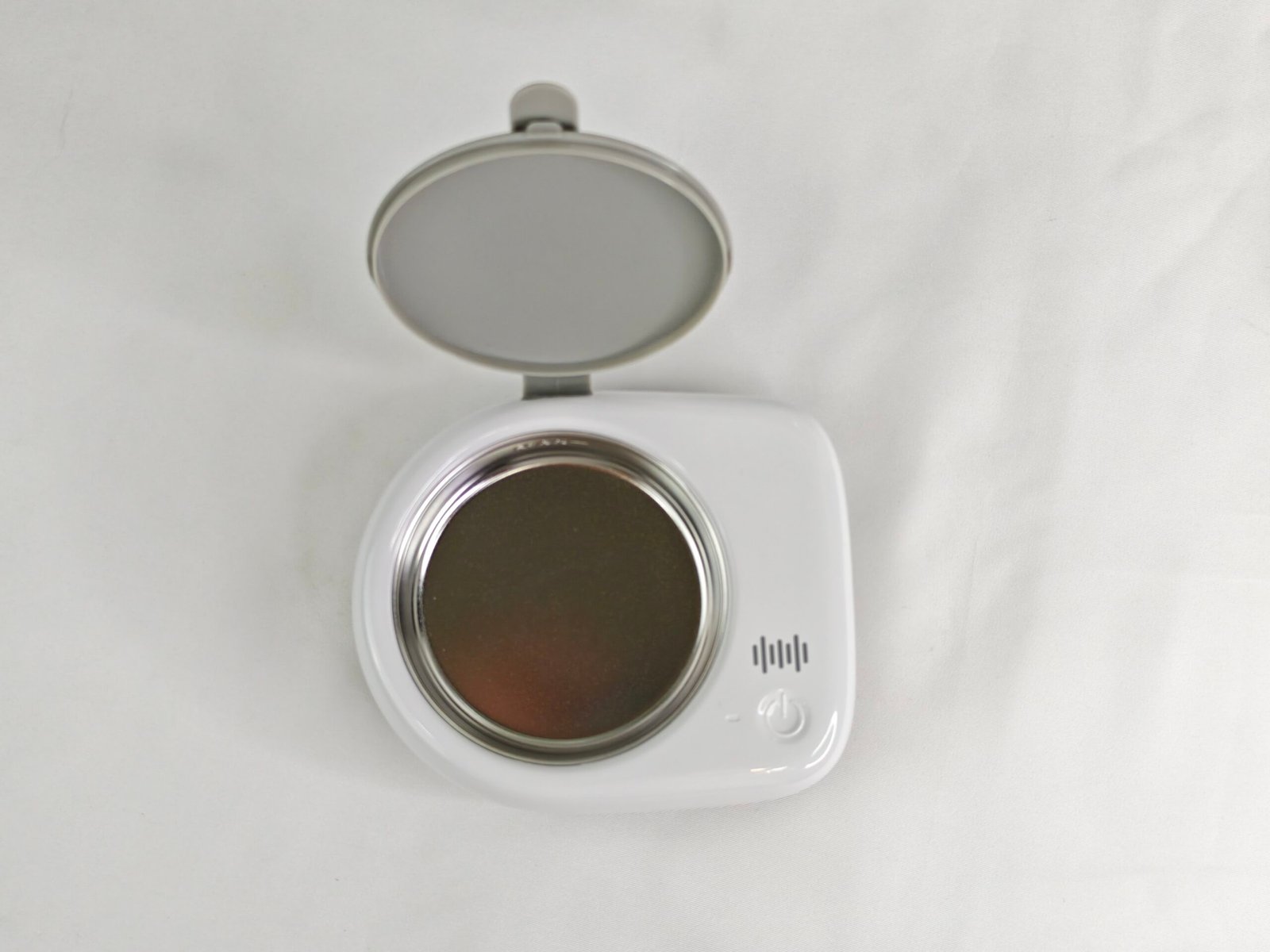
Quick answer: Before approving an OEM ultrasonic retainer cleaner for mass production, buyers should lock the product specification, test cleaning performance with representative dental appliances, verify electrical and charging details, approve branding and packaging, review market-specific compliance documents, and define measurable pre-shipment inspection criteria. A visually acceptable sample is not enough: the approved sample must become a controlled reference for production.
Why sample approval matters in an OEM project
An OEM sample is where the buyer’s brief becomes a physical product. If the specification, artwork or test method remains vague at this stage, the same ambiguity can appear across an entire production batch. The safest approach is to approve a documented “golden sample” together with a signed specification sheet, artwork files and an inspection checklist.
This guide is written for distributors, private-label brands and importers sourcing ultrasonic cleaners for retainers, aligners, dentures and night guards. It is a purchasing checklist rather than legal advice; exact regulatory requirements depend on the product configuration and the destination market.
1. Freeze the exact product configuration
Start with one specification table that identifies the model, tank capacity and material, ultrasonic frequency, rated power, input voltage or charging input, cycle options, accessories, product dimensions, color and packaging configuration. Do not rely on sales messages spread across different chats.
For example, the SONICLEANTECH M9D1201 ultrasonic retainer cleaner product page lists a 220mL SUS304 tank, 48kHz ultrasonic frequency and 100–240V AC input, with logo, color, packaging and plug customization options. Those details are model-specific; the purchase specification should state which options apply to the approved order.
2. Test the items your customers will actually clean
Run sample trials with representative retainers, clear aligners, dentures or night guards made from the materials your customers use. Record the water or approved cleaning solution, fill level, cycle time, item orientation and starting condition. Check visible residue removal, access to grooves and surfaces, and whether the item shows any unacceptable change after repeated cycles.
Do not approve unsupported claims such as “sterilizes” or “kills 99.9% of bacteria” based only on the presence of ultrasound or UV light. Claims should match the evidence available for the exact product and test method.
3. Check cleaning consistency—not only noise or vibration
A machine can make an audible sound without proving that it cleans consistently. Compare multiple cycles using the same controlled setup. If the supplier uses a foil test, treat it as a comparative indication of cavitation distribution, not as proof that a retainer or denture is clean. Our ultrasonic cleaner foil-test guide explains what this check can and cannot demonstrate.
Ask the supplier to record the test conditions and acceptance criteria. If performance changes when the sample is loaded, confirm the intended maximum load and positioning.
4. Review tank fit, access and daily usability
- Confirm that common retainers, aligners and dentures fit without being forced against the tank walls.
- Check whether the item stays adequately immersed at the specified fill level.
- Inspect the lid, hinge, buttons, display and removable basket if included.
- Test water filling, emptying and wiping from a normal user’s perspective.
- Confirm that instructions clearly identify suitable items, cycle selection and cleaning precautions.
5. Verify electrical, plug and charging details
For a mains-powered model, confirm the rated input, plug type, power cord or adapter, label information and destination-market configuration. For a cordless model, confirm the battery specification, charging input, charging interface, operating time test method and transport documentation requested by your logistics provider.
Do not assume that changing a plug is the only market adaptation required. Review the final adapter, charger, cable, label and instructions as a complete system. Buyers considering a battery-powered model can also use our cordless retainer cleaner buying guide.
6. Approve branding with production-ready artwork
Approve logo size, position, color and printing method on the actual housing—not only on a digital mockup. Check the result under normal lighting and after reasonable handling. Lock the Pantone or other agreed color reference, artwork version, print area and tolerance.
The same control should cover the gift box, manual, rating label, carton marks, barcode and any marketplace labels. Keep dated PDF proofs and editable source files under version control so an old artwork file cannot return during reordering.
7. Treat packaging as part of the product
Inspect how the cleaner, adapter, cable, basket and manual are restrained inside the box. Confirm the retail box dimensions, master-carton quantity, gross weight and carton marks against the purchase order. If the goods will be sold through e-commerce, agree on the packaging tests or handling simulations appropriate to the sales channel.
Run a final check after the complete packed sample has travelled through a realistic handling test. A perfect tabletop sample can still create returns if the lid, tank or housing is damaged in transit.
8. Review market-specific compliance before production
Ask which laws, directives and standards apply to the exact finished configuration in each destination market. For the EU, the General Product Safety Regulation has applied to relevant products placed or made available on the market since 13 December 2024. Official European Commission guidance says an EU-based responsible economic operator is required for products covered by the regulation, and online offers must display specified manufacturer or responsible-person and product-identification information where applicable. See the European Commission GPSR guidance.
Where CE-marking legislation applies, the European Commission states that manufacturers are responsible for conformity assessment, technical documentation, the EU Declaration of Conformity and affixing the CE marking. Importers must verify that the required documentation is available. Review the Commission’s guidance for importers and distributors and confirm the applicable requirements with a qualified compliance professional.
Do not accept a logo or generic certificate as proof that every customized configuration is covered. Check the model identification, manufacturer, test sample, standards, report dates and whether changes to the adapter, battery, PCB, housing or other critical components affect the compliance file.
9. Define reliability checks before mass production
Agree on tests appropriate to the product and risk level, such as repeated-cycle operation, button and hinge endurance, charging cycles, leakage checks, abnormal-operation checks and inspection after aging. Define the test duration, sample quantity and pass/fail criteria in writing.
If the OEM sample is modified after testing, identify which checks must be repeated. A component substitution should not be treated as a purely administrative change when it may affect safety, performance, appearance or compliance.
10. Convert the sample into a pre-shipment inspection checklist
| Inspection area | Evidence to retain | Example acceptance point |
|---|---|---|
| Product identity | Approved specification and golden sample | Correct model, color and configuration |
| Function | Recorded test method | Controls and agreed cycles operate correctly |
| Cleaning trial | Reference items and test conditions | Meets the buyer’s agreed evaluation criteria |
| Appearance | Photos and color reference | No unacceptable scratches, gaps or printing defects |
| Electrical set | Approved adapter, cable, plug and label | Matches destination-market order specification |
| Packaging | Approved artwork and packing sample | Correct accessories, manual, barcode and carton marks |
| Documentation | Agreed compliance and shipment file | Correct model and current document versions |
Set an acceptable quality limit or another sampling method with your inspection provider, and identify which defects are critical, major or minor. The supplier and inspector should use the same approved references.
Questions to ask an OEM ultrasonic retainer cleaner manufacturer
- Which specifications and components will be locked after sample approval?
- What cleaning-performance test will be used for production checks?
- Which logo, color, packaging and plug options are available for this model?
- Which documents apply to the exact configuration and target market?
- How are component or firmware changes communicated and approved?
- Can you provide a pre-production sample and retain a matching golden sample?
- What information is needed for a representative cleaning trial and quotation?
Frequently asked questions
Is one working sample enough to approve an OEM order?
Not by itself. Approval should also include a frozen specification, artwork proofs, packaging details, test methods, compliance-document review and measurable inspection criteria.
Should the importer test the cleaner with real retainers?
Yes. Use representative dental appliances and a controlled procedure. A generic demonstration cannot confirm performance for every material, soil and loading condition.
Can a private-label brand use the supplier’s existing CE documents?
Only after checking that the documents and technical file apply to the exact finished product and configuration. Branding or component changes can affect responsibilities and documentation. Obtain market-specific professional advice.
What should become the golden sample?
The final approved unit with the agreed components, finish, logo, rating label, accessories and packaging. Both buyer and supplier should retain controlled references or equivalent signed records.
Plan your OEM project with SONICLEANTECH
SONICLEANTECH supports OEM and ODM sourcing for household and commercial ultrasonic cleaners. To evaluate a private-label retainer cleaner, send us your destination market, target quantity, required functions, branding files and packaging brief. We can then identify a suitable existing model or discuss a customized project.
Summary: Approve an OEM ultrasonic retainer cleaner as a complete, controlled product—not just a working machine. Freeze specifications, validate performance, inspect electrical and packaging details, review market requirements and convert the final sample into a measurable production-inspection standard.