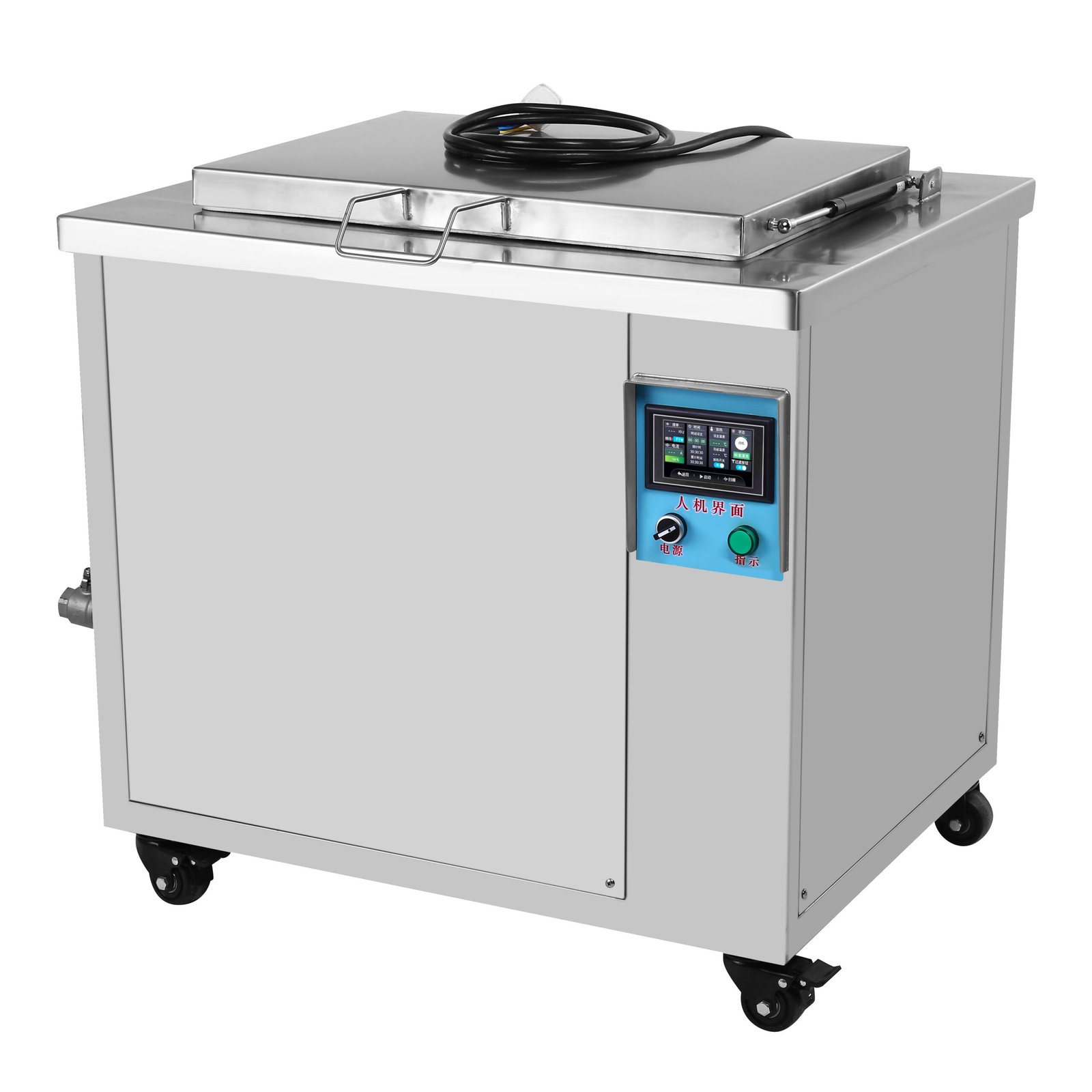
Why Manufacturers Are Switching from Manual Cleaning to Ultrasonic Cleaning?

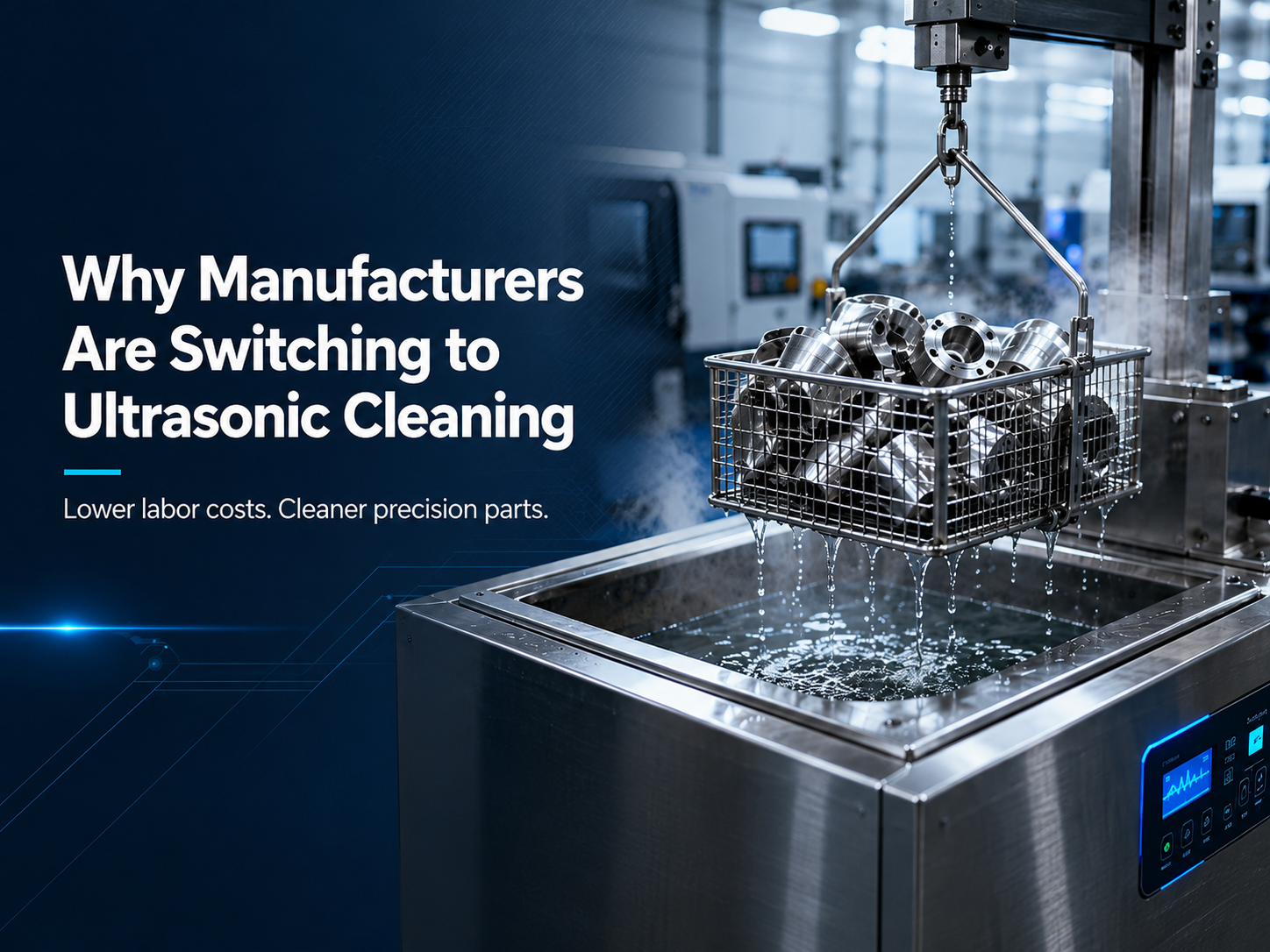
In precision manufacturing, cleaning is no longer just about making parts look clean. Manufacturers are paying more attention to labor cost, cleaning efficiency, consistency, and product quality.
As labor becomes more expensive and precision parts become more complex, manual cleaning is increasingly difficult to justify for long-term production.
This is why more manufacturers are turning to ultrasonic cleaning.
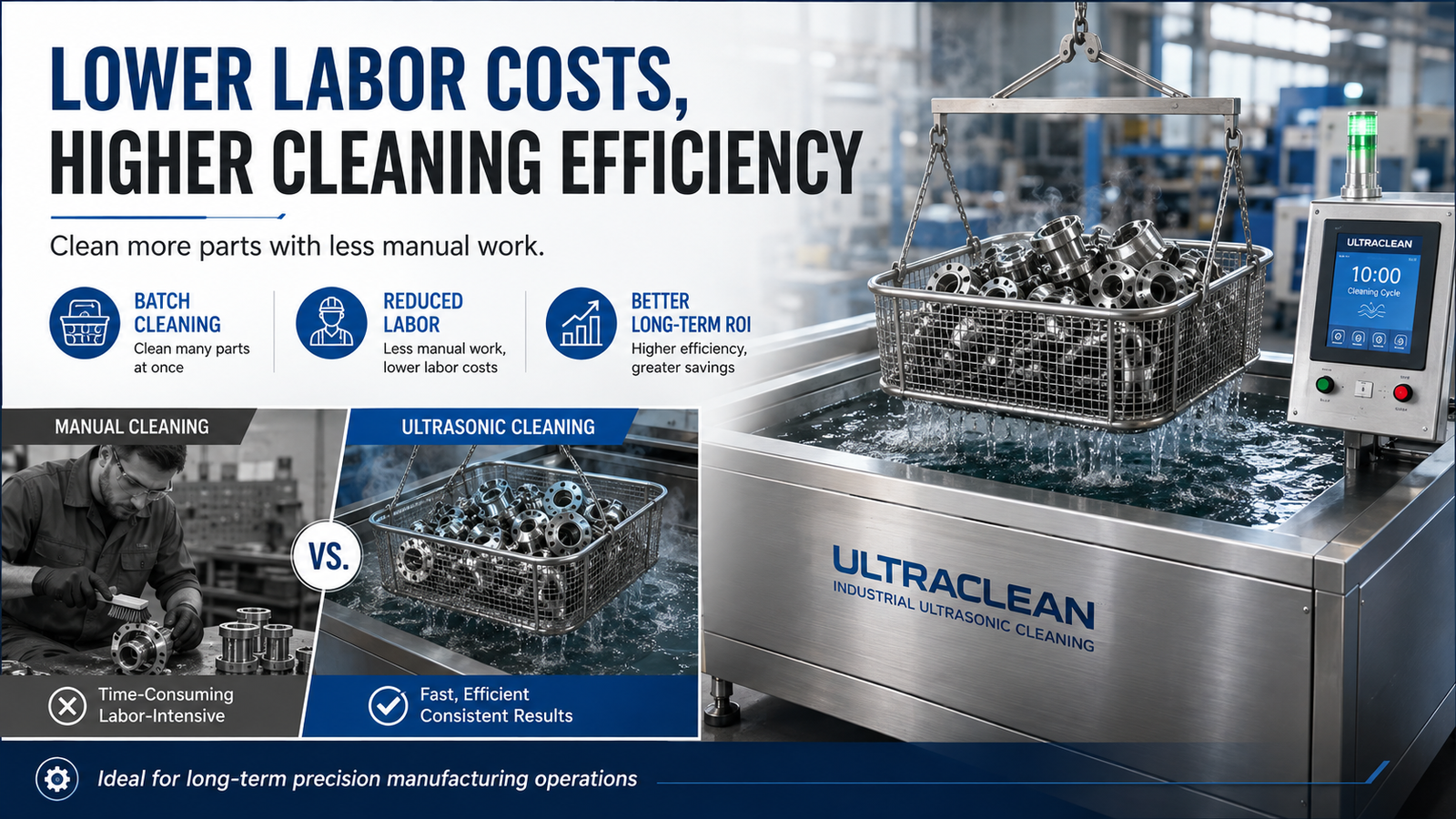
Lower Labor Costs for Long-Term Production
For many factories, labor cost is one of the biggest reasons to upgrade their cleaning process.
Traditional manual cleaning often requires workers to:
- Brush or wipe parts individually
- Clean holes and grooves by hand
- Repeat cleaning when residues remain
- Spend significant time handling every batch
This may be acceptable for occasional cleaning, but it becomes expensive when hundreds or thousands of parts must be cleaned every day.
With an ultrasonic cleaning machine, operators mainly need to load the parts, set the cleaning cycle, and remove them after cleaning.
A single machine can clean many components at the same time, while workers can focus on other production tasks.
For factories running continuously, the initial equipment investment can therefore be offset by:
Lower labor requirements + higher cleaning capacity + shorter processing time.
For large-volume production, ultrasonic cleaning is not simply a cleaning upgrade—it can be a long-term cost-saving solution.
Cleaner Results, Especially for Complex Parts
Cost savings would mean little if cleaning quality were compromised.
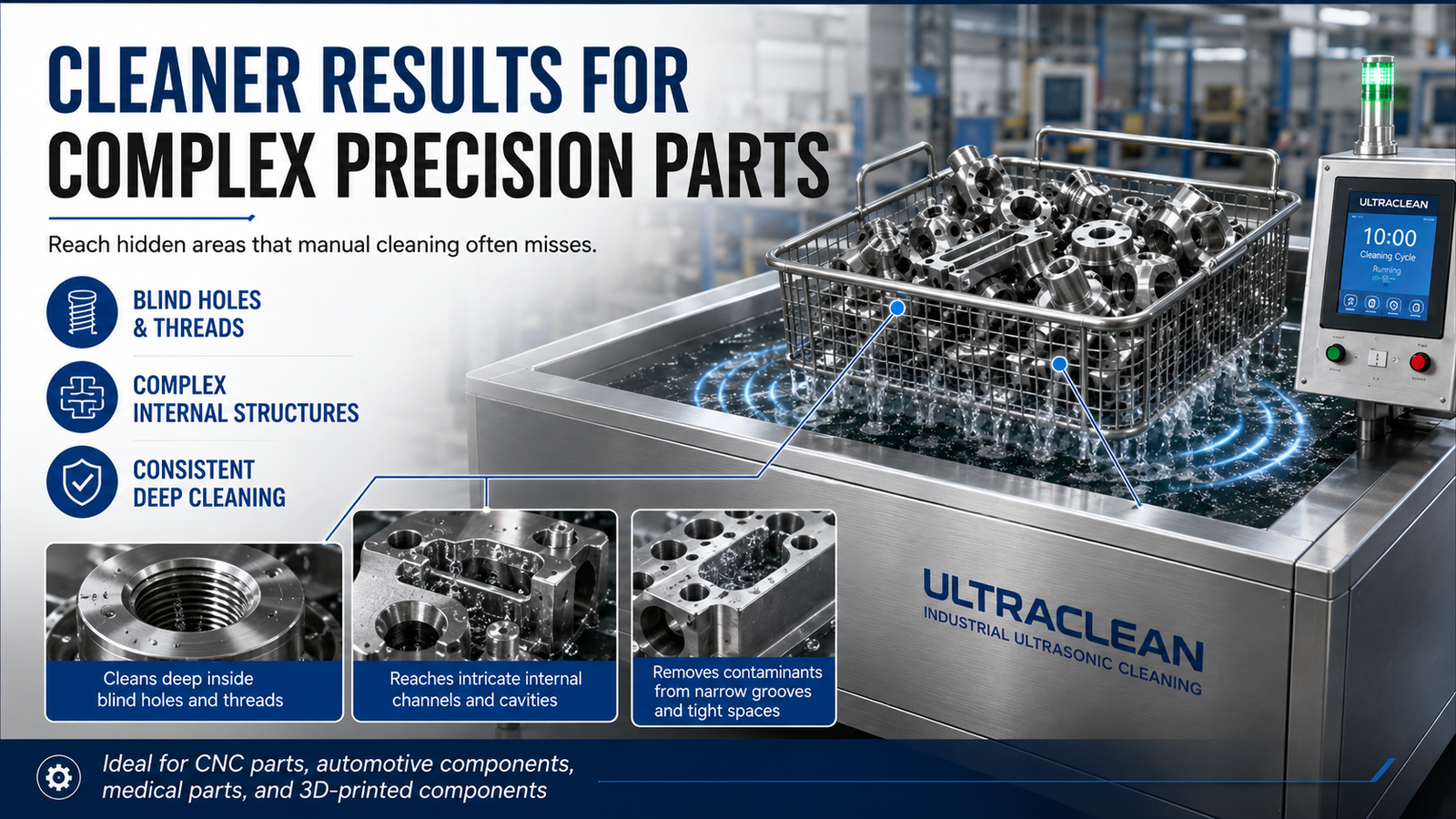
The second major advantage of ultrasonic cleaning is its ability to clean areas that are difficult to reach manually.
Precision parts often contain:
- Blind holes
- Threads
- Small gaps
- Narrow channels
- Grooves
- Complex internal structures
Brushes and cloths mainly clean surfaces that workers can physically reach.
Ultrasonic cleaning works differently.
High-frequency sound waves create microscopic cavitation bubbles throughout the cleaning liquid. When these bubbles collapse, they help loosen oil, particles, polishing compounds, and other contaminants from the surface of the component.
Because the cleaning liquid can enter small holes and cavities, ultrasonic cleaning can reach many areas that manual tools cannot.
This is particularly useful for CNC parts, precision hardware, automotive components, medical parts, electronics, and 3D-printed components.
More Consistent Than Manual Cleaning
Manual cleaning quality depends heavily on the operator.
Different workers may use different cleaning times, pressure, methods, or amounts of detergent.
This makes consistency difficult, especially in mass production.
Ultrasonic cleaning allows manufacturers to control important parameters such as:
- Cleaning time
- Ultrasonic frequency
- Temperature
- Cleaning solution concentration
Once the correct process is established, every batch can follow approximately the same cleaning procedure.
For precision manufacturing, this repeatability is extremely important.
Higher Productivity
Manual cleaning often processes parts one by one.
An industrial ultrasonic cleaner can process an entire basket of components in one cycle.
For higher production requirements, manufacturers can also use multi-tank systems with:
Ultrasonic Cleaning → Rinsing → Drying
More advanced systems can include automatic lifting, filtration, circulation, oil separation, and drying.
This allows the cleaning process to become part of the production line rather than a separate labor-intensive operation.
Why Precision Manufacturing Needs Better Cleaning
Modern manufacturing is producing parts with tighter tolerances and more complicated geometries.
Small amounts of contamination can affect later processes such as:
- Coating
- Plating
- Welding
- Assembly
- Bonding
- Inspection
A part that looks clean may still contain machining oil or fine particles inside a small hole or internal channel.
This is why manufacturers increasingly need cleaning methods that are not only fast, but also repeatable and capable of reaching complex surfaces.
Where Is Ultrasonic Cleaning Commonly Used?
Ultrasonic cleaning is increasingly used for:
CNC Machined Parts
Removing cutting oil, coolant, metal chips, and fine particles.
Automotive Components
Cleaning valves, bearings, engine components, hydraulic parts, and other precision components.
Aerospace Parts
Cleaning complex components where contamination and reliability are critical.
Medical and Dental Components
Cleaning precision stainless-steel and manufactured components before subsequent processing.
Electronics and Precision Hardware
Removing particles, oil, and manufacturing residues from suitable components.
3D-Printed Parts
Helping clean complex geometries and areas that are difficult to access manually.
Is Ultrasonic Cleaning Worth the Investment?
For a small workshop cleaning only a few simple parts occasionally, manual cleaning may still be sufficient.
But the situation is very different for factories that:
- Clean large quantities every day
- Have rising labor costs
- Manufacture complex precision parts
- Need consistent cleaning quality
- Want to automate production
In these cases, ultrasonic cleaning can provide both economic and technical advantages.
The real comparison is not simply:
Machine Cost vs. Manual Cleaning Cost
It should be:
Equipment Investment vs. Years of Labor Cost + Cleaning Time + Production Capacity + Cleaning Consistency
For manufacturers operating over the long term, this difference can become significant.
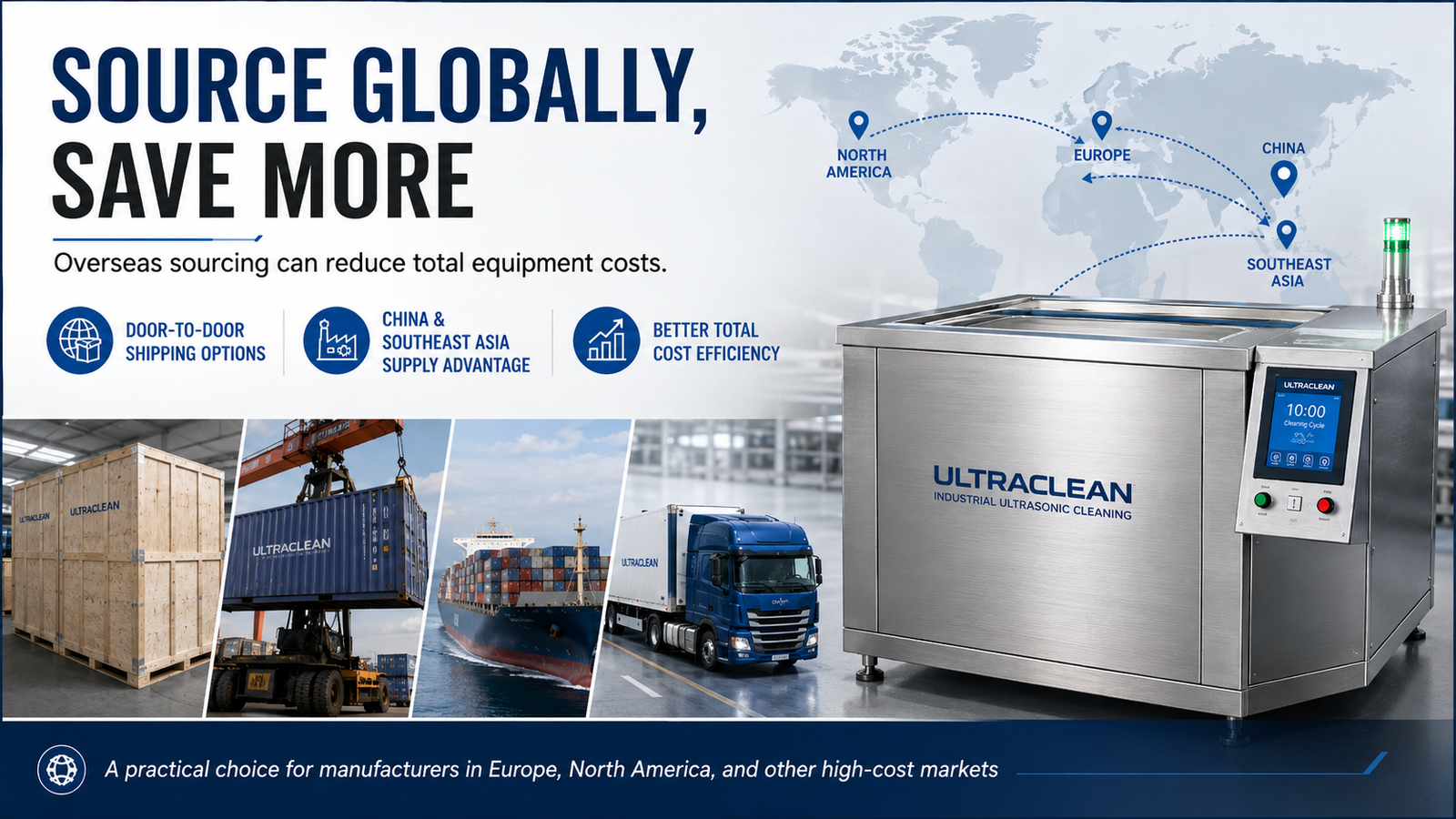
Consider Overseas Sourcing for Better Cost Efficiency
If industrial ultrasonic cleaning equipment is expensive or offers limited value in your local market, sourcing directly from overseas manufacturers can also be a practical option.
International purchasing and logistics have become much more convenient in recent years. For many destinations, suppliers and freight forwarders can now provide door-to-door shipping solutions, including options where freight, customs clearance, and import duties are handled together.
This means buyers do not necessarily need extensive import experience to purchase equipment directly from overseas.
For companies in Europe, North America, and other higher-cost markets, sourcing ultrasonic cleaning equipment from manufacturing regions such as China and Southeast Asia can often reduce the overall equipment investment significantly, especially when purchasing industrial machines, multi-tank cleaning systems, or customized production-line equipment.
When comparing suppliers, however, buyers should consider more than the machine price alone. It is important to evaluate:
- Equipment specifications and materials
- Cleaning performance
- Warranty and after-sales support
- Spare parts availability
- Shipping costs
- Import duties and local taxes
- Final delivered cost
The best comparison is therefore not simply local price vs. overseas machine price, but the total landed cost and long-term operating value.
For manufacturers seeking better cost efficiency, purchasing directly from an experienced overseas ultrasonic cleaning equipment manufacturer can be an effective way to reduce initial investment without sacrificing the cleaning capability required for industrial production.
Conclusion
The growing use of ultrasonic cleaning in precision manufacturing is driven by two simple requirements:
Reduce production costs and achieve better cleaning results.
As labor becomes more expensive, relying heavily on manual cleaning becomes less economical for mass production.
At the same time, modern precision parts are becoming more complex and increasingly difficult to clean by hand.
Ultrasonic cleaning allows manufacturers to clean multiple parts simultaneously, reduce manual work, reach difficult areas, and maintain more consistent cleaning quality.
For factories focused on long-term production efficiency, ultrasonic cleaning is increasingly becoming an investment in both cost control and manufacturing quality.