
Multi-Frequency Ultrasonic Cleaning Technology for Laboratories and Small Businesses
Discover how 1L–20L multi-frequency ultrasonic cleaners support laboratories and small businesses with flexible, professional cleaning for glassware, tools, jewelry and small parts.

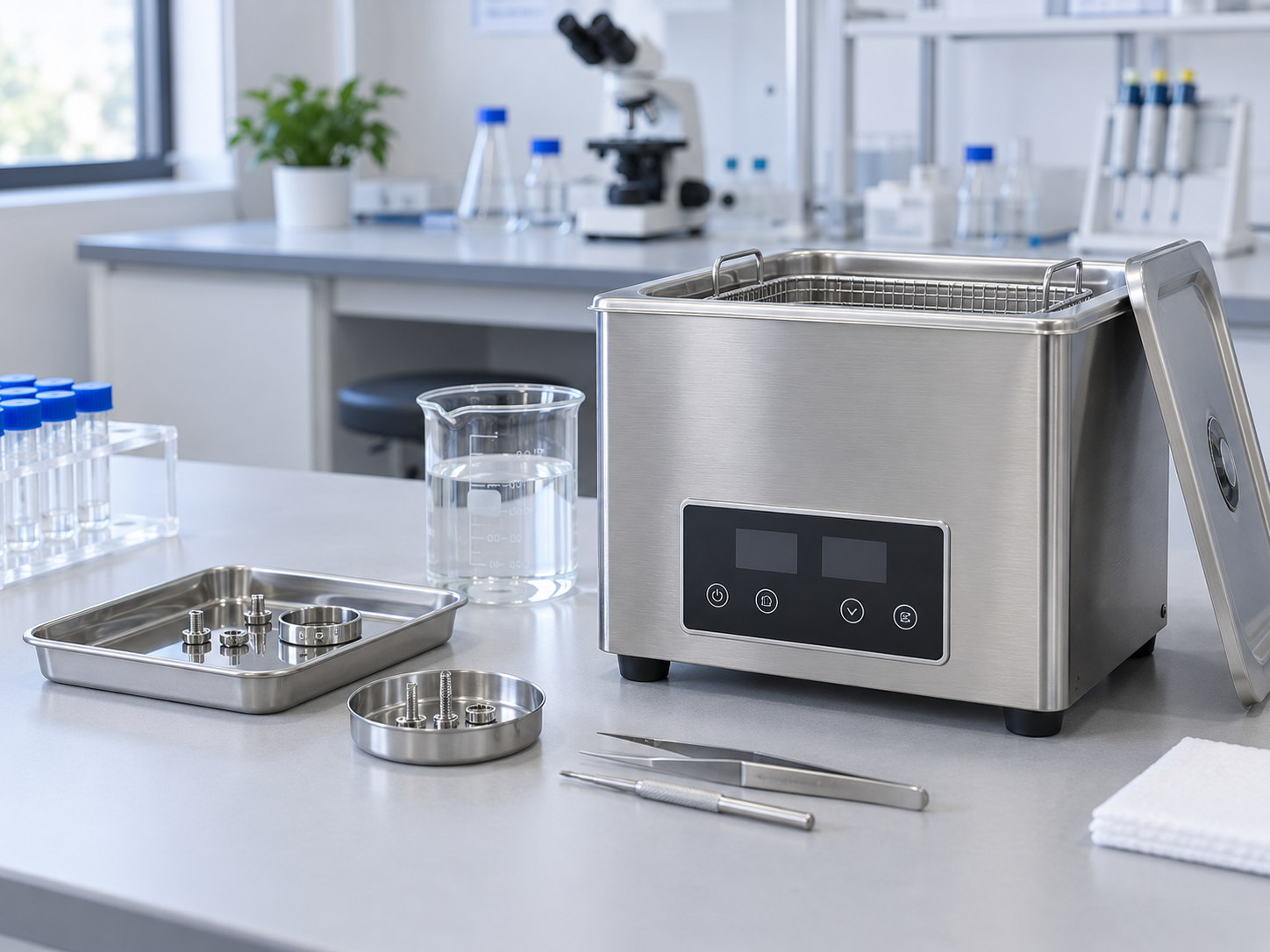
Quick Answer: A multi-frequency ultrasonic cleaner allows laboratories and small businesses to select different cleaning frequencies for different items and levels of contamination. In the 1L–20L range, these compact bench-top machines are suitable for small-batch professional cleaning without requiring a large industrial system.
What Is a Multi-Frequency Ultrasonic Cleaner?
A multi-frequency ultrasonic cleaner is a machine that can operate at two or more ultrasonic frequencies. Instead of using one fixed frequency for every task, users can adjust the frequency according to the size, shape, material and contamination of the items being cleaned.
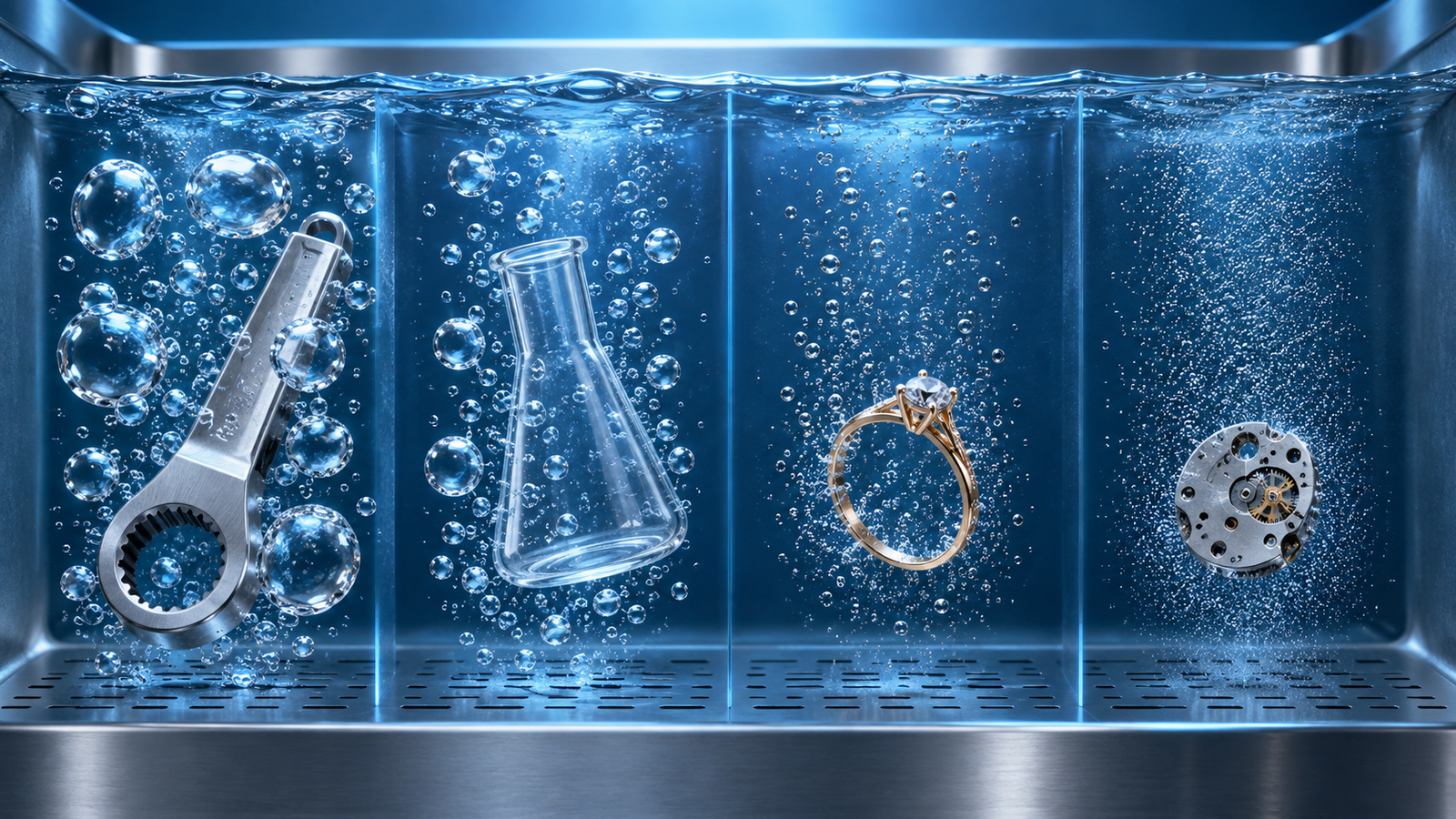
Lower frequencies such as 28 kHz generally create stronger cavitation and can be useful for heavier contamination on robust parts. Medium frequencies such as 40 kHz and 48 kHz are widely used for general commercial and laboratory cleaning. Higher frequencies such as 80 kHz create finer cavitation and may be preferred for small details, narrow gaps and more sensitive surfaces.
Multi-frequency technology is not automatically better for every application. The best choice depends on the workpiece, cleaning solution, ultrasonic power, temperature, loading method and required result.
Why Is Multi-Frequency Technology Useful for Commercial Cleaning?
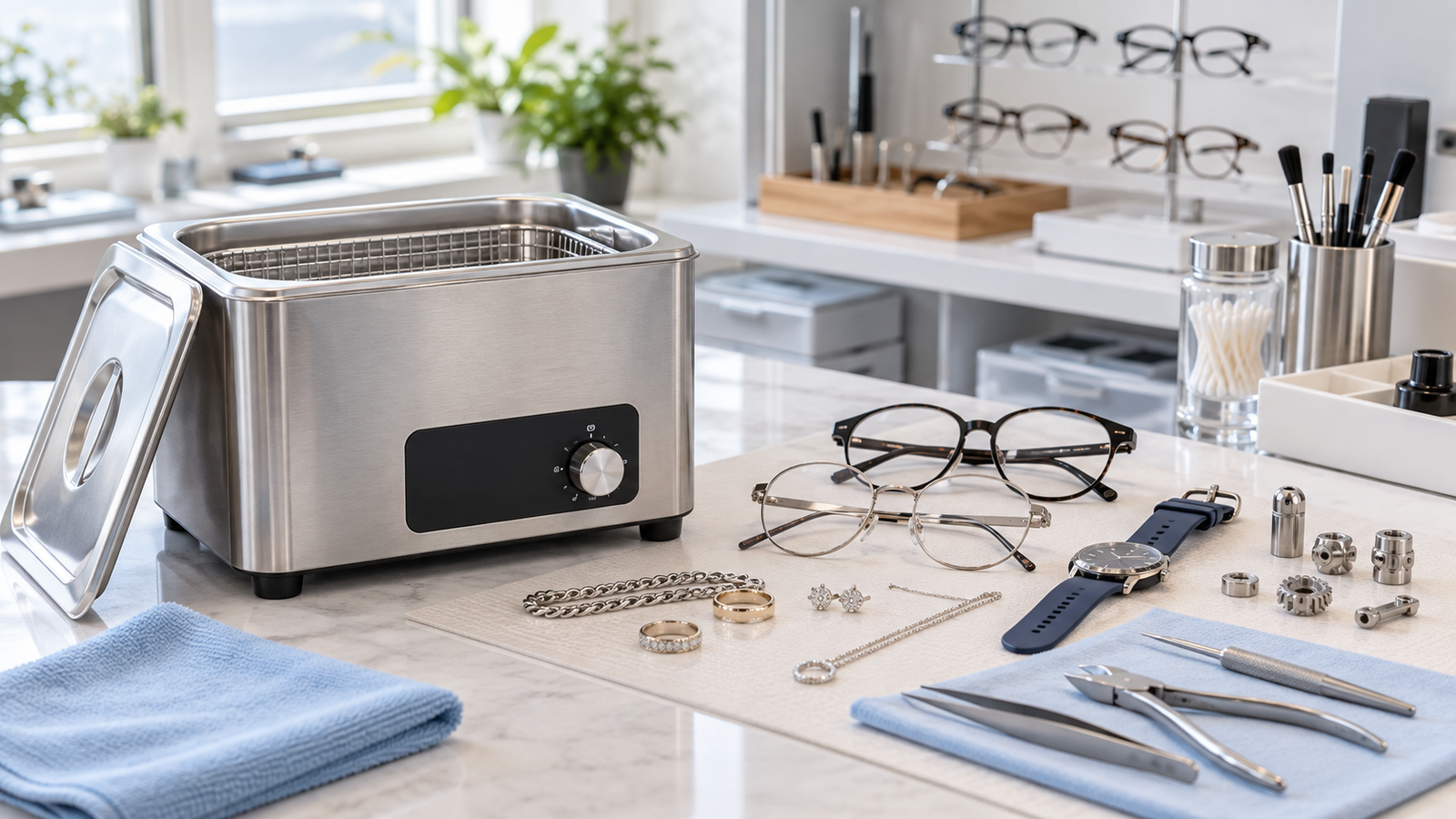
Small businesses often clean different items during the same working day. An optical shop may clean eyeglass frames, while a jewelry store may remove polishing compound from metal accessories. A laboratory may clean glassware, sample holders and small stainless-steel tools.
A fixed-frequency cleaner can be effective when the workload is always similar. A multi-frequency model gives users more flexibility when the items and contamination change.
Different Items Need Different Cleaning Conditions
Large or strongly contaminated metal parts may need more aggressive cavitation. Small components with narrow gaps may benefit from finer bubbles that can enter detailed areas more easily. Delicate surfaces may require a gentler process and shorter cleaning time.
With a multi-frequency machine, one cleaner can support several daily workflows instead of requiring a separate machine for every application.
More Flexibility for Laboratories
Laboratories may clean glass beakers, sample trays, stainless-steel tools, holders, fittings and other approved accessories. A 3L, 6L, 10L or 15L ultrasonic cleaner can provide practical small-batch cleaning on a laboratory workbench. A 20L model may be useful when several small items need to be cleaned together.
Not every laboratory instrument should be placed in an ultrasonic cleaner. Users should follow the equipment manufacturer’s instructions, especially for electronic components, optical coatings, sealed assemblies and sensitive measuring instruments.
Suitable for Daily Professional Cleaning
- Jewelry and watch accessories
- Eyeglass frames and metal accessories
- Dental laboratory tools approved for ultrasonic cleaning
- Manicure and beauty tools
- Small repair parts and hardware
- Airbrush components and nozzles
- Small mechanical parts approved for ultrasonic cleaning
Ultrasonic cleaning can reach grooves, holes and narrow gaps that are difficult to clean manually. This can reduce brushing time and help businesses create a more consistent cleaning process.
How to Choose the Right Frequency
| Frequency | Typical Cleaning Character | Example Applications |
|---|---|---|
| 28 kHz | Stronger and more aggressive cavitation | Heavier dirt, oil, grease and robust metal parts |
| 40 kHz | Balanced everyday cleaning | Laboratory glassware, tools, jewelry and eyeglasses |
| 48 kHz | Refined professional cleaning | Small parts, tools and mixed commercial applications |
| 80 kHz | Finer and gentler cavitation | Small details, narrow gaps and sensitive surfaces |
Frequency should not be considered separately from ultrasonic power, tank loading, cleaning chemistry, temperature and cycle time. For many laboratories and small businesses, 40 kHz is a practical general-purpose choice. A multi-frequency model becomes especially useful when the user regularly handles both robust and delicate items.
What Tank Capacity Is Suitable?
1L–3L Ultrasonic Cleaners
Compact 1L–3L models are suitable for jewelry, eyeglasses, dental tools, beauty tools, small laboratory accessories and small repair components. They require limited bench space and are convenient for low or moderate daily cleaning volumes.
5L–10L Ultrasonic Cleaners
This range provides more working space while remaining suitable for a workbench. Typical applications include laboratory glassware, several pairs of eyeglasses, jewelry batches, stainless-steel tools, small mechanical parts and service workshops.
A 6.2L or 10L heated ultrasonic cleaner can be a practical choice for daily professional use. Typical features may include a stainless-steel tank, 40 kHz ultrasonic cleaning, heating, digital timer, cover and basket.
15L–20L Ultrasonic Cleaners
These models are useful when laboratories, dental laboratories, jewelry workshops, optical stores and small commercial service centers need to clean more items in one cycle.
A larger tank does not always mean better cleaning. Items should not be stacked tightly because the cleaning solution and ultrasonic energy need to reach the surfaces. The basket should match the tank size and the shape of the items.
Heating, Timer and Drainage Also Matter
Heating Function
Heating can improve the performance of many water-based cleaning solutions, especially when removing oil or grease. A machine with adjustable temperature gives users more control over different cleaning tasks.
Temperature should be selected according to the material and cleaning solution. Excessive heat may affect plastics, coatings, adhesives or heat-sensitive items.
Digital Timer
A timer helps users repeat the same cleaning process. It is usually better to begin with a shorter cycle, inspect the result and adjust the time when necessary instead of assuming that a longer cycle is always better.
Drain Valve, Basket and Cover
For 10L–20L machines, a drain valve can make liquid replacement easier. A basket keeps items away from the tank bottom and makes loading and unloading safer. A cover can reduce noise, limit splashing and help maintain the cleaning temperature.
How to Use a Multi-Frequency Ultrasonic Cleaner
- Fill the tank with a suitable cleaning solution.
- Place the items inside the basket without overcrowding.
- Select the appropriate frequency.
- Set the temperature if heating is required.
- Run a short cleaning cycle.
- Inspect the result and repeat the process if necessary.
- Rinse and dry the items according to the application.
Fresh cleaning solution and proper loading are important. Dirty solution, excessive stacking or incorrect detergent concentration can reduce the cleaning result even when the machine has sufficient ultrasonic power.
Single-Frequency or Multi-Frequency: Which Should You Choose?
A single-frequency ultrasonic cleaner may be suitable when the machine will always clean similar items. It is simple to operate and can be cost-effective for one specific workflow.
A multi-frequency ultrasonic cleaner may be a better choice when the business cleans different materials, handles changing item sizes, removes both heavy and light contamination, tests different cleaning processes or wants one machine to serve several applications.
The correct decision should be based on the actual cleaning workload rather than the word “multi-frequency” alone.
How to Choose a Commercial Ultrasonic Cleaner Supplier
When purchasing a 1L–20L commercial or laboratory ultrasonic cleaner, buyers should evaluate tank capacity, internal dimensions, ultrasonic frequency and power, heating power, temperature range, timer, stainless-steel tank material, basket and cover design, drainage options, voltage, plug type, safety protection, warranty and spare parts.
SONICLEANTECH provides commercial and laboratory ultrasonic cleaning solutions for small businesses, professional users and distributors. OEM and ODM options may include customized tank sizes, frequencies, voltage, plugs, branding, packaging and product configuration.
Frequently Asked Questions
Is a multi-frequency ultrasonic cleaner suitable for laboratory use?
Yes. A properly selected 1L–20L unit can be suitable for small-batch laboratory cleaning, including approved glassware, tools, trays and small components. Each item should be confirmed as compatible with ultrasonic cleaning before use.
Is 40 kHz suitable for daily commercial cleaning?
40 kHz is a balanced frequency for many general cleaning tasks, including tools, jewelry, eyeglasses, laboratory accessories and small parts. The final result also depends on power, solution, temperature and cleaning time.
Can one ultrasonic cleaner clean jewelry and laboratory tools?
It may be possible, but the cleaning solution and procedure should be appropriate for each application. Businesses should replace or properly maintain the solution when changing between different types of products.
Is a larger tank always better?
No. A larger tank provides more working capacity, but the machine must still be loaded correctly. For small items and limited volumes, a compact 1L–6L unit may be more efficient.
Does SONICLEANTECH support OEM and ODM projects?
Yes. SONICLEANTECH supports B2B customers with customized capacity, frequency, voltage, plug, branding and packaging, subject to project requirements.
Final Takeaway
For laboratories and small commercial businesses, multi-frequency ultrasonic cleaning technology provides practical flexibility within a compact 1L–20L machine range. Instead of choosing a large industrial system, users can select a bench-top cleaner that matches their daily workload, available space and cleaning requirements.
The best machine is not necessarily the one with the highest power or the most functions. It is the one that provides the right combination of frequency, capacity, heating, cleaning solution and process control for the items being cleaned.
For commercial ultrasonic cleaner, laboratory ultrasonic cleaner and OEM/ODM inquiries, contact SONICLEANTECH to discuss the appropriate tank size, frequency and configuration.
B2B Specification Snapshot
Quick Answer for buyers: For a laboratory or small-business workflow, choose tank capacity and internal dimensions first, then confirm frequency, heating, timer, basket and local power supply. Multi-frequency is useful only when the workload includes both robust and more detailed compatible items.
Practical 1L–20L Buying Points
- 1L–3L: small accessories, limited bench space and low-volume batches.
- 6L–10L: recurring batches of compatible glassware, tools or workshop parts.
- 15L–20L: larger batches while remaining a bench-top format.
- Process controls: 40 kHz is a common general-cleaning configuration; heating and a repeatable timer should match the approved cleaning solution and item material.
Suitable B2B Use Cases
Laboratories, dental laboratories, jewelry workshops, optical-service counters and maintenance departments should validate the item material and their cleaning process before routine use. An ultrasonic cleaner supports cleaning; it is not a substitute for any required disinfection or sterilization step.
See SONICLEANTECH’s commercial ultrasonic cleaner guide for dental, lab and jewelry applications and commercial ultrasonic cleaner range. For configured capacity, frequency, voltage or private-label needs, discuss an OEM project with our manufacturer team.
Buyer FAQ
Is 40 kHz enough for a laboratory? It is a practical general-purpose starting point for many compatible applications; final performance also depends on the solution, temperature, load arrangement and cycle time.
Can this guide define medical-device reprocessing? No. For regulated or clinical items, follow the item manufacturer’s validated instructions and local requirements; see the FDA medical-device information for regulatory context.
[…] SONICLEANTECH’s 18L heated commercial ultrasonic cleaner is listed with a 40kHz frequency, 360W ultrasonic power, 600W heating power, digital controls, and an ambient-to-80°C temperature range. Confirm application suitability and specifications with our team before ordering. You can also read our guide to multi-frequency cleaning for laboratories and small businesses. […]