
Why Are Some Ultrasonic Cleaners So Cheap? A Buyer’s Guide to Real Cleaning Performance
Why are some ultrasonic cleaners much cheaper than others? This buyer’s guide explains the difference between genuine ultrasonic cleaning technology and low-cost products using small vibration motors, simple circuits, and plastic inner tanks. Learn what B2B buyers should check before choosing a supplier.

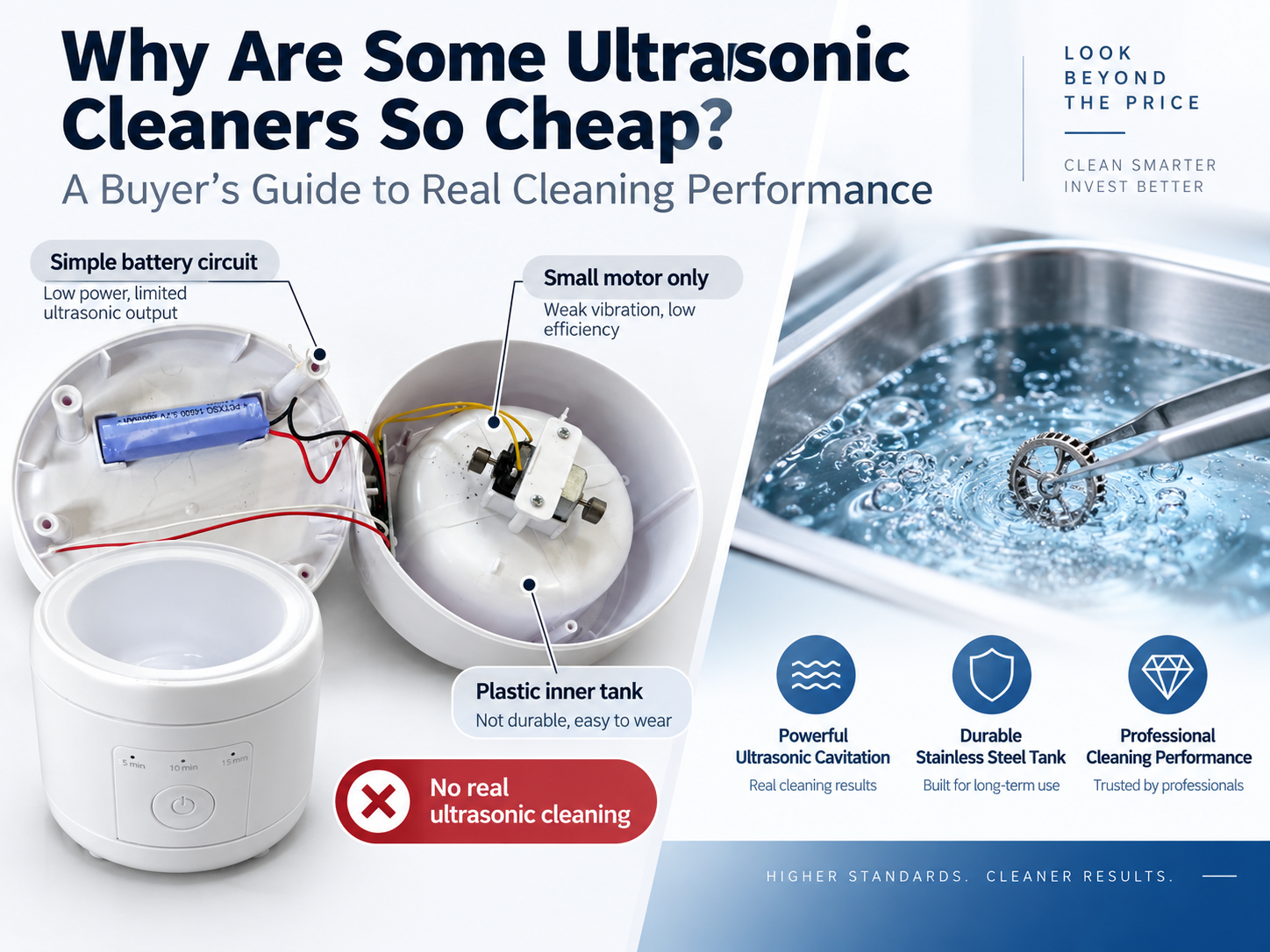
Before buying a cheap ultrasonic cleaner, B2B buyers should verify whether the machine produces genuine ultrasonic cavitation. Some low-cost products may only create mechanical vibration through a small motor.
When comparing ultrasonic cleaners from different suppliers, buyers often notice a surprisingly large price gap. One machine may cost several times more than another model with a similar appearance, capacity, and control panel.
This naturally raises an important question:
Why are some ultrasonic cleaners so cheap?
In many cases, the difference is not simply related to labor costs, brand margins, or packaging. Some low-cost products may reduce the core components, simplify the electrical system, replace stainless steel with plastic, or even sell a product that creates vibration without producing genuine ultrasonic cavitation.
For importers, distributors, dental suppliers, jewelry equipment buyers, and private-label brands, the cheapest quotation may create higher risks in product returns, customer complaints, safety claims, and long-term reputation.
1. A Low Price Does Not Always Mean Better Purchasing Value
A genuine ultrasonic cleaner requires more than a tank, a switch, and a small motor.
A properly designed ultrasonic cleaning machine normally includes:
- An ultrasonic generator
- One or more piezoelectric ultrasonic transducers
- A tank designed to transmit ultrasonic energy
- Temperature and timer controls
- Proper grounding and electrical protection
- Stable wiring and insulation
- Suitable materials for water, detergents, and heat
- Quality control during assembly and testing
These components work together to create high-frequency pressure waves in the cleaning liquid. The pressure changes form microscopic bubbles that rapidly collapse. This process, known as cavitation, helps remove dirt from small gaps, surfaces, holes, and complex shapes.
If a product only produces mechanical movement through a small motor, it may look active in water but still lack the cavitation effect required for genuine ultrasonic cleaning.
2. Some Low-Cost Products May Only Use a Small Motor
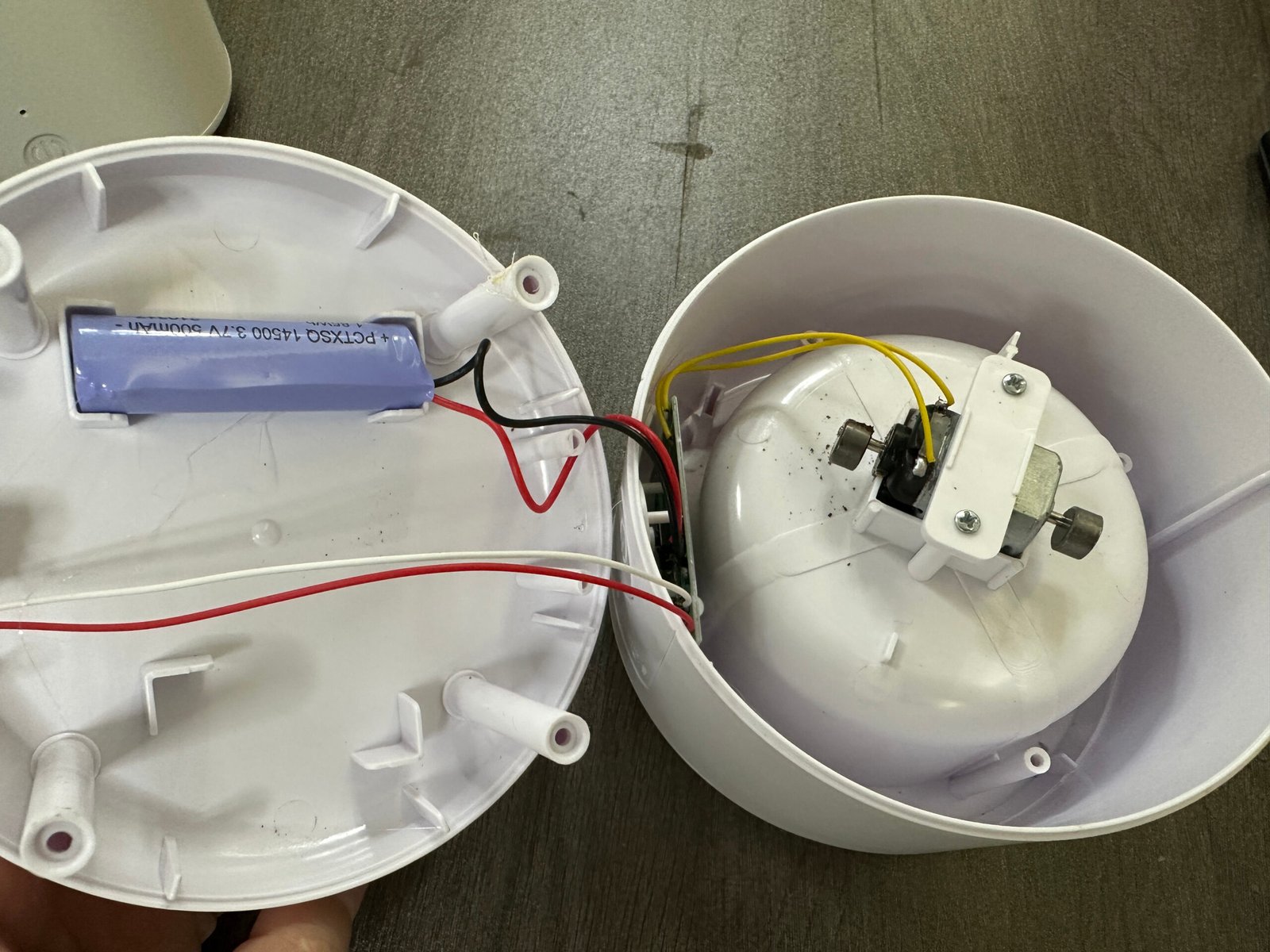
One warning sign is a product that contains a small motor, an eccentric weight, a simple switch, and basic wiring, but no visible ultrasonic transducer or dedicated ultrasonic generator.
A motor can create vibration or water movement. However, vibration alone is not proof of ultrasonic cleaning.
For a product to be marketed as an ultrasonic cleaner, the supplier should be able to provide clear technical information such as:
- Rated ultrasonic frequency, for example 40 kHz or 48 kHz
- Ultrasonic power
- Number and type of transducers
- Generator specifications
- Tank material and thickness
- Actual cavitation or cleaning test results
- Electrical safety and compliance documentation
A simple motor-and-switch structure may be cheaper to manufacture because it removes the cost of the generator, transducers, precision bonding, and ultrasonic testing.
This is why buyers should not judge a machine only by its appearance, noise, or the movement of water. A machine may make sound and vibration without delivering meaningful ultrasonic energy.
3. Why the Tank Material Matters
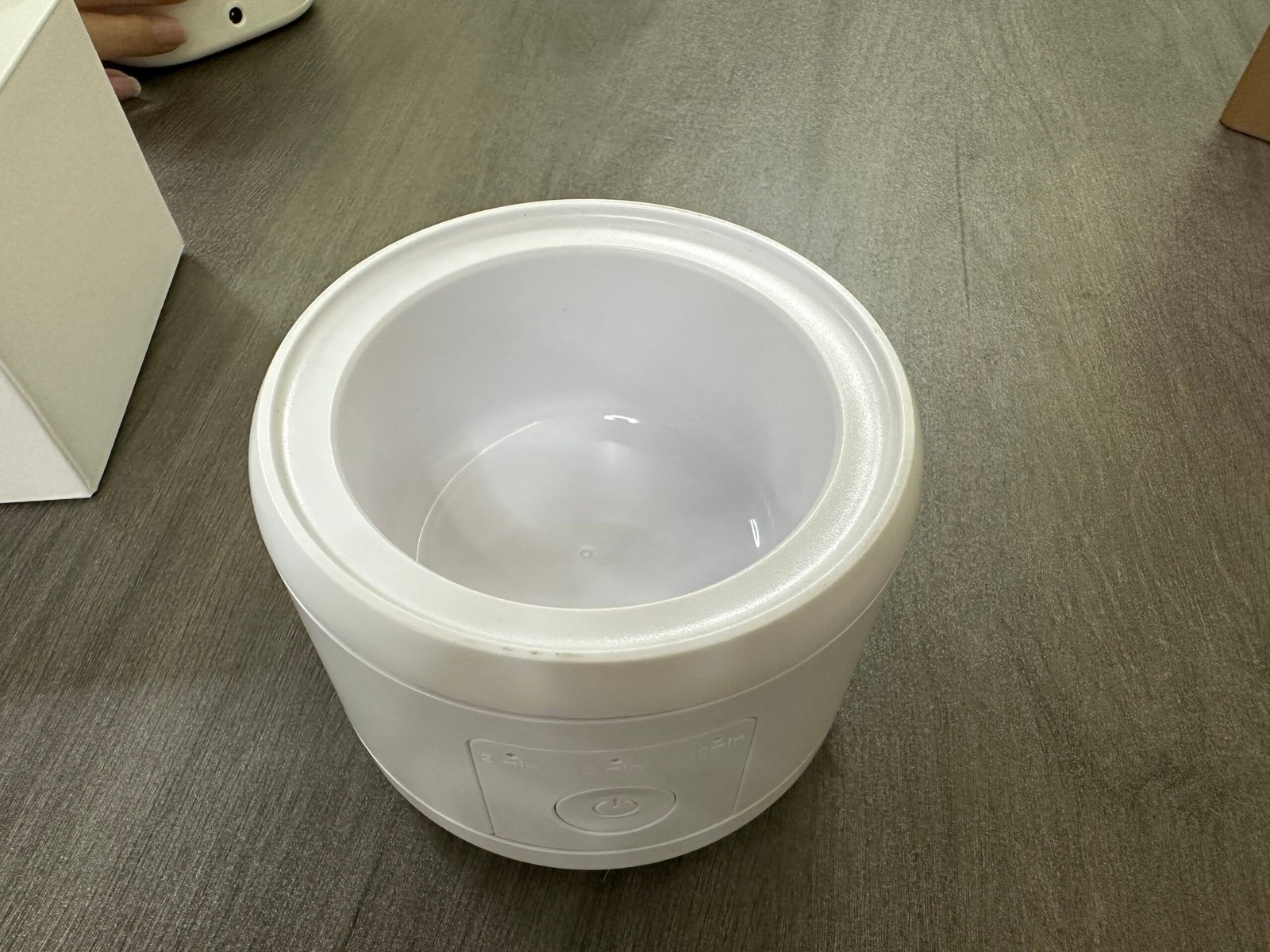
The second major cost-saving method is replacing a stainless steel tank with a plastic inner chamber.
Plastic can reduce material and manufacturing costs. It may also make a product lighter and easier to assemble. However, the suitability of plastic depends on its exact grade, thickness, temperature resistance, chemical compatibility, and long-term durability.
A plastic chamber is not automatically unsafe. Some engineered plastics are suitable for specific applications. The problem occurs when a supplier cannot clearly identify the material or provide relevant test information.
For professional purchasing, buyers should ask:
- What exact plastic material is used?
- Is it suitable for heated water?
- Is it compatible with cleaning detergents?
- Is it resistant to repeated vibration?
- Has migration or particle-shedding testing been completed?
- Is the chamber intended for oral-care or personal-care items?
- What is the recommended operating temperature?
These questions become especially important when the cleaner is used for retainers, aligners, dentures, mouthguards, toothbrush heads, or other items that may later be placed in or near the mouth.
4. Potential Microplastic and Chemical Exposure Concerns
Plastic surfaces can age over time. Heat, detergents, ultraviolet exposure, repeated vibration, abrasion, and chemical contact may affect the material.
Depending on the plastic formulation and operating conditions, deterioration may create concerns about:
- Surface cracking
- Discoloration
- Odor
- Chemical migration
- Small particles or microplastic shedding
- Reduced mechanical strength
- Difficult-to-clean scratches and biofilm accumulation
This does not mean that every plastic tank releases dangerous quantities of microplastics. The actual risk depends on the material, manufacturing process, operating conditions, and test results.
The World Health Organization has stated that available evidence regarding microplastics in drinking water remains limited and that important knowledge gaps still exist. This is precisely why suppliers should avoid making unsupported “completely safe” claims without material and migration data. Buyers can review the WHO report on microplastics in drinking water when evaluating risk communication.
For a supplier, the responsible approach is not to ignore the issue. It is to select appropriate materials, control temperature and chemicals, and provide evidence that supports the intended application.
5. Stainless Steel Is Still the Preferred Choice for Many B2B Applications
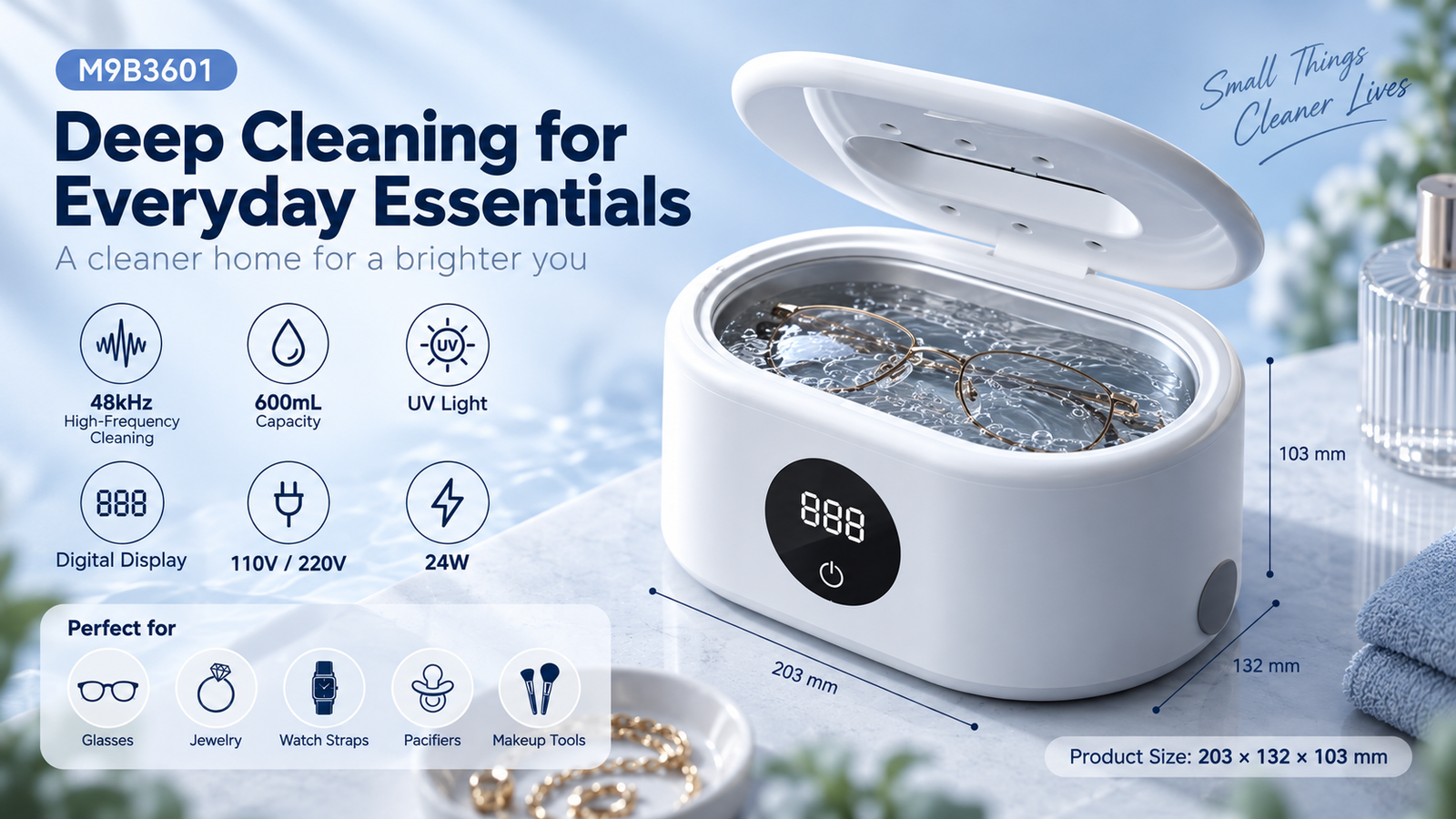
For commercial, dental, laboratory, jewelry, and industrial applications, stainless steel is widely preferred because it offers:
- Better resistance to heat
- Better resistance to detergents
- Higher mechanical strength
- Easier cleaning and disinfection
- Better compatibility with ultrasonic transducers
- Longer service life
- More professional appearance
- Easier inspection and maintenance
A stainless steel tank also provides a stable surface for transmitting ultrasonic energy. The tank, transducers, generator, and control system must be designed as one working system.
The material alone does not guarantee performance, but a properly manufactured stainless steel tank generally gives buyers a stronger foundation for durability and consistent cleaning.
6. The Hidden Cost of Buying the Cheapest Machine
A low purchase price may appear attractive, especially for large-volume orders. However, the total cost can increase after shipment.
Potential hidden costs include:
- High return rates
- Replacement requests
- Customer complaints
- Product recalls
- Poor marketplace reviews
- Brand damage
- Additional inspection expenses
- Repackaging and reshipping
- Difficulty obtaining technical support
- Compliance problems in the target market
For distributors and private-label brands, a product failure does not only affect one unit. It can affect the entire product range and the buyer’s relationship with retailers and end customers.
A reliable supplier should help reduce these risks before the order is confirmed, not simply offer the lowest initial price.
7. How to Check Whether a Product Is a Real Ultrasonic Cleaner
Before placing an order, buyers can request the following evidence:
Technical documentation
Ask for:
- Frequency specification
- Ultrasonic power rating
- Generator information
- Transducer quantity
- Tank material specification
- Heating power
- Timer range
- Electrical protection details
- Product testing records
Sample inspection
For a sample machine, check:
- Whether the tank is stainless steel or plastic
- Whether the supplier can identify the tank material
- Whether the machine has an ultrasonic generator
- Whether transducers are properly installed
- Whether the water shows consistent cavitation
- Whether heating and timer functions work correctly
- Whether wiring and grounding are properly protected
Cleaning comparison
Use the same water, detergent, object, temperature, and cleaning time to compare samples. Test difficult items such as:
- Small metal parts
- Jewelry
- Dental appliances
- Watch components
- Fine holes and grooves
- Grease-contaminated components
Do not rely only on noise level. A louder machine is not automatically a better machine.
8. Questions Every B2B Buyer Should Ask the Supplier
Before approving a supplier, ask:
- Does this machine use piezoelectric ultrasonic transducers?
- What is the actual operating frequency?
- What is the rated ultrasonic power?
- What material is used for the inner tank?
- Is the tank suitable for heated water and detergent?
- Can you provide a wiring diagram or internal component photos?
- Has the machine passed functional testing before shipment?
- Can you provide a sample for independent testing?
- What warranty and spare-parts support are included?
- Can the supplier support OEM, private-label, and compliance documentation?
A professional supplier should answer these questions clearly and consistently.
9. What Reliable Suppliers Should Focus On
A responsible ultrasonic cleaner manufacturer should focus on:
- Real ultrasonic performance
- Stable generator design
- Correct transducer installation
- Durable tank materials
- Electrical safety
- Repeatable quality control
- Traceable production records
- Clear operating instructions
- Appropriate application limitations
- Long-term after-sales support
The goal is not to make every product unnecessarily expensive. The goal is to avoid removing the very components that make ultrasonic cleaning possible.
Conclusion: Compare the Cleaning System, Not Just the Price
When purchasing an ultrasonic cleaner, the lowest quotation is not always the lowest-cost solution.
A product with only a small motor and simple switch circuit may not deliver genuine ultrasonic cleaning. A low-grade plastic inner chamber may also create durability, chemical compatibility, particle-shedding, and customer trust concerns if its material and testing are not properly documented.
The right purchasing decision should consider:
- Authentic ultrasonic technology
- Frequency and power
- Tank material
- Safety and compliance
- Cleaning performance
- Quality consistency
- Warranty support
- Total cost of ownership
For B2B buyers, the most reliable supplier is not simply the one offering the cheapest machine. It is the supplier that can explain what is inside the machine, demonstrate how it works, and provide consistent quality from the first sample to mass production.
Looking for a Reliable Ultrasonic Cleaner Manufacturer?
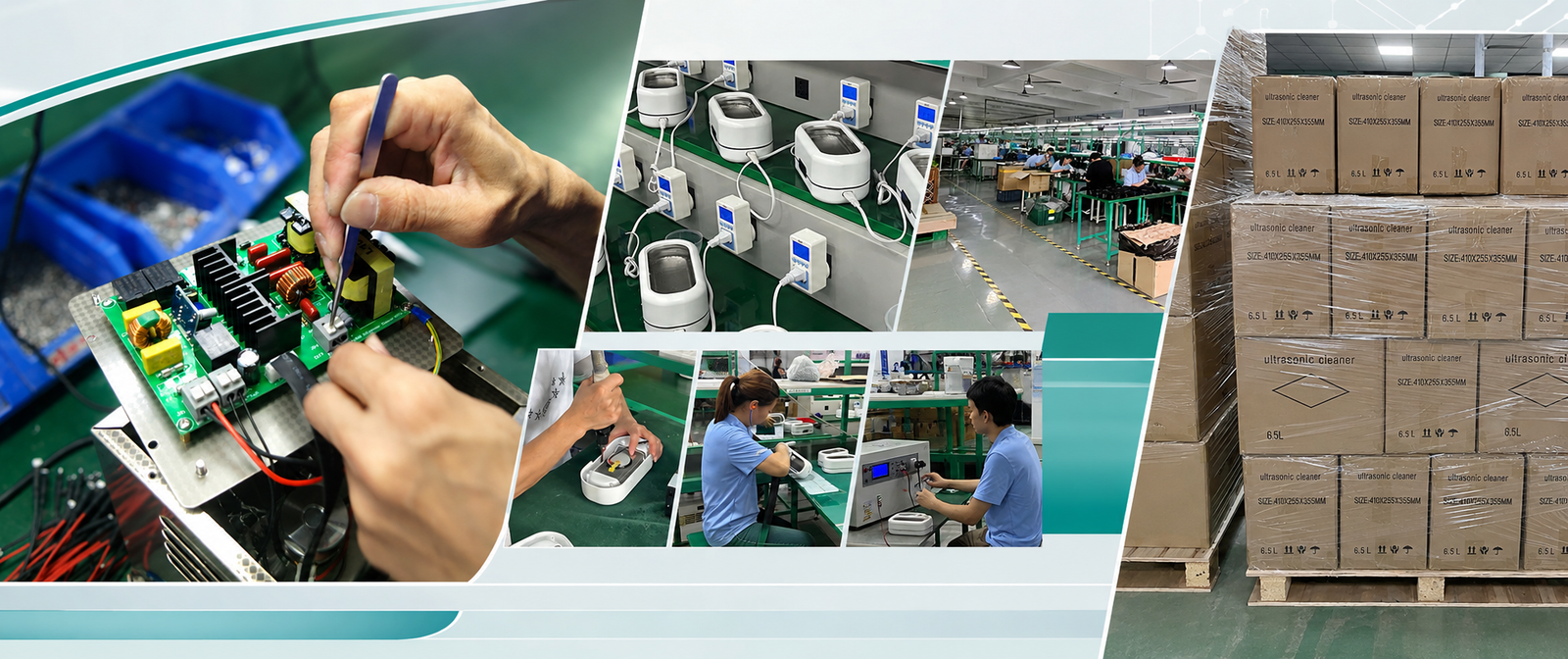
SONICLEANTECH is a China-based ultrasonic cleaner manufacturer with over 18 years of manufacturing experience, supplying household, commercial, and industrial ultrasonic cleaning solutions for global B2B customers.
We focus on genuine ultrasonic cleaning technology, stable product performance, appropriate tank materials, and consistent quality control from sampling to mass production.
For distributors, importers, private-label brands, and OEM/ODM buyers, we can support:
- OEM & ODM ultrasonic cleaner manufacturing
- Private label and custom branding
- Household, dental, commercial, and industrial models
- Multiple ultrasonic frequencies and power configurations
- Product customization for different markets
- Stable bulk production and long-term supply
Looking for an ultrasonic cleaner supplier for your next project? Contact SONICLEANTECH to discuss your application, target market, and OEM requirements.