
110V vs 220V Ultrasonic Cleaner: A Voltage & Plug Guide for Importers
Compare 110V vs 220V ultrasonic cleaners and learn how importers should verify mains frequency, plug type, grounding, power rating and nameplate details before ordering.

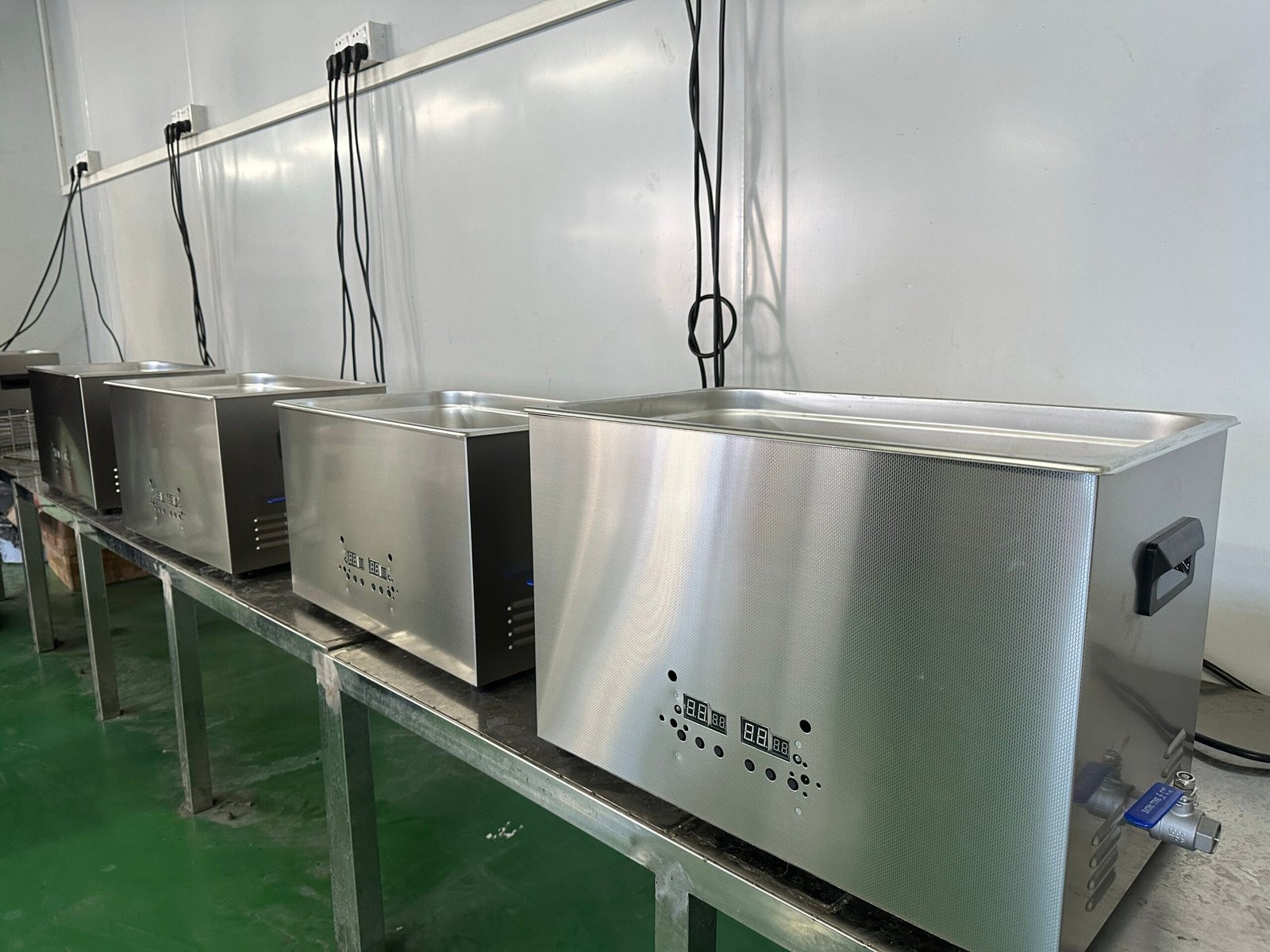
Quick answer: Choosing between a 110V and 220V ultrasonic cleaner is not simply a matter of changing the plug. An importer should confirm the destination market’s mains voltage and frequency, the cleaner’s complete input rating, plug and grounding arrangement, total power draw, compliance version and nameplate before approving a sample or purchase order. Compact models may use a wide-input adapter, while larger heated cleaners are often built as market-specific electrical versions.

Why voltage mistakes become expensive for importers
A voltage mismatch can create more than an inconvenient return. Depending on the design, connecting equipment to the wrong supply may prevent operation, damage the power section or create an electrical-safety risk. A travel adapter only changes the physical connection; it does not automatically convert voltage or frequency.
The International Electrotechnical Commission maintains a World Plugs reference for country-level plug, voltage and frequency information. Buyers should use it as a starting point and confirm local requirements with their importer, testing laboratory or electrical-compliance specialist before production.
Four specifications that buyers often confuse
| Specification | What it means | What the buyer should verify |
|---|---|---|
| Mains voltage | The input supply, such as 100–120V or 220–240V AC | The complete rated input range printed on the product or adapter |
| Mains frequency | The grid frequency, normally 50Hz or 60Hz | Whether the exact product version is rated for the destination frequency |
| Ultrasonic frequency | The cleaning frequency, such as 40kHz or 48kHz | Do not confuse this with 50/60Hz mains frequency |
| Rated power | Total or component power in watts | Ultrasonic power, heater power and maximum electrical input |
For example, “40kHz” describes the ultrasonic cleaning system—not the electrical-grid frequency. A specification sheet that only says “40kHz, 300W” is therefore incomplete for an importer. The purchase order should also state the required AC input, 50/60Hz rating, plug, cord and grounding configuration.
110V vs 220V ultrasonic cleaner: which version should you order?
Order the version designed and labelled for the destination market. North American orders commonly require a 100–120V, 60Hz configuration, while many European markets use approximately 220–240V, 50Hz. Japan requires special attention because nominal voltage is 100V and grid frequency varies by region. These are procurement starting points, not a substitute for country-specific verification.
- For one-country distribution: specify the exact country, voltage, frequency and plug in the RFQ.
- For multi-country e-commerce: check whether a genuine wide-input adapter or power supply is available, then approve the correct market cord or plug for each SKU.
- For heated commercial machines: treat voltage as a production configuration. Do not assume a high-power heater can be changed from 110V to 220V with a plug adapter.
- For private-label orders: make the electrical version visible on the carton, rating label, manual and inventory barcode to prevent warehouse mix-ups.
Household units and commercial baths need different checks
Compact household and retainer cleaners
Some compact products use an external adapter rated for a broad input range. As a current site example, the M9C3202 compact ultrasonic retainer cleaner lists 100–240V and 50/60Hz. That still does not mean one retail package is automatically ready for every country: the supplied plug, adapter markings, instructions and applicable compliance documentation must match the target market.
Heated commercial ultrasonic cleaners
Larger baths combine ultrasonic generators, heaters and sometimes fans or other components. Their electrical configuration and current draw need closer review. The VGT-6250 2.5L heated ultrasonic cleaner, for example, lists a 100–120V/60Hz version and an optional 220–240V/50Hz version. The 15L 40kHz commercial ultrasonic cleaner states that power supply can be configured for market requirements.
This distinction is reflected in established manufacturers’ documentation. The official Bransonic Ultrasonic Bath operating manual provides separate regional electrical specifications and instructs users to connect the unit to an appropriate grounded socket. It also warns users to keep the control area dry and not to remove the grounding connection. Always follow the manual supplied with the exact machine you purchase.
Why the plug alone is not enough
Two machines can have similar-looking plugs and still have different voltage, current or grounding requirements. Conversely, a product may accept a broad input range but still need a different detachable cord for each market. Before production, confirm all of the following:
- Rated voltage range
- Rated mains frequency
- Maximum input power or current
- Ultrasonic power and heater power listed separately
- Plug type and whether it is grounded
- Detachable cord or fixed cord
- Adapter manufacturer, model and output rating where applicable
- Fuse or overcurrent requirements stated in the manual
- Rating-label and carton-label artwork
- Market-specific test reports, declarations and user instructions required for the destination
A practical sample-approval test for importers
Electrical details should be verified on the physical sample—not only in a quotation. Use this sequence before mass production:
- Photograph the product rating label, adapter label, plug and carton electrical mark.
- Compare every value with the signed specification sheet and purchase order.
- Confirm that the sample plug matches the destination country and that protective grounding is present where the design requires it.
- Run the sample from a correct, protected local supply; never use an improvised adapter to “see if it works.”
- Test ultrasonic cleaning, heating and the longest intended cycle under a realistic load.
- Check whether the cord, adapter or enclosure becomes abnormally hot.
- Confirm that the production golden sample and inspection checklist identify the electrical SKU clearly.
For a larger order, ask the supplier to include the voltage and plug variant in pre-shipment inspection records. This is especially important when several regional versions are produced in the same factory.
Questions to send an ultrasonic cleaner supplier
- Is this exact model single-voltage, dual-voltage or wide-input?
- Is the stated input rating for the machine itself or only for its external adapter?
- Can you supply both 50Hz and 60Hz versions?
- Which grounded plug and cord options are available?
- What are the ultrasonic power, heater power and maximum total input?
- Will the nameplate, manual and retail carton show the correct regional rating?
- Which compliance documents apply to this exact electrical version?
- How will different voltage SKUs be separated and identified during packing?
Frequently asked questions
Can I use a 220V ultrasonic cleaner on 110V?
Not unless the product label explicitly includes the lower voltage or a correctly sized, approved transformer is specified by a qualified professional. A plug adapter does not convert voltage.
Does 50Hz vs 60Hz matter for an ultrasonic cleaner?
It can. The product’s input circuitry and other electrical components must be designed for the stated mains frequency. Buy only a version whose nameplate includes the destination frequency. This is separate from the cleaner’s ultrasonic frequency in kilohertz.
Is a 100–240V cleaner universal worldwide?
It may accept the listed voltage range, but worldwide readiness also depends on frequency, plug or cord, grounding, labels, instructions and local compliance requirements. Verify the complete regional package.
Which is better: 110V or 220V?
Neither is inherently better for cleaning. The correct choice is the version engineered for the user’s electrical supply and the intended market. Cleaning performance should be evaluated separately through frequency, power, tank loading, chemistry, temperature and application testing.
Summary for buyers
The safest procurement rule is simple: define the destination market before confirming the electrical specification. Verify voltage, mains frequency, plug, grounding, total input and label artwork on the sample, then carry those details into the purchase order and inspection checklist. For distributors planning several regional SKUs, SONICLEANTECH can discuss household, retainer and commercial configurations through its distributor and wholesale program.
Need a market-specific quotation? Contact SONICLEANTECH with your destination country, required voltage and frequency, plug type, application, tank size and estimated order quantity.