
What Jewelry Should Not Go in an Ultrasonic Cleaner? Safety Guide
A practical jewelry ultrasonic cleaner safety guide covering delicate gems, treated stones, loose settings, safer alternatives and retailer instructions.

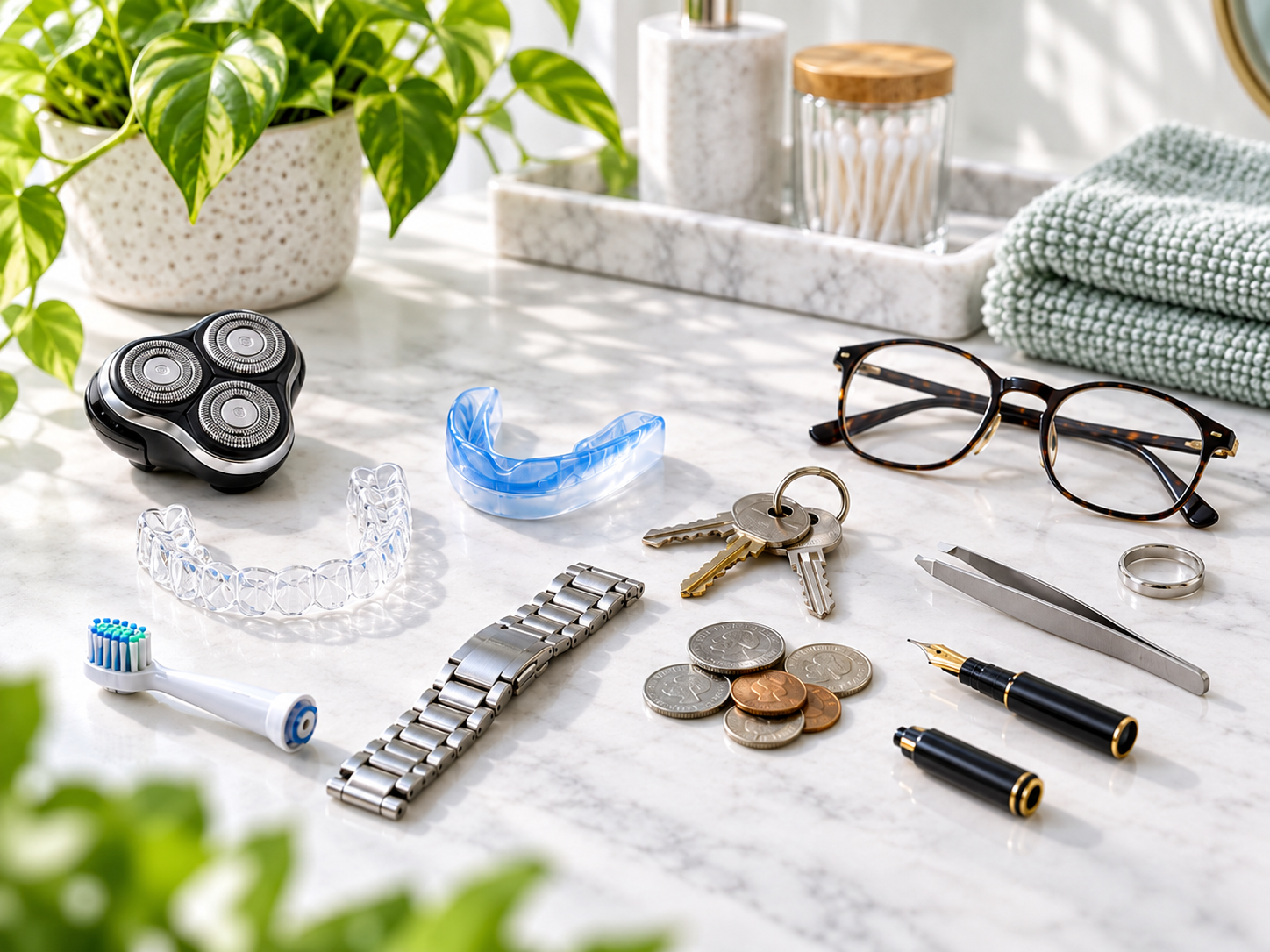
Quick answer: Do not put every piece of jewelry into an ultrasonic cleaner. Avoid pearls, coral, amber, ivory and other organic gems; opal, turquoise and other heat-sensitive or porous stones; fracture-filled, coated, oiled or wax-treated gems; glued components; antique pieces; and jewelry with loose or damaged settings. If you cannot identify the gemstone, treatment or construction, use a safer manual method or ask a qualified jeweler.
Why Jewelry Ultrasonic Cleaner Safety Depends on the Item
An ultrasonic cleaner sends high-frequency sound through liquid, creating cavitation that can help remove oils and debris from crevices that are difficult to reach with a cloth or brush. That is useful around chains, prongs and the backs of compatible stones—but the same process can expose weak settings, delicate materials and unstable treatments.
The Gemological Institute of America (GIA) guide to gems and ultrasonic cleaners warns that not all gems and jewelry can be cleaned safely this way. The risk is not determined by the metal alone. A gold ring with an untreated, securely set stone may have a different cleaning requirement from a gold ring containing an oiled emerald, glued accent or fragile vintage repair.
What Jewelry Should Never—or Usually Not—Go in an Ultrasonic Cleaner?
1. Pearls, coral, amber and other organic gem materials
GIA identifies pearls, coral, tortoise shell, ivory, shell cameos, jet and amber as organic materials that should not be placed in an ultrasonic cleaner. They can be porous or sensitive to heat and chemicals. A machine marketed as a “jewelry cleaner” does not make these materials compatible.
2. Opal, turquoise and other heat- or temperature-sensitive gems
Some gemstones can be affected by heat or sudden temperature changes. GIA’s care guidance lists examples including tanzanite, sunstone, moonstone, fluorite, iolite, kunzite, lapis lazuli, malachite, opal, topaz, turquoise and zircon. This is not a complete list, so identification matters more than memorizing a short “safe stone” chart.
3. Fracture-filled, oiled, waxed, resin-filled or coated stones
Gem treatments may improve apparent color or clarity but can change how the stone responds to cleaning. Surface-reaching fractures may be filled with oil, resin, wax or glass-like material. Heat, cleaning chemistry and ultrasonic energy can damage or remove some treatments. Emeralds are commonly treated with oil, resin or wax, while other gems—including some diamonds—may also be fracture filled.
If a GIA report or seller disclosure identifies a treatment, follow the care instructions for that specific gem. If the treatment is unknown, do not assume ultrasonic cleaning is safe.
4. Jewelry with loose stones, worn prongs or touching girdles
Ultrasonic cleaning does not necessarily create a defect, but vibration can reveal an existing weakness. GIA advises checking that gemstones are securely mounted before and after cleaning and notes that vibration can shake stones loose or chip gems whose girdles touch.
Stop and ask a jeweler to inspect the piece if a stone moves, a prong is bent, the setting catches on fabric, the ring has been resized or repaired, or the piece has suffered an impact.
5. Glued jewelry, costume jewelry and mixed-material pieces
Many fashion-jewelry elements are bonded rather than mechanically set. Cleaning liquid and ultrasonic energy may affect adhesive, plating, painted details, enamel or decorative coatings. Treat the item according to its most vulnerable material—not the strongest metal visible on the outside.
6. Antique, oxidized or intentionally patinated jewelry
Darkened recesses may be part of the design, not dirt. Aggressive chemistry or prolonged cleaning can alter an intentional patina or expose previous repairs. GIA recommends delicate handling for vintage jewelry; valuable antique pieces are better assessed by a professional before cleaning.
Are Diamonds, Gold and Silver Always Safe?
No material name is an automatic approval.
- Diamond: many untreated diamonds in sound settings can be suitable, but fracture-filled or coated diamonds require special care. A worn prong can also make an otherwise durable diamond ring unsuitable.
- Gold: plain gold jewelry may be a candidate when it has no delicate stones, glue, enamel, fragile repairs or intentional surface finish. Avoid chlorine bleach and abrasive household cleaners, which can damage alloys or surfaces.
- Silver: simple, structurally sound silver pieces may be compatible, but oxidized finishes, plated areas, glued stones and soft or porous gems change the answer.
- Platinum and stainless steel: the metal may tolerate cleaning, but settings, inserts, coatings and attached materials must still be checked.
The safest decision uses the complete construction of the piece, not a single material label.
A 60-Second Check Before You Start
- Identify every material. Check the metal, gemstones, enamel, plating, adhesive and any non-metal insert.
- Check for treatments. Review the seller’s disclosure or a laboratory report for filling, oiling, coating, dyeing or heat treatment.
- Inspect the setting. Look for movement, gaps, bent prongs, worn channels, cracks and previous repairs.
- Read the jewelry care instructions. The item manufacturer’s restrictions take priority.
- Read the cleaner manual. Confirm permitted liquids, fill level, basket use and cycle options.
- When uncertain, stop. Unknown stones and sentimental, antique or high-value pieces should be checked by a qualified jeweler.
How to Clean Approved Jewelry More Safely
Only proceed after confirming that the complete piece is compatible.
- Use clean water or a compatible jewelry-cleaning solution in the concentration specified by its manufacturer. Our ultrasonic cleaning solution guide explains why chemistry must match both the item and the machine.
- Fill the tank to the indicated operating level. Never run the cleaner dry.
- Use the supplied basket or holder. Do not place jewelry directly on the tank bottom.
- Keep pieces separated so they do not scratch or strike one another.
- Choose the shortest validated cycle first. A longer cycle is not automatically better.
- Watch the first cycle and stop if the item moves excessively or the machine behaves unusually.
- Remove and inspect the piece, especially the setting. GIA advises rinsing jewelry in a glass of water rather than directly over an open sink, where a loose stone or small piece could be lost.
- Dry according to the jewelry maker’s guidance before storage or wear.
Never use flammable liquids in a standard ultrasonic tank. Do not improvise with bleach, abrasive powder or an unverified household chemical.
Does a Higher Frequency Make Every Gem Safe?
No. Frequency affects cavitation characteristics, but it does not cancel problems caused by porosity, fractures, unstable treatments, glue, a weak mounting or heat-sensitive material. A 48kHz home cleaner may provide a different cleaning action from a 40kHz unit, yet neither frequency is a universal gemstone-safety certificate.
SONICLEANTECH’s M9B1303 350mL ultrasonic jewelry cleaner, for example, uses a 48kHz frequency, 24W rated power and a SUS304 stainless steel tank. Those specifications describe the machine; they do not replace the buyer’s responsibility to confirm that a particular jewelry item is compatible.
What Retailers and Private-Label Buyers Should Put in the Instructions
Clear limitations protect customers and reduce avoidable returns. Packaging, manuals and online listings should not say “safe for all jewelry.” A practical instruction set should include:
- a statement that suitability depends on gemstone, treatment, setting and construction;
- a clear exclusion list covering organic, porous, treated, glued, antique and damaged items;
- a warning to inspect mountings before and after each cycle;
- approved liquid and prohibited-chemical guidance;
- fill-level, basket and cycle-time instructions;
- a recommendation to consult a qualified jeweler when materials or treatments are unknown;
- customer-support contact details and model-specific troubleshooting information.
For distributors comparing household models, tank capacity, usable dimensions, timer logic, voltage, packaging protection and after-sales documentation matter alongside frequency. Review our broader guide to home ultrasonic cleaner uses when planning product positioning.
Frequently Asked Questions
Can I put a diamond ring in an ultrasonic cleaner?
Sometimes, but first confirm that the diamond is not fracture filled or coated and that the setting is secure. A jeweler should inspect valuable, repaired or heavily worn rings.
Can an ultrasonic cleaner loosen stones?
Vibration can expose an already weak setting. Check for movement and worn prongs before and after cleaning, and stop using the machine if anything appears loose.
Can I clean pearl earrings ultrasonically?
No. GIA advises against ultrasonic cleaning for pearls and other organic gem materials. Use the care method recommended for the pearls and their string, adhesive or setting.
Is warm water and dish soap always safe?
It is a safer option for many—but not every—piece. Porous materials, pearls and treated gems can need different care. Check the specific gem and jewelry-maker instructions.
Can I clean several rings at once?
Only if every ring is compatible and the pieces can be kept from touching. For valuable jewelry, cleaning one item at a time makes inspection and handling easier.
Should a jewelry-cleaner seller provide a gemstone list?
Yes, but the list should be presented as guidance rather than a guarantee. Treatments, settings, adhesives and item condition can change the answer even for the same gemstone species.
Choose the Cleaner and the Instructions Together
A responsible ultrasonic jewelry cleaner supplier should discuss both product specifications and safe-use communication. If you are sourcing for retail, wholesale or private label, provide your target market, capacity, voltage, packaging and instruction requirements during sample approval.
Contact SONICLEANTECH to discuss a household ultrasonic cleaner and OEM/ODM instruction package.
Summary: Ultrasonic cleaning is useful for compatible, structurally sound jewelry, but it is not universal. Identify the gem and treatment, inspect the setting, follow both manuals and refer uncertain pieces to a professional.