
Cordless Ultrasonic Retainer Cleaner Buying Guide: What Importers Should Verify
A 2026 cordless cleaner announcement puts portability in focus. Use this buyer checklist to evaluate battery claims, cleaning evidence, compatibility, and supplier support before sourcing a cordless ultrasonic retainer cleaner.

Quick answer: When sourcing a cordless ultrasonic retainer cleaner, verify the intended appliance fit, cleaning performance under repeatable test conditions, usable cycles per charge, charging and battery documentation, water-resistance limits, and after-sales support. A frequency or “portable” label alone does not prove that a unit will perform consistently for your customers.
Why cordless retainer cleaners are getting buyer attention
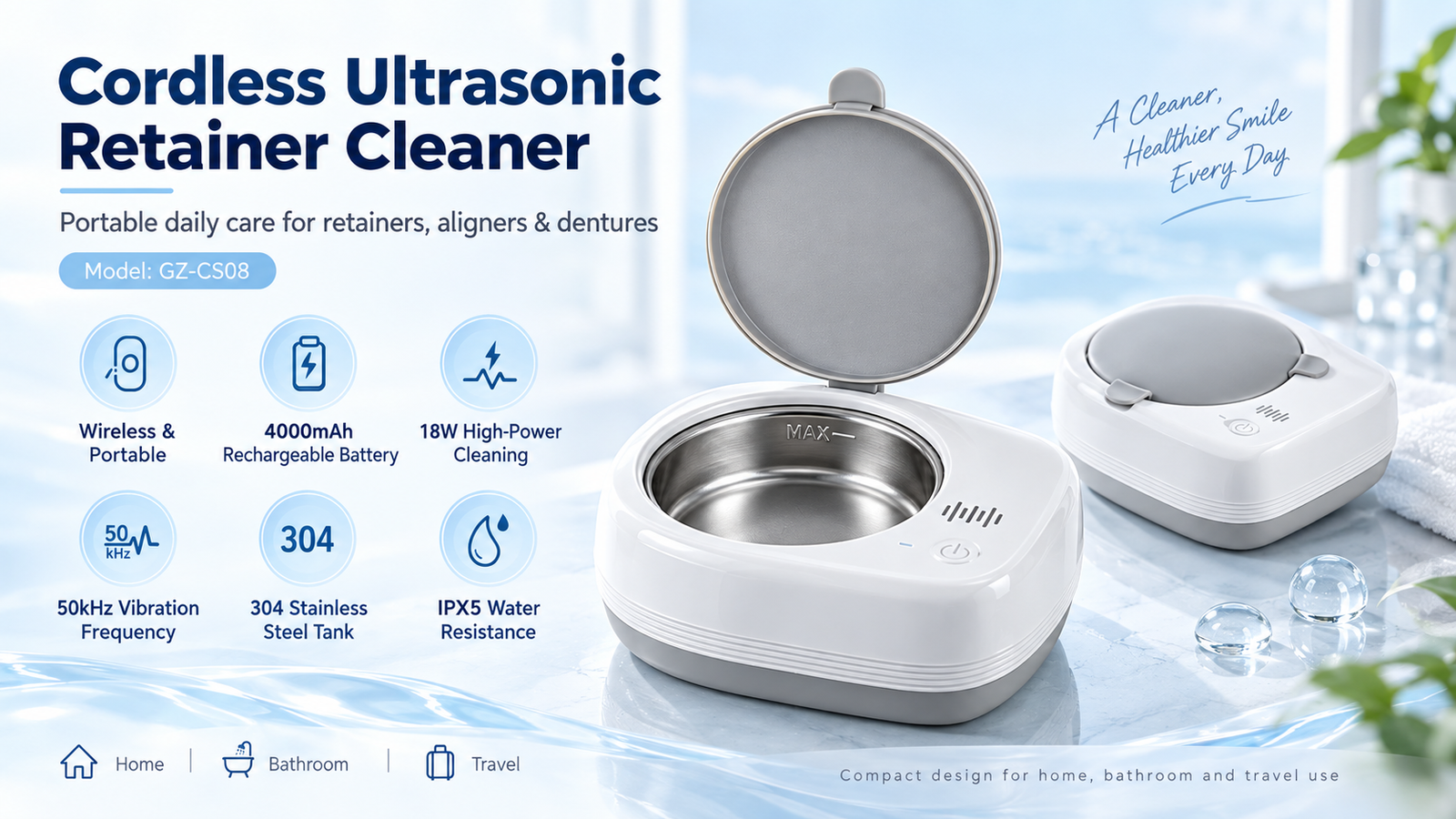
Portability is becoming a more visible product feature in personal-care cleaning. For example, a September 2026 product announcement described an upcoming cordless 48kHz cleaner for removable oral appliances, with USB-C charging and multiple cleaning modes. This is one company announcement, not proof of a market-wide shift or an independent performance test. It does, however, show the kinds of portability claims buyers may encounter when comparing products.
For importers, distributors, and private-label brands, the useful question is not simply whether a cleaner is cordless. It is whether the design, cleaning process, and battery performance match the use case you plan to sell.
1. Check the real use case and usable tank space
Ask which appliances the tank is designed to hold: retainers, clear aligners, night guards, mouth guards, or removable dentures. Request internal tank dimensions and the recommended water level, then test the largest intended appliance in its normal orientation. Nominal capacity in millilitres does not tell you whether a bulky appliance fits without touching the tank walls or lid.
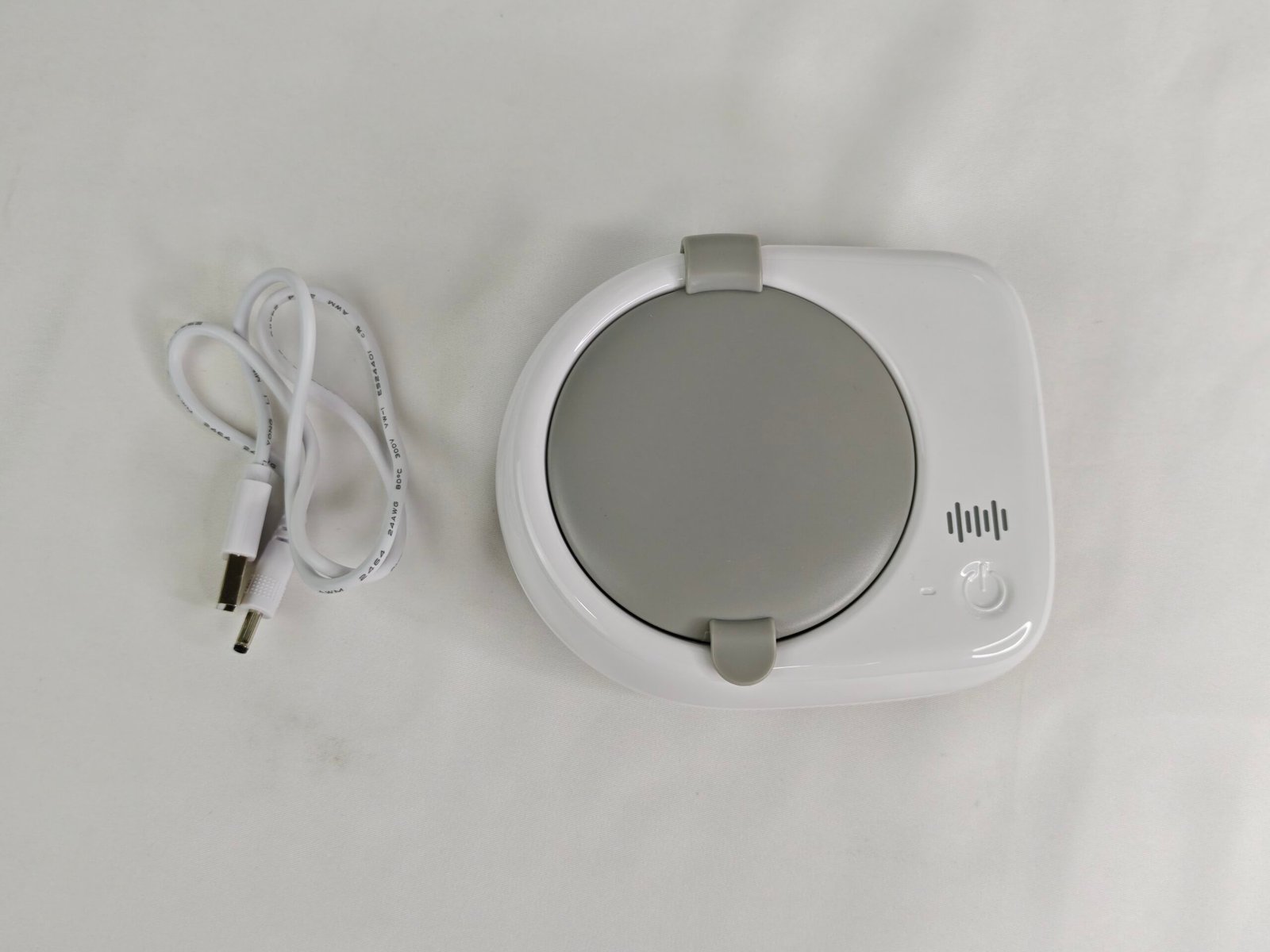
Confirm what is included in the package, such as a basket, charging cable, storage case, or cleaning brush. These details affect customer experience and the landed cost of a wholesale kit.
2. Ask how cleaning performance is measured
Do not compare products by frequency alone. Request a practical test using representative appliances and a defined cleaning routine. The test should document the water level, solution, temperature, cycle time, load position, and how residue removal was assessed. Ask for repeat tests, not just a single demonstration.
The IEC TS 63001:2024 describes methods for measuring cavitation in ultrasonic baths and reactors. IEC also makes clear that this measurement evaluates cavitation, not the secondary result of cleaning an item. In other words, an acoustic or cavitation measurement can support a technical discussion, but it does not replace a cleaning test on the appliance and soil relevant to your customers.
3. Verify battery claims in realistic use
Ask the supplier to state how many complete cycles are supported per charge, which mode and cycle length were used, and whether the figure comes from a measured test or a design estimate. Also request charge time, charging input, battery replacement policy, and test results after repeated charge-and-discharge cycles.
For a retail launch, test the sample after charging it as instructed and record the number of cycles until the cleaner needs to be recharged. Repeat the test with the modes you intend to advertise. If the package includes a USB-C cable, confirm whether a wall adapter is included or sold separately.
4. Confirm compatible materials and safety limits
Compatibility depends on the appliance material, construction, and manufacturer care instructions. Ask for a written compatibility list and clear warnings for items that should not be cleaned ultrasonically. Avoid broad claims that one cycle is suitable for every retainer, aligner, denture, or night guard.
Ultrasonic cleaning should not automatically be described as disinfection or sterilization. If the unit includes UV features or other treatment claims, request the exact test method, conditions, and report that support each claim. Do not publish a percentage or medical benefit based only on a supplier’s verbal statement.
5. Read water-resistance claims carefully
Portable bathroom products may advertise splash resistance. Ask for the relevant test report and explain the rating precisely in the user manual and product listing. Water-resistant does not necessarily mean waterproof or safe to submerge. Check how the charging port, lid, switches, and exterior are protected, and give users a clear cleaning and drying procedure.
6. Review supplier readiness before placing a wholesale order
- Request a sample and written specifications that match the production model.
- Confirm battery and charging documentation for the markets where you plan to sell.
- Check spare-part availability, warranty terms, lead time, packaging, and user-manual languages.
- For OEM/ODM projects, agree on logo placement, packaging artwork, accessory set, and approval samples before mass production.
- Keep marketing claims aligned with the supplied test reports and product instructions.
Buyer checklist at a glance
| What to check | Evidence to request |
|---|---|
| Appliance fit | Tank dimensions, fill line, and sample fit test |
| Cleaning performance | Repeatable test conditions and a relevant residue-removal assessment |
| Battery life | Cycles per charge, mode, test conditions, charge time, and aging data |
| Compatibility | Written use instructions and material limitations |
| Claims and compliance | Applicable reports and exact wording supported by those reports |
| Wholesale readiness | Sample approval, packaging, lead time, warranty, and spare parts |
Frequently asked questions
Is a higher kHz rating enough to prove a cordless cleaner works better?
No. Frequency is one design parameter. Cleaning results also depend on the load, water and cleaning solution, tank geometry, cycle, and placement. Ask for performance evidence using the kind of appliance your customers will clean.
How many cleaning cycles should a cordless retainer cleaner provide per charge?
There is no single figure that fits every product and use pattern. Compare supplier claims only when the mode, cycle duration, battery condition, and test method are disclosed, then verify the claim with a production sample.
Does an ultrasonic retainer cleaner sterilize an appliance?
Do not assume so. Ultrasonic cleaning and sterilization are different claims. Follow the appliance manufacturer’s care instructions and require appropriate evidence before using disinfection or sterilization language.
What should a distributor test before ordering?
Test appliance fit, repeat-cycle performance, battery runtime, charging, water handling, noise, instructions, and package contents. Check that the production sample matches the final specifications and marketing materials.
Discuss a retainer-cleaner sourcing project
SONICLEANTECH supplies ultrasonic cleaner products and OEM/ODM support. Review our compact retainer cleaner range or distributor and wholesale program. For a model comparison, private-label request, or sample quotation, contact our team with your target market, appliance types, and expected order quantity.