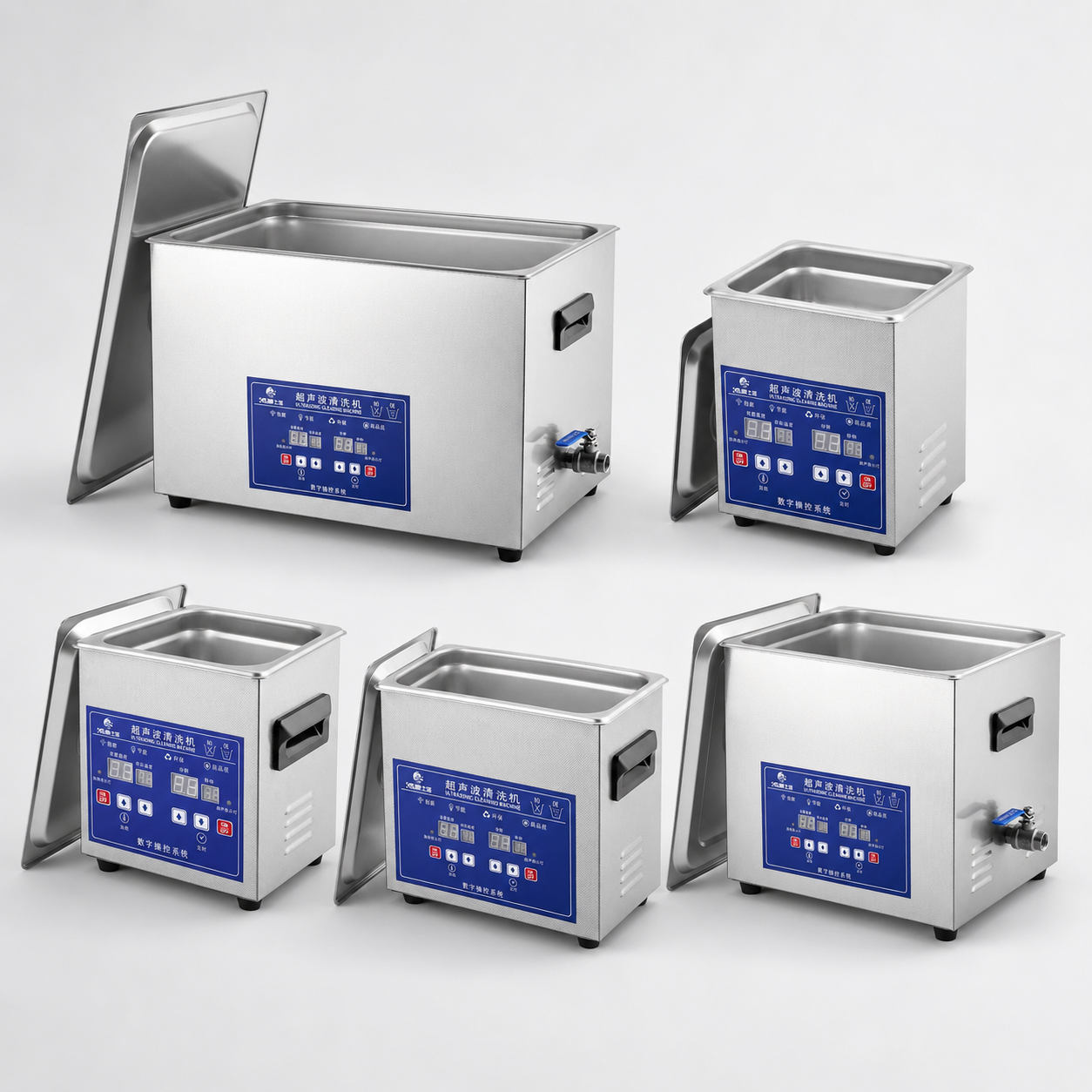
Why Do Commercial Ultrasonic Cleaners Vary So Much in Price?

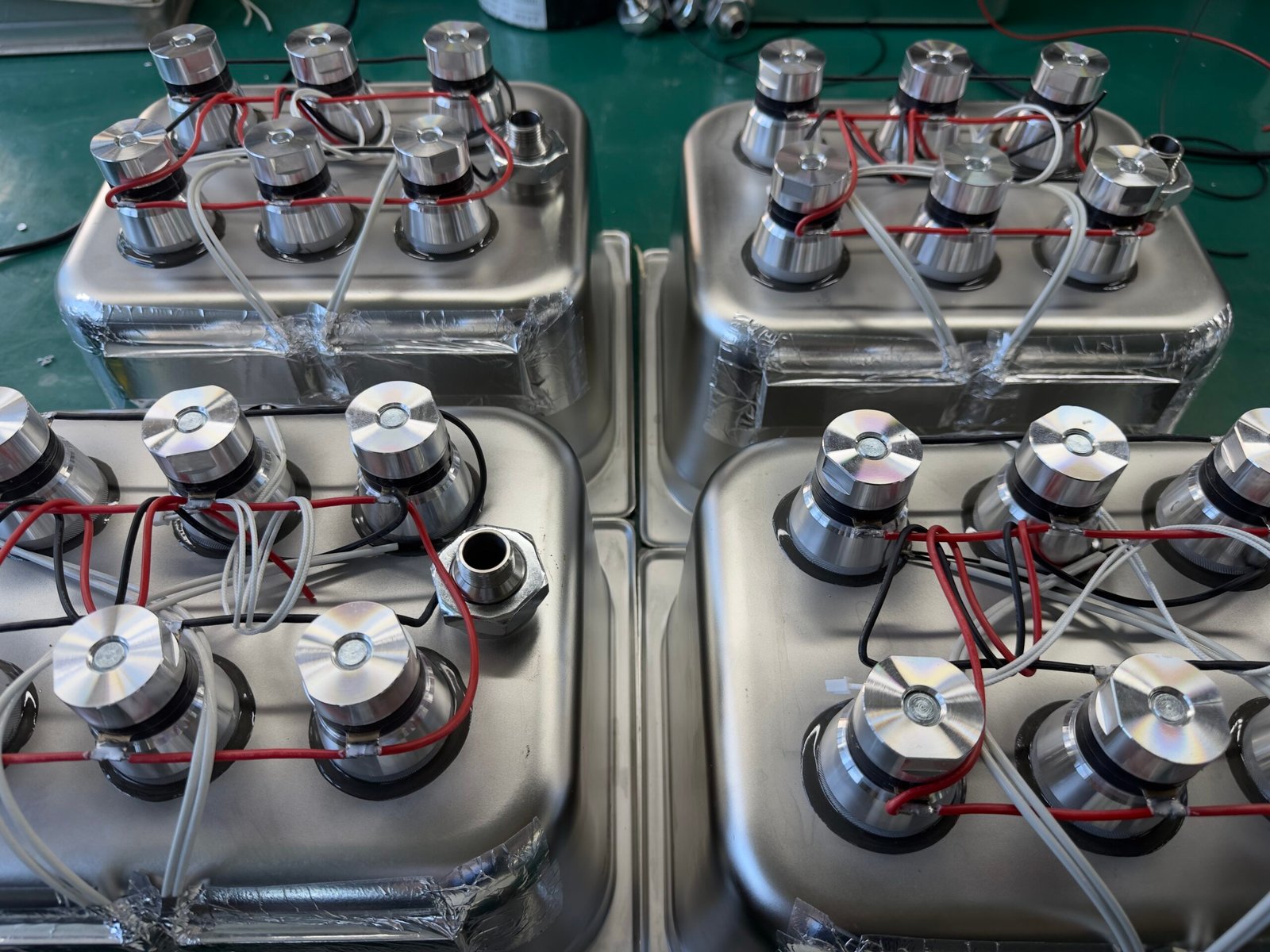
Commercial ultrasonic cleaners may look similar from the outside, but their internal construction, cleaning performance and service life can be very different.
A lower price does not always mean better value. In many cases, the difference comes from components that buyers cannot easily see.
1. Real Ultrasonic Cleaning or Simple Mechanical Vibration?
A genuine ultrasonic cleaner requires three essential parts:
- An ultrasonic generator
- Properly designed ultrasonic transducers
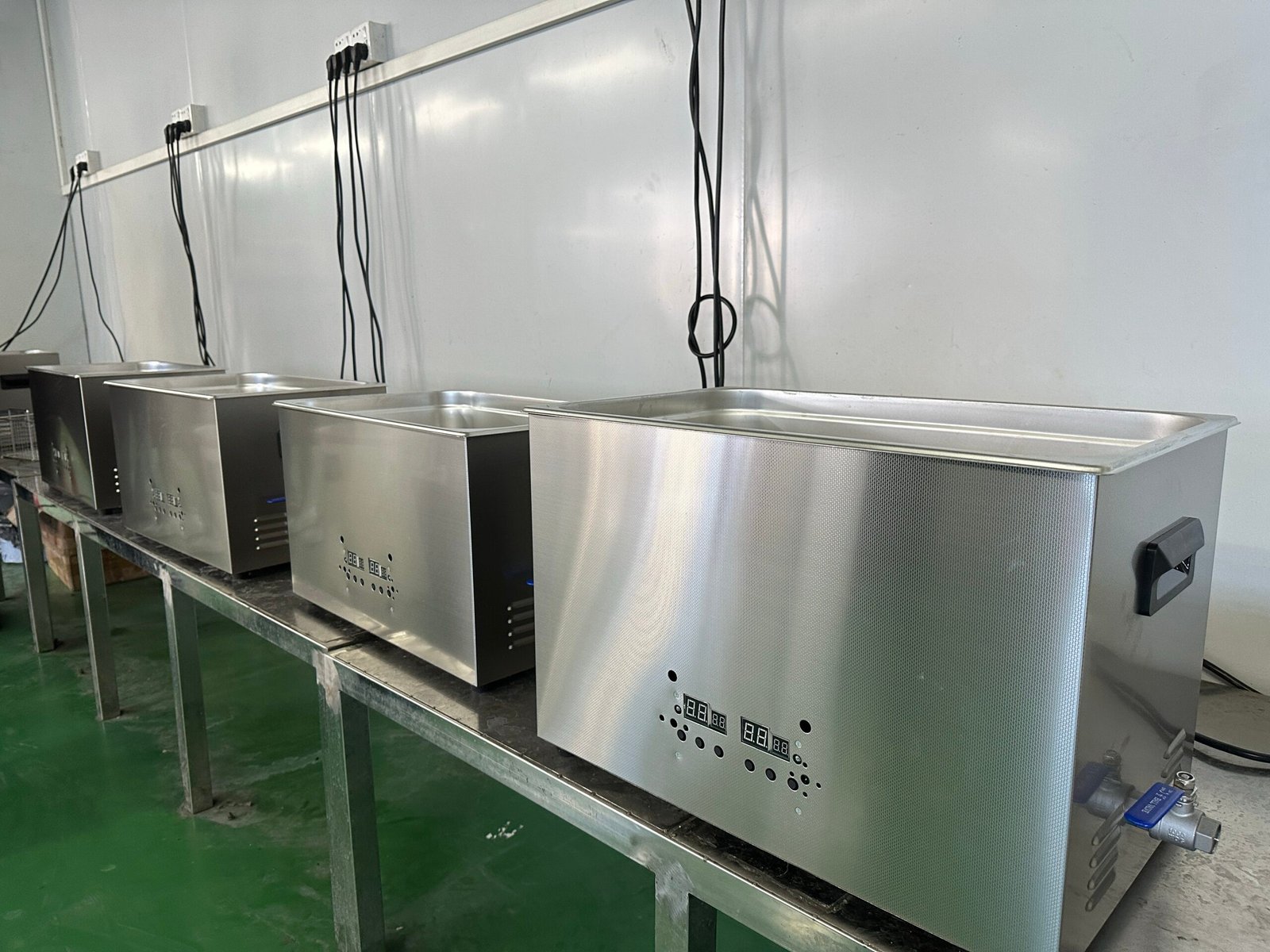
- A stainless-steel tank that can efficiently transmit ultrasonic energy
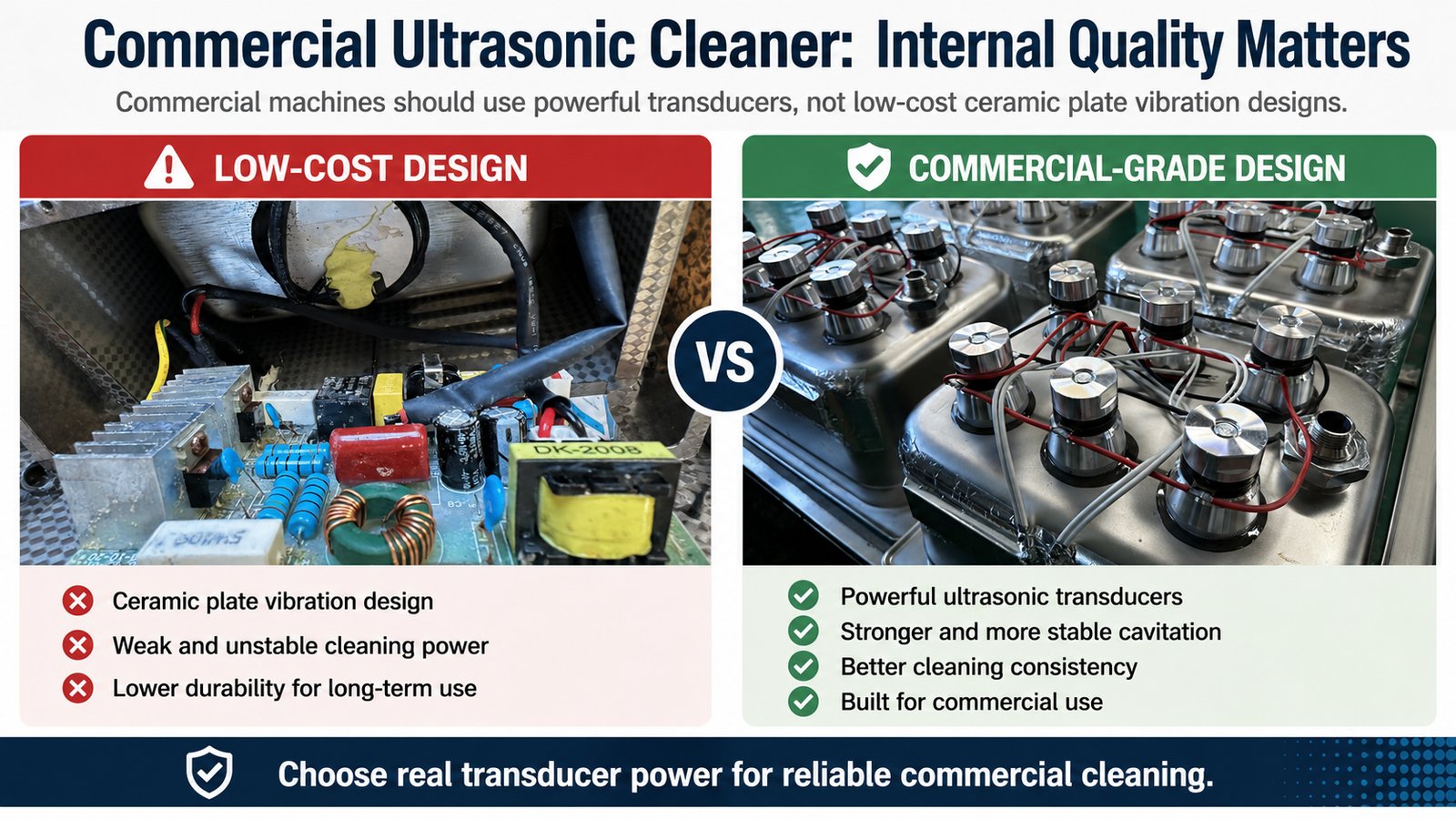
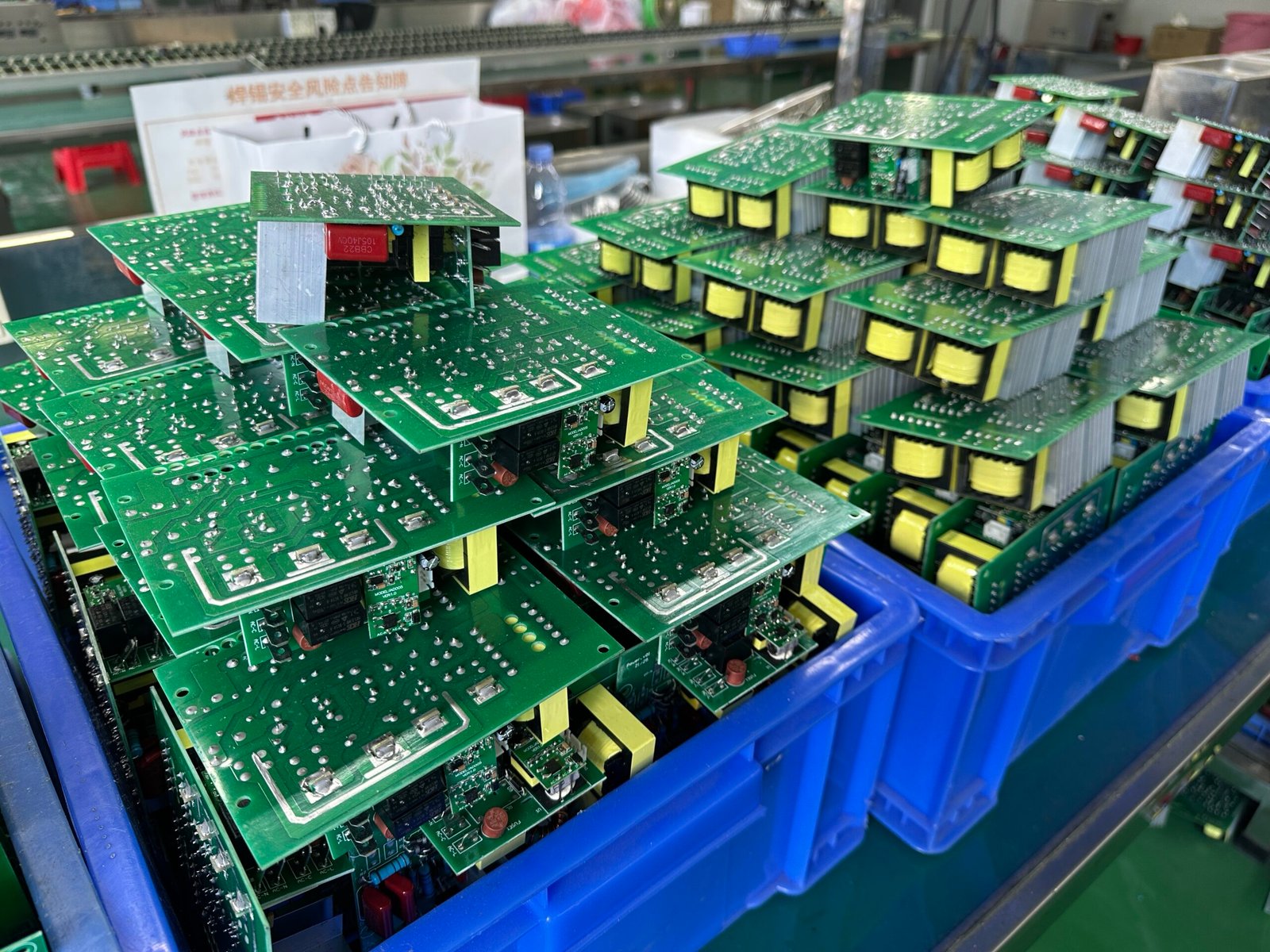
The generator converts electrical power into high-frequency signals. The transducers then turn these signals into ultrasonic vibrations, producing microscopic cavitation bubbles in the cleaning liquid.
Some extremely low-cost machines may use low-grade piezoelectric components, too few transducers or poorly bonded transducers. In more serious cases, ordinary vibration motors are used to make the tank shake.
A vibrating tank may create visible water movement, but visible movement does not prove that effective ultrasonic cavitation is being produced. Real ultrasonic cleaning depends on cavitation, not simply noise or vibration.
2. Number and Quality of Transducers
Two machines with the same tank capacity can have very different numbers of transducers.
Using fewer transducers reduces manufacturing cost, but it can also cause:
- Weak cleaning power
- Uneven cleaning areas
- Dead zones inside the tank
- Longer cleaning cycles
- Poor performance under heavy loads
Transducer quality, bonding materials and installation position also affect how evenly ultrasonic energy is distributed throughout the tank.
A professional system should provide relatively uniform cavitation instead of strong cleaning in one area and weak cleaning in another.
3. Stainless-Steel Tank Thickness
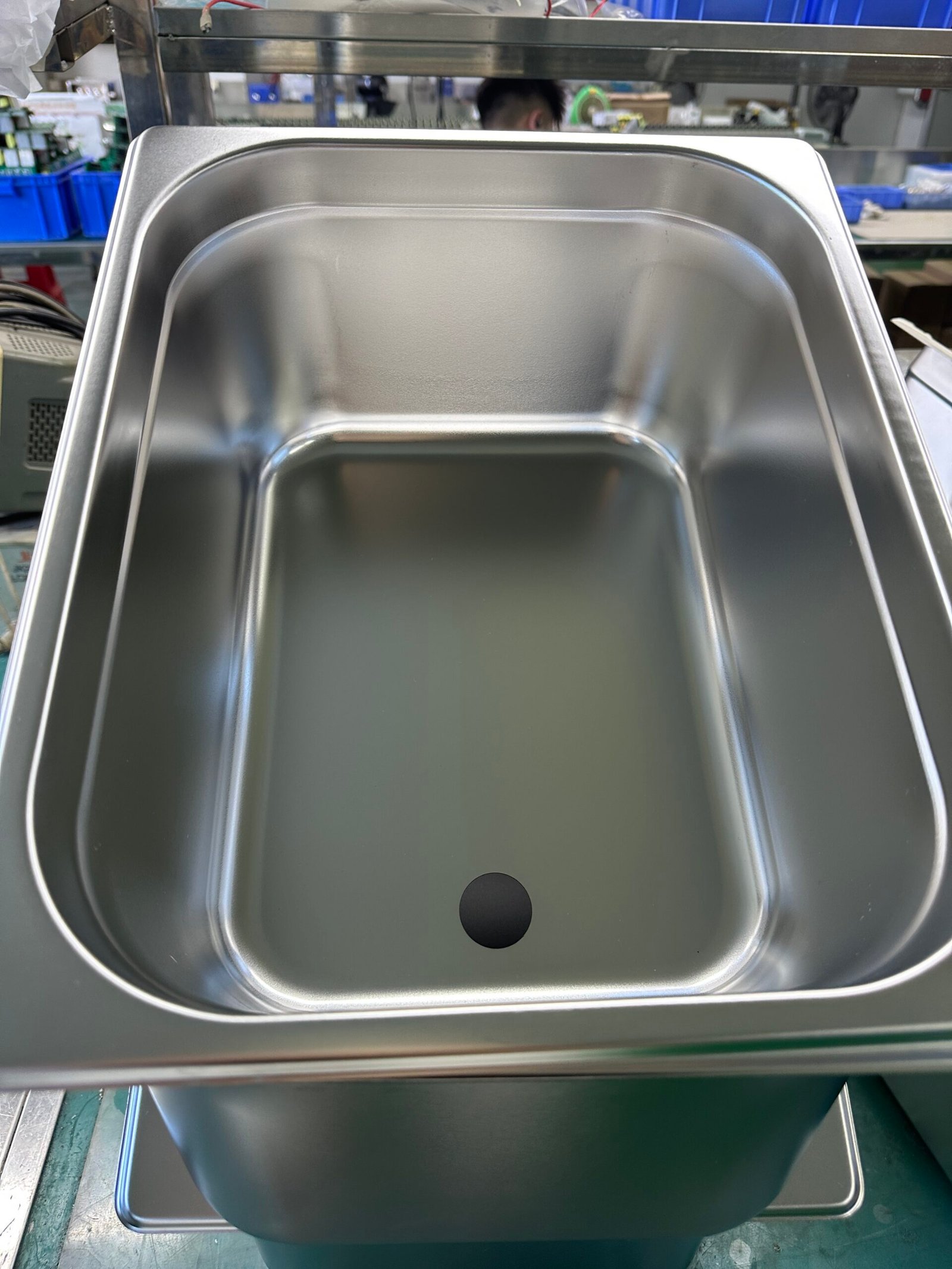
Tank thickness is one of the most easily hidden cost differences.
A thin inner tank may look almost identical to a thicker tank when the machine is new. However, ultrasonic cavitation continuously impacts the tank surface during operation.
If the stainless steel is too thin or unsuitable for long-term ultrasonic use, the tank may gradually develop:
- Pitting
- Cracks around welded areas
- Water leakage
- Cavitation erosion
- Premature perforation
Professional industrial systems often use stronger welded construction and cavitation-resistant stainless steel to improve service life.

4. Stainless-Steel Grade
Not all stainless steel is the same.
Lower-cost machines may use thinner or lower-grade materials in the inner tank, outer housing, heating pipes or baskets.
Common options include:
- SUS304 for general commercial cleaning
- SUS316 or 316L for stronger corrosion resistance and more demanding applications
The correct material depends on the cleaning solution, temperature, contamination and working environment.
Using unsuitable steel may lead to rust, corrosion or chemical damage, especially when acidic or alkaline cleaning agents are used.
5. Generator Quality and Actual Ultrasonic Power
The power shown in a product listing may not represent the machine’s real continuous ultrasonic output.
Some suppliers advertise peak power, combined heating power or theoretical component power instead of actual operating ultrasonic power.
A high-quality ultrasonic generator should provide:
- Stable frequency output
- Consistent power under different loads
- Overcurrent and overheating protection
- Reliable cooling
- Frequency tracking or sweep control
- Stable long-term operation
Advanced sweep technology can help distribute ultrasonic energy more evenly and reduce standing-wave dead zones.
6. Transducer Bonding and Welding Quality
Transducers must be securely bonded or welded to the tank or transducer box.
Poor installation can cause transducers to loosen after repeated heating, cooling and vibration cycles. Once a transducer becomes partially detached, cleaning power may decrease significantly.
The tank welds are equally important. Weak welds, rough corners and insufficient reinforcement can eventually lead to leakage or structural failure.
These differences are difficult to identify from product photos alone.
7. Heating System and Temperature Control
Commercial ultrasonic cleaners often work for long periods, so the heating system must be designed for continuous operation.
Price differences may come from:
- Heater material
- Heater quantity
- Temperature sensor accuracy
- Dry-heating protection
- Wiring quality
- Temperature control stability
A low-cost thermostat may have a large temperature error, while poor heating protection can shorten heater life or create safety risks.
8. Electrical Components and Safety Protection
Reliable machines use properly rated electrical components, wiring, relays, circuit breakers, grounding and cooling systems.
Cheaper machines may reduce costs by using undersized wires, low-grade relays or limited electrical protection.
Important protection functions may include:
- Overload protection
- Overtemperature protection
- Short-circuit protection
- Generator cooling
- Heater dry-run protection
- Reliable grounding
These features may not improve the appearance of the machine, but they strongly affect safety and long-term reliability.
9. Drainage, Filtration and Oil Separation
A basic ultrasonic tank may only include cleaning and heating.
A professional commercial system may also include:
- Drain valves
- Circulation filtration
- Oil-water separation
- Overflow systems
- Rinsing tanks
- Drying tanks
- Lifting platforms
- Automatic agitation
- Custom baskets and fixtures
Filtration and oil separation help keep the cleaning liquid effective for longer and reduce the frequency of solution replacement.
Therefore, two machines with the same tank size may actually be designed for completely different production requirements.
10. Frequency and Application Matching
Different cleaning applications require different ultrasonic frequencies.
For example:
- Lower frequencies generally provide stronger cavitation for heavy oil, carbon deposits and robust metal parts.
- Higher frequencies provide finer and gentler cleaning for precision parts, electronics, optics and delicate components.
A professional supplier should recommend the frequency according to the material, contamination, part structure and cleanliness requirement—not simply sell the same frequency for every application.
11. Continuous-Duty Design
A machine used for 20 minutes per day does not require the same construction as a machine running for eight hours per shift.
Commercial and industrial equipment may require:
- Larger cooling fans
- Better generator ventilation
- Reinforced tanks
- Higher-quality transducers
- Heavy-duty heaters
- More durable electrical components
Machines designed only for occasional use may overheat or lose performance when used continuously.
12. Quality Control and Performance Testing
A professional manufacturer should test more than whether the machine can turn on.
Useful tests include:
- Ultrasonic power testing
- Cavitation distribution testing
- Heating tests
- Leakage tests
- Grounding and electrical safety tests
- Continuous-operation tests
- Load cleaning tests
Professional ultrasonic performance can be measured and qualified rather than judged only by sound or visible water movement.
13. Customization, Warranty and Technical Support
The purchase price may also include engineering and after-sales support.
A reliable supplier should be able to provide:
- Application recommendations
- Cleaning tests
- Voltage and plug customization
- Frequency selection
- Spare parts
- Technical drawings
- Operation guidance
- Repair support
- Clear warranty terms
A very cheap machine may become expensive when replacement generators, transducers or technical support are unavailable.
How to Compare Commercial Ultrasonic Cleaners
Before purchasing, ask the supplier for the following information:
- What is the actual ultrasonic output power?
- How many transducers are installed?
- What type and thickness of stainless steel are used for the inner tank?
- Is the machine designed for continuous commercial operation?
- Does the generator include sweep, frequency tracking and protection functions?
- Can the supplier provide a cleaning test or cavitation test?
- What components are covered by the warranty?
- Are replacement generators and transducers available?
- Is the quoted power ultrasonic power or total power including heating?
- Can the machine be customized for the actual cleaning application?
Conclusion
Commercial ultrasonic cleaners are not priced only according to tank size.
The main differences are usually hidden inside the machine: transducer quality, generator stability, tank thickness, stainless-steel grade, welding, heating components, electrical protection and continuous-duty capability.
A low-priced machine may save money at the time of purchase, but weak cavitation, uneven cleaning, tank perforation and frequent repairs can create much higher costs later.
The best choice is not always the cheapest machine. It is the machine that provides stable cleaning performance, suitable construction and reliable support for the required application.