
Why Do Ultrasonic Cleaners Use Different kHz Frequencies? A Complete Guide for Retainers, Dentures, Jewelry and Industrial Parts

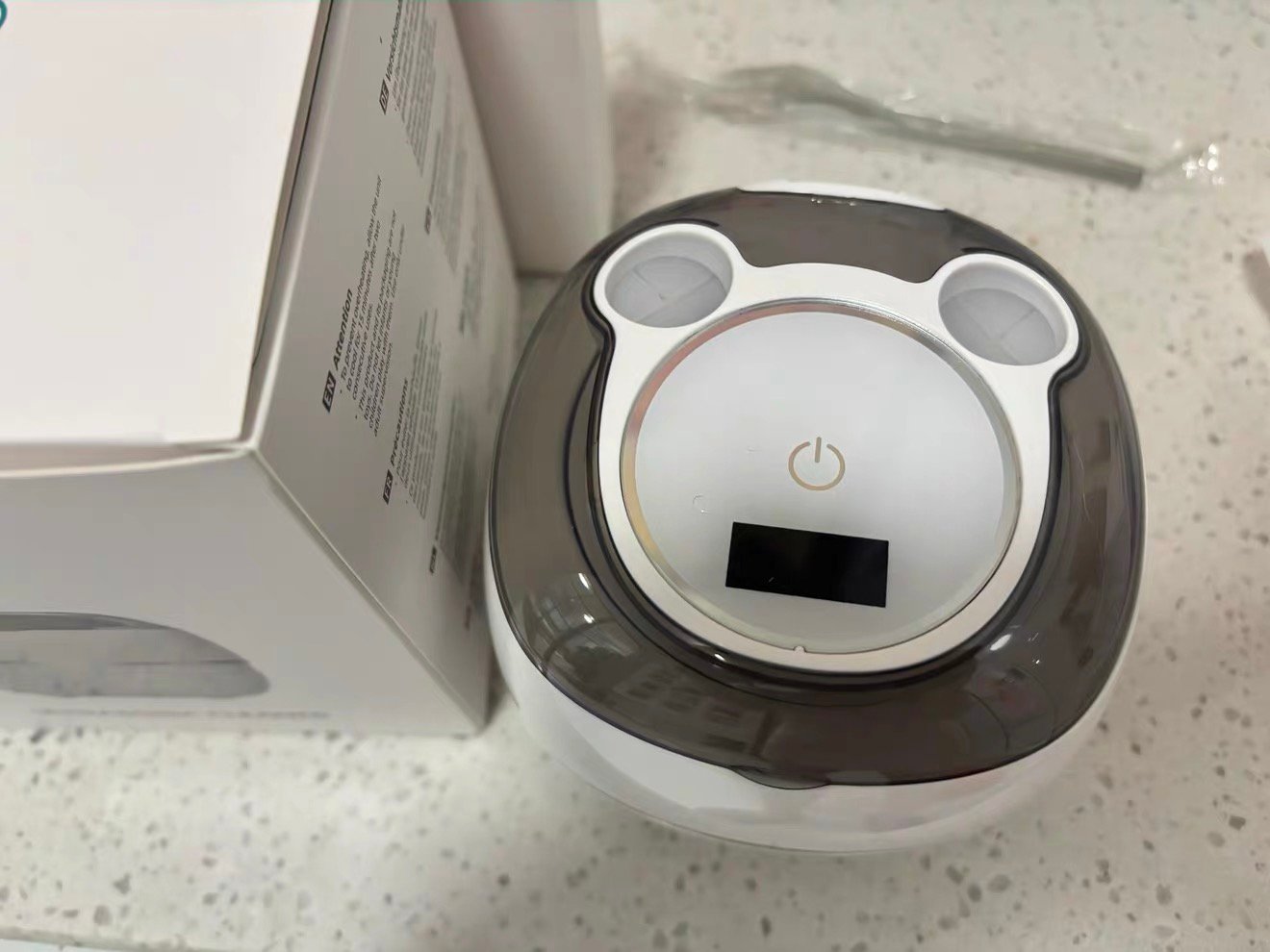
Ultrasonic cleaners are widely used in daily oral care, jewelry cleaning, laboratories, workshops and industrial manufacturing. However, many buyers may notice one important specification when comparing different machines: ultrasonic frequency, usually shown as kHz.
For example, the M9C3203 UV Ultrasonic Retainer Cleaner uses a 48kHz ultrasonic frequency, making it suitable for daily cleaning of retainers, dentures, aligners, mouth guards and toothbrush heads. But what does kHz actually mean? Why do ultrasonic cleaners have different frequencies? And which frequency is suitable for different products?
This article explains the principle of ultrasonic cleaning in a simple way.
What Does kHz Mean in an Ultrasonic Cleaner?
kHz means kilohertz, which refers to how many vibration cycles happen per second.
In ultrasonic cleaning, the frequency determines how fast the ultrasonic transducer vibrates. For example:
40kHz means 40,000 vibrations per second.
48kHz means 48,000 vibrations per second.
80kHz means 80,000 vibrations per second.
These high-frequency vibrations create countless microscopic bubbles in the cleaning liquid. This process is called cavitation. When the bubbles collapse, they release energy that helps remove dirt, stains, grease and residue from the surface of objects and from small gaps that are difficult to reach by hand.
How Is Ultrasonic Frequency Generated?
An ultrasonic cleaner mainly works through three important parts:
1. Ultrasonic Generator
The generator converts electrical energy into a high-frequency electrical signal.
2. Ultrasonic Transducer
The transducer receives the signal and converts it into mechanical vibration.
3. Stainless Steel Cleaning Tank
The vibration is transferred into the cleaning liquid inside the tank. This creates ultrasonic waves and cavitation bubbles.
When the ultrasonic waves travel through water, bubbles form and collapse rapidly. This produces a powerful but controlled cleaning effect.
For oral care products such as retainers and aligners, the cleaning effect needs to be strong enough to remove residue, but gentle enough not to damage delicate surfaces. That is why a medium-high frequency such as 48kHz is commonly used for compact dental appliance cleaners.
Why Do Ultrasonic Cleaners Have Different Frequencies?
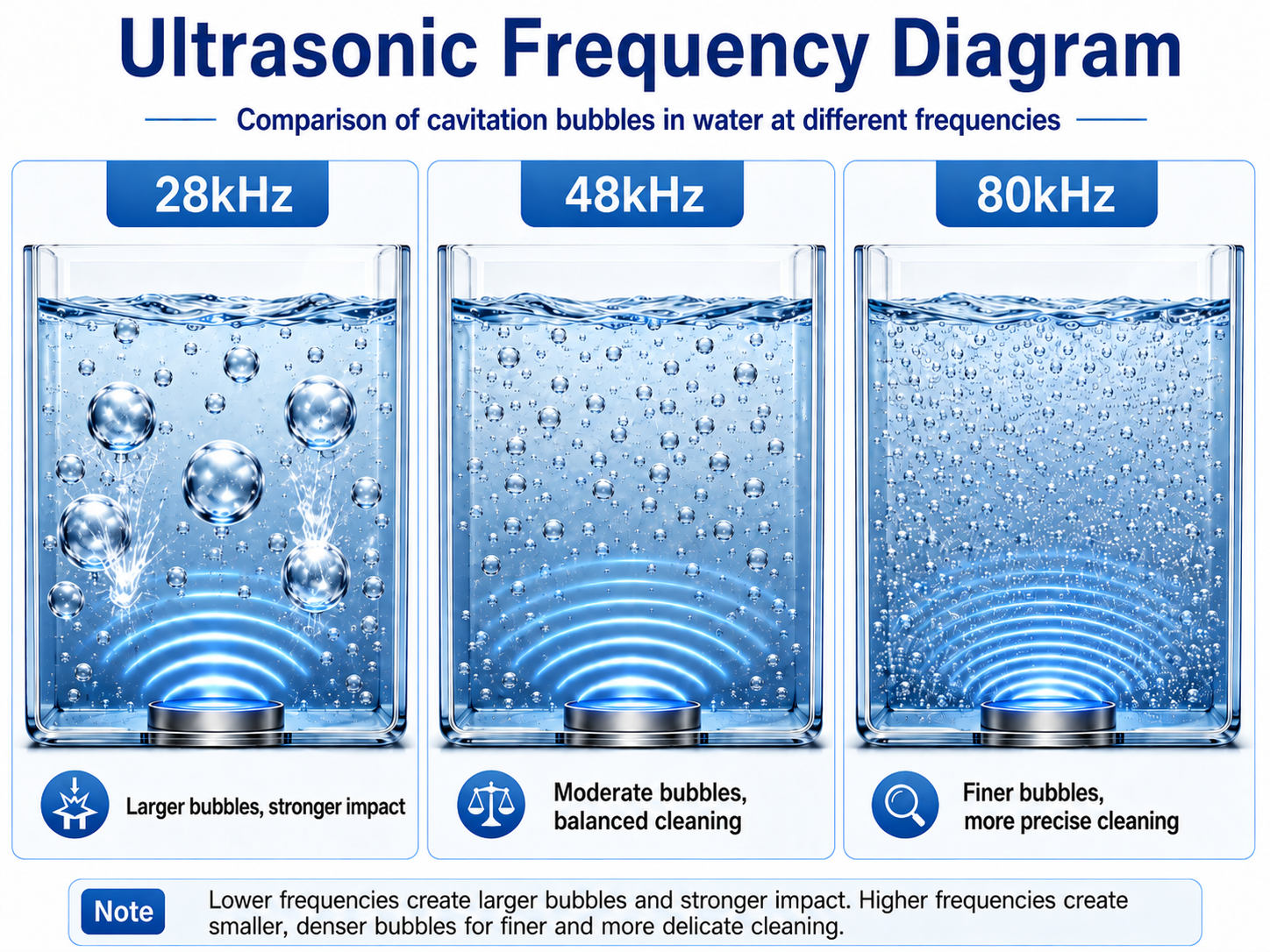
Different frequencies create different sizes and strengths of cavitation bubbles.
In general:
Lower frequency = stronger cleaning power, larger cavitation bubbles
Higher frequency = gentler cleaning effect, smaller cavitation bubbles
This means different frequencies are suitable for different cleaning tasks.
A heavy-duty metal part covered with oil may need stronger cavitation. A delicate retainer, jewelry item or precision part may need a gentler and more even cleaning effect.
That is why ultrasonic cleaners are not all designed with the same kHz frequency.
Common Ultrasonic Frequencies and Their Applications
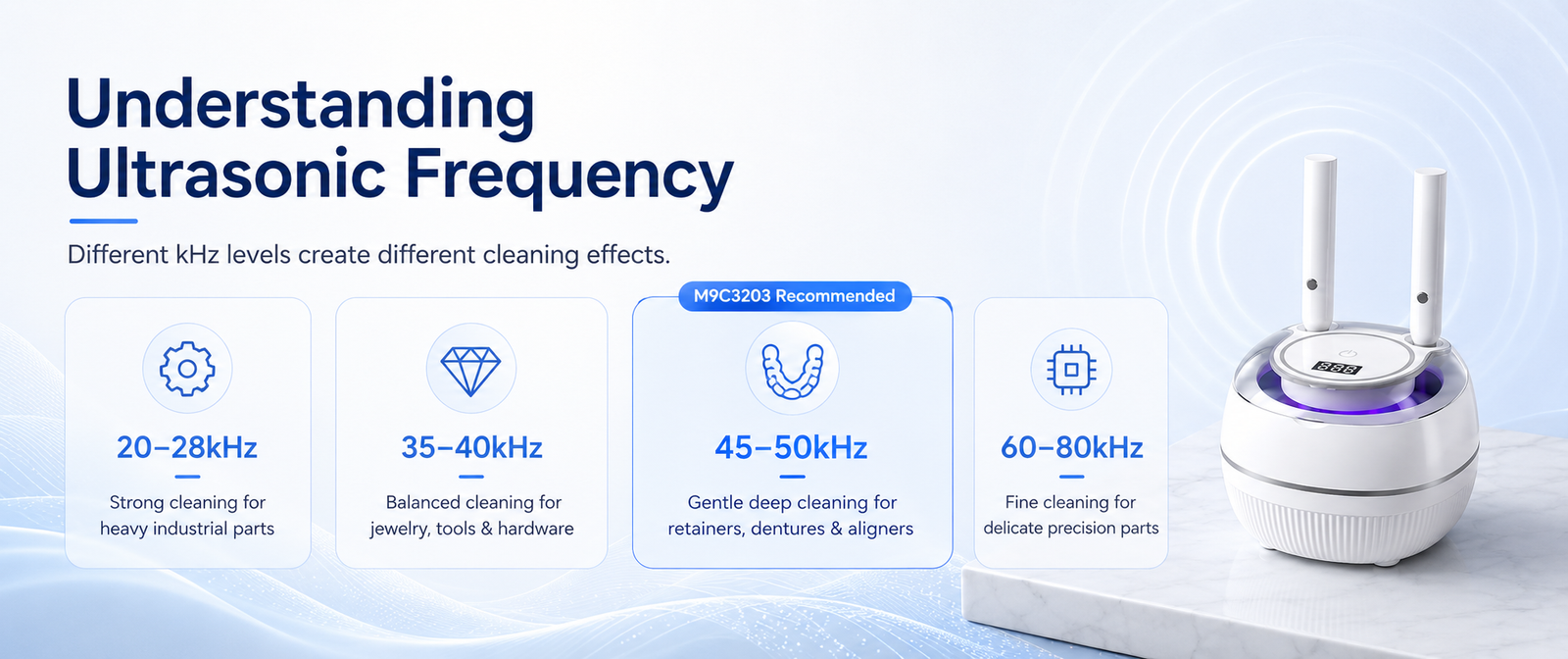
20kHz–28kHz: Strong Cleaning for Heavy-Duty Industrial Parts
Low-frequency ultrasonic cleaners create stronger cavitation. They are suitable for large, hard and durable parts.
Common applications include:
- Automotive parts
- Engine components
- Metal hardware
- Industrial molds
- Heavy oil removal
- Large mechanical parts
This frequency range is powerful, but it may be too aggressive for delicate items such as retainers, glasses, soft jewelry or precision electronic parts.
35kHz–40kHz: General-Purpose Cleaning Frequency
This is one of the most common frequency ranges for commercial and industrial ultrasonic cleaners. It offers a good balance between cleaning power and surface protection.
Common applications include:
- Jewelry cleaning
- Watch parts
- Dental tools
- Laboratory instruments
- Small metal parts
- Restaurant utensils
- Commercial cleaning equipment
40kHz ultrasonic cleaners are widely used because they can handle many different cleaning tasks.
45kHz–50kHz: Gentle and Efficient Cleaning for Daily-Use Products
This frequency range is especially suitable for smaller and more delicate items. It creates finer cavitation bubbles than lower-frequency machines, allowing the ultrasonic waves to reach tiny gaps and curved surfaces more evenly.
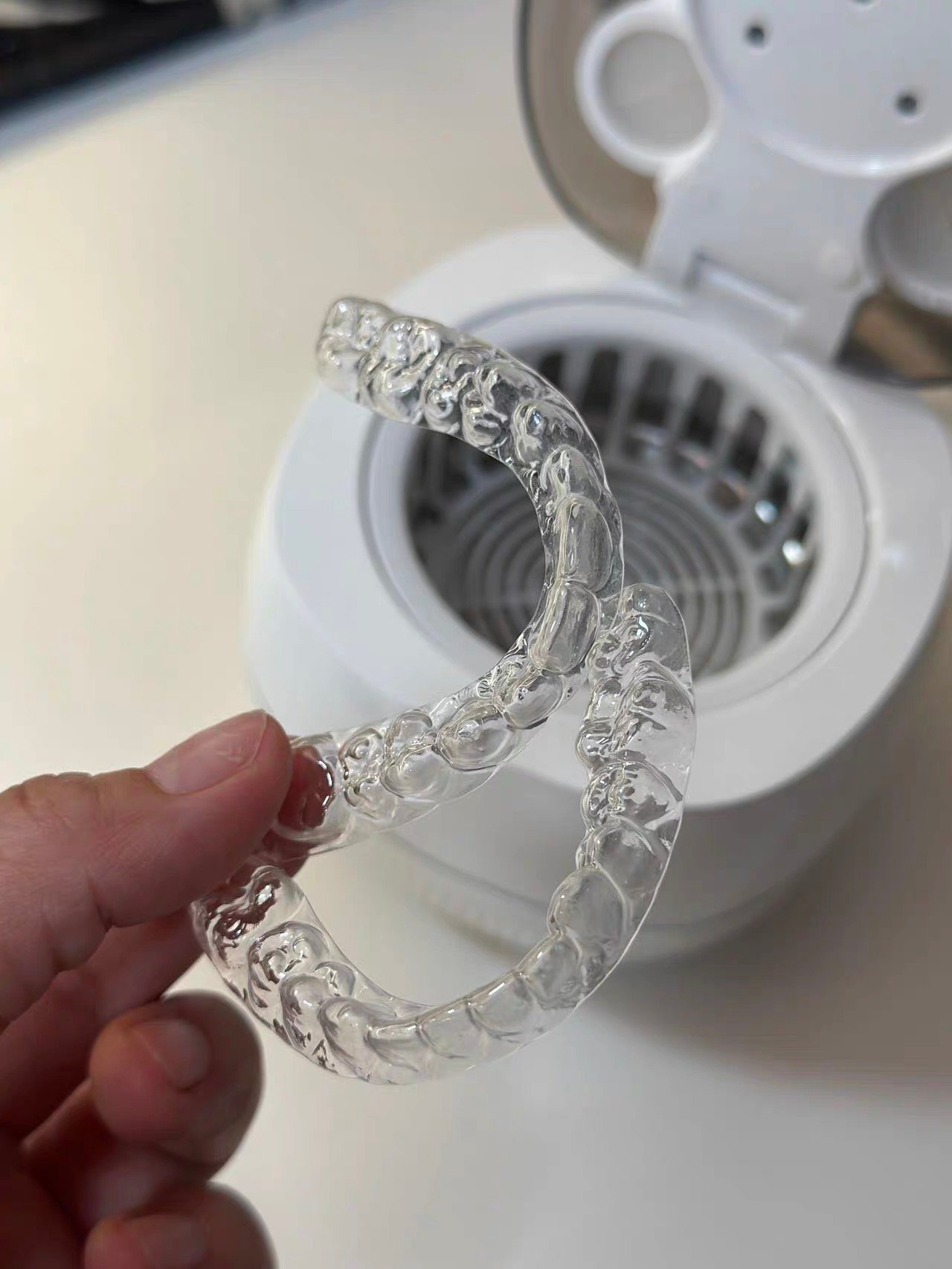
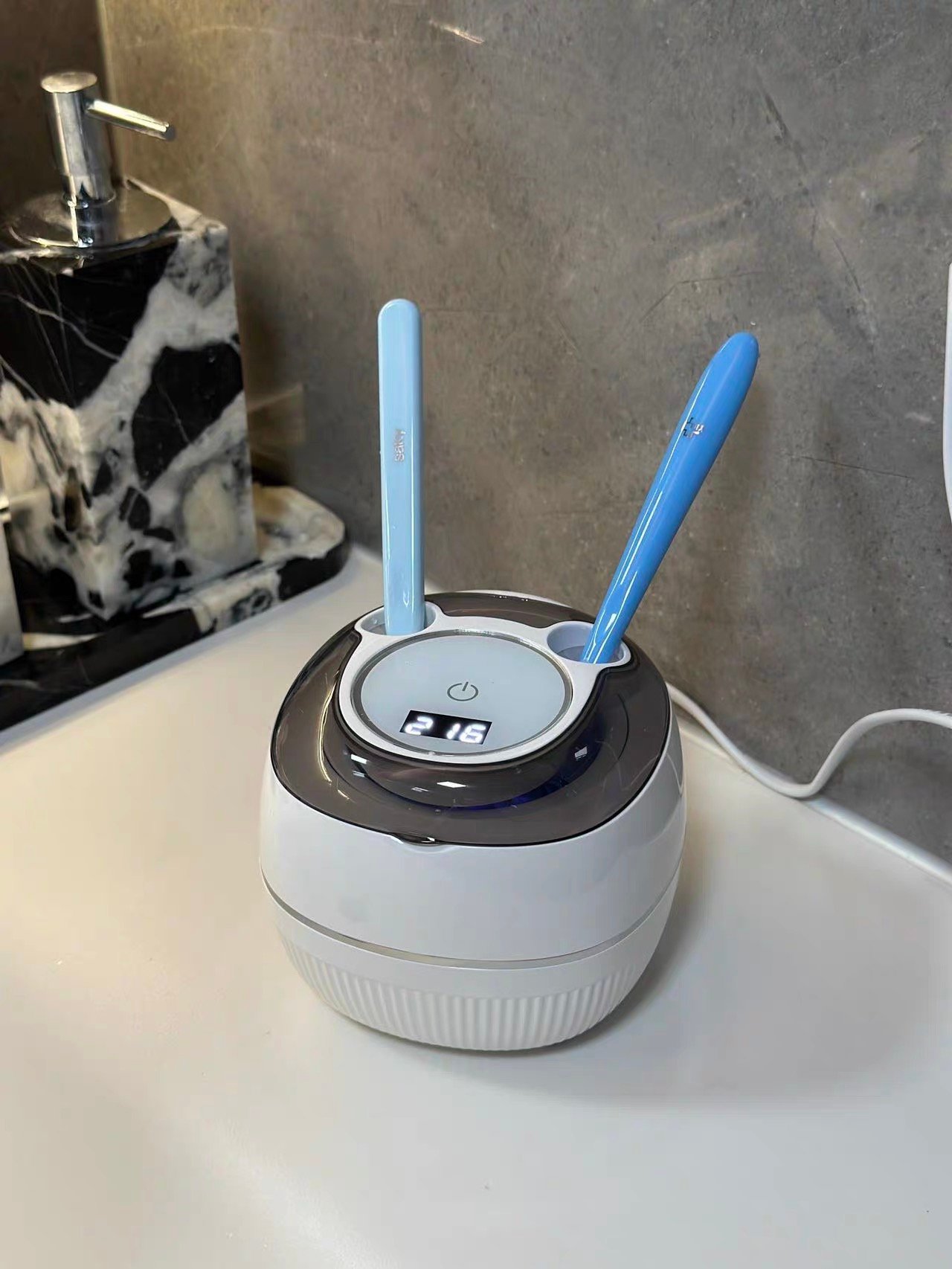
The M9C3203 UV Ultrasonic Retainer Cleaner uses 48kHz high-frequency ultrasonic cleaning, making it ideal for oral care items such as:
- Retainers
- Dentures
- Clear aligners
- Mouth guards
- Night guards
- Toothbrush heads
- Small personal hygiene items
For dental appliances, 48kHz offers a practical balance: it helps remove residue, stains and odor from hard-to-reach areas while remaining gentle for daily use.
60kHz–80kHz: Precision Cleaning for Delicate Components
Higher frequencies create smaller cavitation bubbles and a softer cleaning effect. They are often used for precision parts or items with very fine gaps.
Common applications include:
- Optical lenses
- Precision electronic parts
- Semiconductor components
- Fine jewelry
- Medical instruments
- Laboratory glassware
These frequencies are suitable when surface protection and fine-detail cleaning are more important than strong impact cleaning.
100kHz and Above: Ultra-Fine Cleaning
Very high ultrasonic frequencies are mainly used in professional precision industries. They are designed for extremely delicate cleaning tasks.
Common applications include:
- Semiconductor wafers
- Microelectronic components
- Precision optical parts
- High-end laboratory cleaning
- Aerospace precision components
These machines are usually used in specialized industrial environments rather than household cleaning.
Why Is 48kHz Suitable for Retainers, Dentures and Aligners?
Oral care products often have curved shapes, small grooves and hard-to-reach areas. Manual brushing may not fully clean hidden residue, especially inside retainers, clear aligners, dentures or mouth guards.
A 48kHz ultrasonic cleaner provides several advantages:
Gentle Cleaning
The cleaning action is softer than low-frequency industrial ultrasonic cleaners, making it more suitable for daily oral care items.
Deep Cleaning in Small Gaps
High-frequency ultrasonic waves can reach tiny spaces that are difficult to clean with a brush.
Suitable for Daily Use
48kHz is a practical frequency for home cleaning, especially for retainers, dentures, aligners and toothbrush heads.
Better Hygiene Support
When combined with UV sterilization, the cleaning process helps keep oral appliances fresher and cleaner.
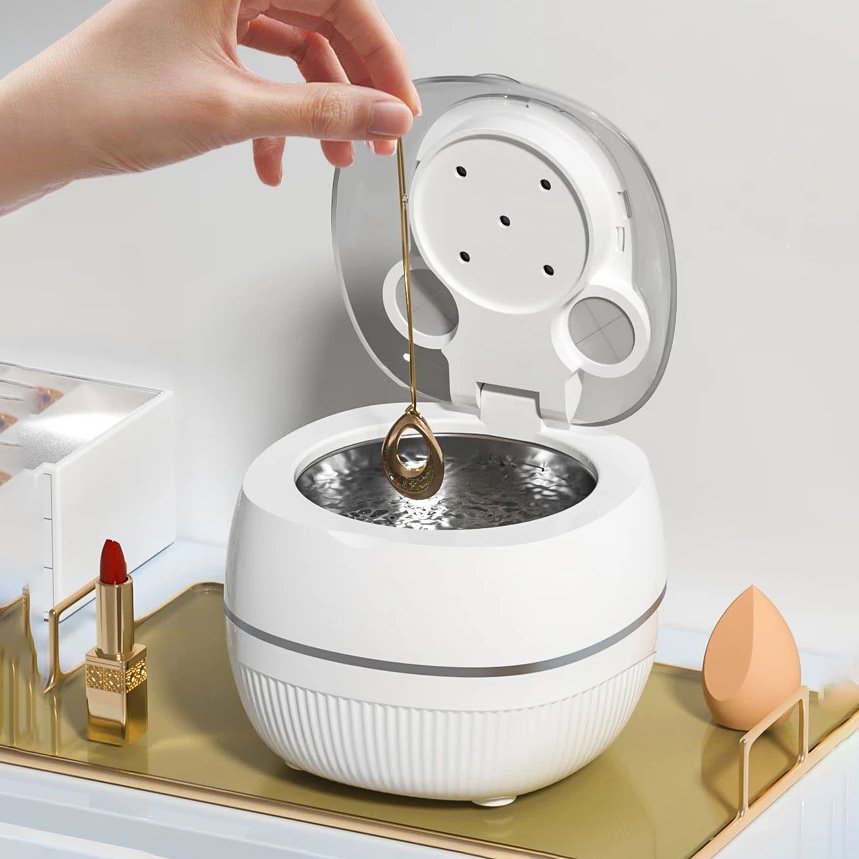
This is why the M9C3203 UV ultrasonic retainer cleaner is designed with 48kHz ultrasonic frequency, a 220mL SUS304 stainless steel tank, and 5-minute / 10-minute cleaning modes.
What Is the Difference Between Ultrasonic Cleaning and UV Sterilization?
Ultrasonic cleaning and UV sterilization are two different functions.
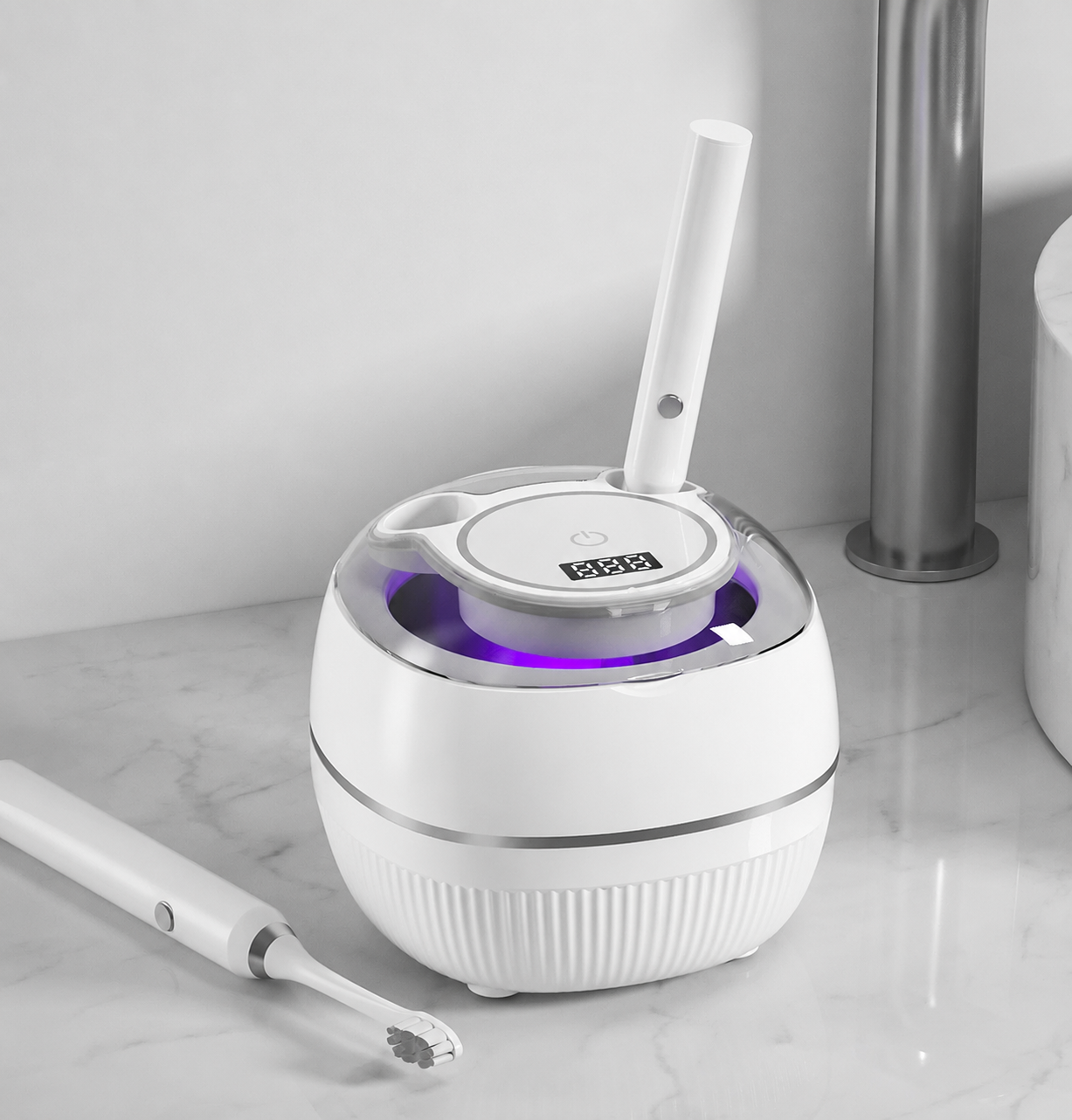
Ultrasonic cleaning mainly removes physical dirt, stains, residue and particles through high-frequency vibration and cavitation.
UV sterilization helps reduce bacteria and improve hygiene through UV light exposure.
The M9C3203 combines both functions, offering a dual cleaning solution for daily oral care products. Ultrasonic cleaning helps remove visible and hidden residue, while UV sterilization helps keep the items cleaner and fresher after washing.
How to Choose the Right Ultrasonic Frequency
When choosing an ultrasonic cleaner, frequency should match the cleaning object.
| Frequency Range | Cleaning Strength | Suitable For |
|---|---|---|
| 20–28kHz | Very strong | Heavy-duty metal parts, automotive parts, molds |
| 35–40kHz | Balanced | Jewelry, dental tools, hardware, general cleaning |
| 45–50kHz | Gentle and efficient | Retainers, dentures, aligners, toothbrush heads, daily-use items |
| 60–80kHz | Fine cleaning | Precision parts, optics, delicate components |
| 100kHz+ | Ultra-fine cleaning | Semiconductor, microelectronics, high-precision industries |
For household oral care products, a compact cleaner around 48kHz is usually a suitable choice.
Product Recommendation: M9C3203 UV Ultrasonic Retainer Cleaner
The M9C3203 UV Ultrasonic Retainer Cleaner is designed for daily oral hygiene cleaning. It is suitable for retainers, dentures, aligners, mouth guards, night guards and toothbrush heads.
Key Features
- 48kHz ultrasonic cleaning for deep and gentle cleaning
- UV sterilization for improved hygiene
- 220mL capacity for daily oral care items
- SUS304 stainless steel tank for durability and easy cleaning
- 5-minute quick clean and 10-minute deep clean
- 100–240V wide voltage for global use
- Compact design for home bathrooms, travel and dental care brands
Whether you are looking for an ultrasonic retainer cleaner, UV denture cleaner, aligner cleaner, or toothbrush head cleaner, the M9C3203 offers a simple and efficient solution for daily cleaning
Conclusion
Ultrasonic frequency is one of the most important factors in ultrasonic cleaning performance. Different kHz frequencies create different cleaning effects, so the right frequency depends on the type of item being cleaned.
Low-frequency ultrasonic cleaners are better for heavy-duty industrial cleaning, while higher frequencies are better for delicate and precision items. For daily oral care products such as retainers, dentures, aligners and mouth guards, 48kHz ultrasonic cleaning offers an excellent balance between cleaning efficiency and gentle care.
The M9C3203 UV Ultrasonic Retainer Cleaner is designed with this purpose in mind, providing a compact, hygienic and user-friendly cleaning solution for modern oral care.